
Northeast Europe (1552–1563 CE): Emerging Rivalries, Religious …
Years: 1552 - 1563
Northeast Europe (1552–1563 CE): Emerging Rivalries, Religious Conflicts, and Strategic Realignments
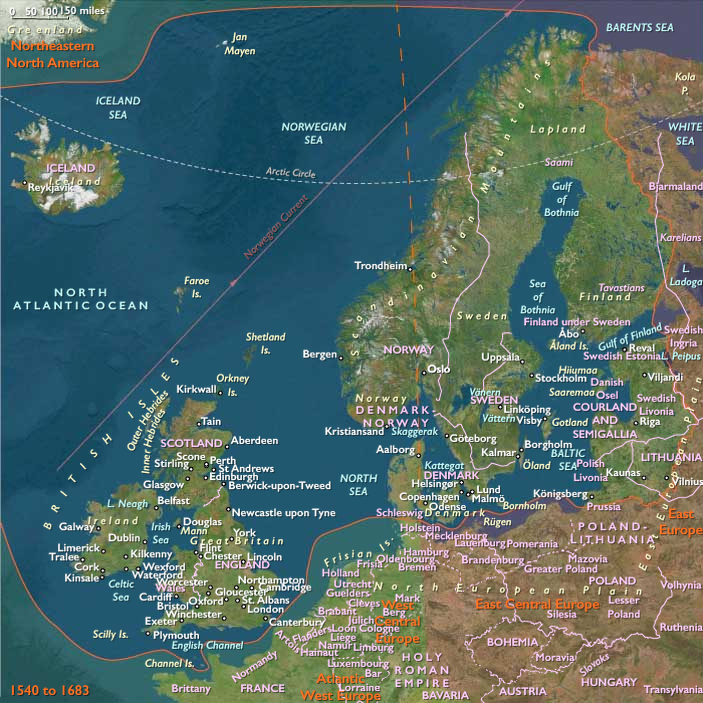
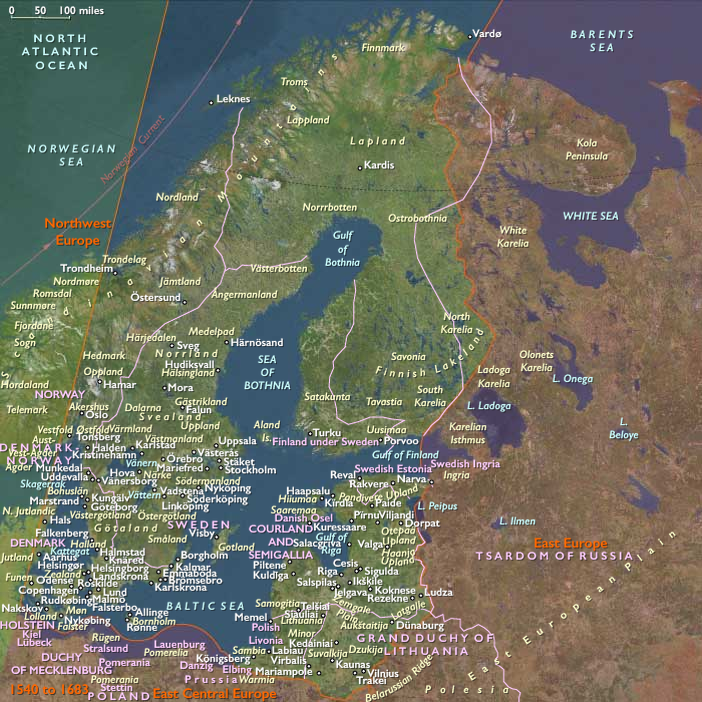
Between 1552 and 1563 CE, Northeast Europe witnessed intensifying geopolitical tensions, driven by religious divisions, emerging rivalries, and shifting diplomatic alliances. The period marked increased Russian assertiveness under Ivan IV, heightened regional instability in Livonia, and further political consolidation across Scandinavia and the secular Duchy of Prussia, significantly reshaping territorial alignments and cultural identities.
Livonian Confederation under Mounting Pressure
The Livonian Confederation, centered around prosperous Riga, increasingly faced severe geopolitical pressures. Internal divisions, declining military capacity, and religious tensions weakened its political cohesion. Simultaneously, external threats intensified, particularly from an increasingly aggressive Grand Duchy of Muscovy, laying groundwork for the devastating conflicts of the upcoming Livonian War (1558–1583).
Outbreak of the Livonian War
In 1558, Ivan IV (the Terrible) of Muscovy launched a major invasion of Livonia, marking the start of the prolonged and destructive Livonian War. Ivan’s ambitions aimed at securing Baltic access and regional dominance, dramatically altering Northeast Europe's geopolitical landscape. Livonian defenses swiftly collapsed, triggering interventions by neighboring powers including the Polish–Lithuanian Union, Sweden, and Denmark–Norway, each competing for influence in the collapsing Confederation.
Strengthening of the Duchy of Prussia
The secularized Duchy of Prussia, ruled by Duke Albert of Brandenburg-Ansbach, consolidated Protestant governance, administrative efficiency, and regional autonomy under Polish overlordship. Königsberg and other Prussian cities saw sustained economic resilience despite regional conflicts. The Duchy emerged as a stable territorial entity amid growing regional turmoil, positioning itself strategically within shifting alliances.
Consolidation and Expansion of Independent Sweden
Under the reign of Gustav I Vasa until his death in 1560, and thereafter under his son Eric XIV, Sweden significantly strengthened its political cohesion, administrative reforms, and military capabilities. These efforts were extended notably into southern Finland, where fortified defenses and expanded governance deepened cultural and political integration, reinforcing Sweden's status as a major emerging regional power.
Danish-Norwegian Internal Stability and Diplomatic Strategies
Under Christian III and subsequently Frederick II, the Kingdom of Denmark–Norway successfully consolidated Lutheran reforms, reinforcing internal administrative stability and religious uniformity. Despite internal cohesion, external diplomatic maneuvers involved Denmark–Norway directly in Baltic rivalries, especially in contesting Muscovite advances, Swedish influence, and Livonian territories, shaping strategic diplomatic alignments throughout this period.
Economic Resilience and Urban Prosperity
Major urban centers such as Reval (Tallinn), Riga, Königsberg, and Visby continued experiencing economic resilience through maritime commerce, commercial networks, and stable urban governance. Even amid regional upheavals, these cities supported broader economic stability, significantly mitigating the disruptive impacts of geopolitical and military conflicts.
Cultural and Religious Transformations
Ecclesiastical institutions and religious identities continued experiencing profound transformations amid Lutheran consolidation and geopolitical instability. Protestant educational reforms significantly altered societal structures and cultural identities across Scandinavia and Prussia, while religious tensions in Livonia and the Baltic region contributed substantially to regional instability.
Strategic Diplomatic Realignments and Alliances
Diplomatic activity intensified considerably during this period, characterized by shifting alliances, strategic negotiations, and territorial contests amid escalating regional tensions. Conflicting interests among the Polish–Lithuanian Union, Sweden, Denmark–Norway, Muscovy, and the Duchy of Prussia drove complex diplomatic maneuvers, significantly reshaping regional geopolitics.
Legacy of the Era
The era from 1552 to 1563 CE profoundly influenced Northeast Europe’s historical trajectory through escalating geopolitical rivalries, deepened religious conflicts, and strategic territorial realignments. These developments established enduring territorial patterns, diplomatic relationships, and cultural identities, fundamentally shaping the region’s historical evolution in subsequent decades.
People
- Albert of Prussia
- Christian III
- Eric XIV of Sweden
- Frederick II of Denmark-Norway
- Gustav I Vasa
- Ivan IV
Groups
- Polytheism (“paganism”)
- Latvians, or Letts (Eastern Balts)
- Estonians
- Christians, Roman Catholic
- Finland under Swedish rule
- Riga, Bishopric/Archbishopric of
- Terra Mariana (Livonian Confederation)
- Livonian Order
- Hanseatic League
- Poland of the Jagiellonians, Kingdom of
- Crown of the Kingdom of Poland
- Lithuania, Grand Duchy of
- Lutheranism
- Sweden, (second) Kingdom of
- Prussia, Duchy of
- Denmark-Norway, Kingdom of
- Russia, Tsardom of
- Estonia, Duchy of (Swedish Estonia)
- Livonia, Duchy of (Polish Estonia and Latvia)
- Courland and Semigallia, Duchy of
Topics
Subjects
Regions
Subregions
Years: 1552 - 1563
People
- Albert of Prussia
- Christian III
- Eric XIV of Sweden
- Frederick II of Denmark-Norway
- Gustav I Vasa
- Ivan IV
Groups
- Polytheism (“paganism”)
- Latvians, or Letts (Eastern Balts)
- Estonians
- Christians, Roman Catholic
- Finland under Swedish rule
- Riga, Bishopric/Archbishopric of
- Terra Mariana (Livonian Confederation)
- Livonian Order
- Hanseatic League
- Poland of the Jagiellonians, Kingdom of
- Crown of the Kingdom of Poland
- Lithuania, Grand Duchy of
- Lutheranism
- Sweden, (second) Kingdom of
- Prussia, Duchy of
- Denmark-Norway, Kingdom of
- Russia, Tsardom of
- Estonia, Duchy of (Swedish Estonia)
- Livonia, Duchy of (Polish Estonia and Latvia)
- Courland and Semigallia, Duchy of
Topics
Subjects
Regions
Subregions