
Northeast Europe (1528–1539 CE): Union Dissolution, Consolidation …
Years: 1528 - 1539
Northeast Europe (1528–1539 CE): Union Dissolution, Consolidation of Protestant Reforms, and Geopolitical Realignments
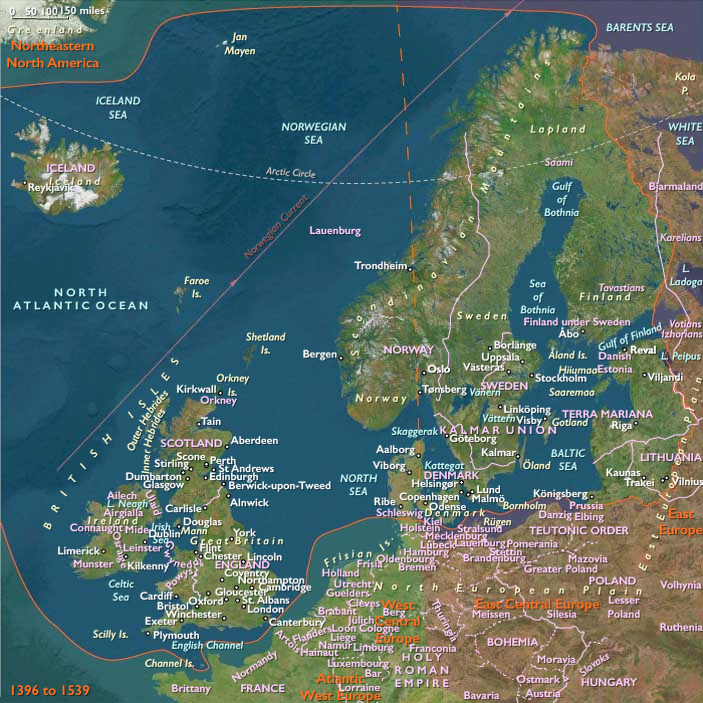
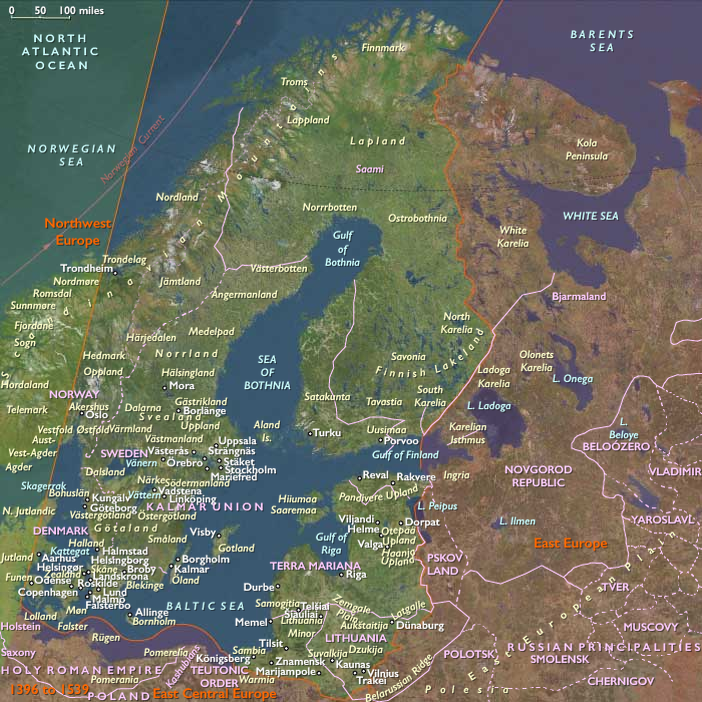
Between 1528 and 1539 CE, Northeast Europe underwent profound political and religious transformations, marked by the definitive end of the Kalmar Union, the deepening of Protestant Reformation across the region, and continued strategic adjustments following the secularization of the Teutonic Order. These pivotal changes significantly reshaped regional alliances, territorial structures, and cultural identities.
Dissolution of the Kalmar Union and Rise of Independent Sweden
Following the pivotal rebellion led by Gustav Vasa, the Kalmar Union effectively dissolved, culminating in Sweden's emergence as an independent monarchy under Gustav’s rule. Crowned as King Gustav I in 1523, his reign during this era was characterized by significant administrative reforms, strengthened centralized authority, and decisive moves toward religious reform. The Union's dissolution fundamentally altered regional power dynamics, leaving Denmark and Norway under the Oldenburg monarchy, now separated politically from Sweden.
Consolidation of Protestant Reformation
This period marked intensified Lutheran reform movements, significantly influencing Northeast Europe's religious and cultural landscape. Under Gustav I’s leadership, Sweden formally embraced Lutheranism through the Riksdag at Västerås in 1527, initiating extensive ecclesiastical reforms and church property confiscations. The secularization movement profoundly transformed societal structures, weakened traditional Catholic institutions, and strengthened state authority across Swedish territories, including Finland.
Secular Duchy of Prussia and Teutonic Order’s Aftermath
The secularization of the Teutonic Order territories, finalized in 1525 with the establishment of the Duchy of Prussia under Duke Albert of Brandenburg-Ansbach, dramatically reshaped regional geopolitics. During this era, Prussia consolidated its secular governance, expanding Protestant reforms, enhancing administrative efficiency, and strengthening its alignment as a Polish vassal state, significantly altering its historical role and identity.
Livonian Confederation amid Religious and Political Pressures
The Livonian Confederation, centered in economically vibrant Riga, faced growing pressures from Protestant influences and external powers. Skillful diplomacy, internal governance reforms, and economic resilience allowed the Confederation to maintain relative autonomy and political stability despite increasing external challenges and religious transformations, preserving its regional importance.
Finnish Integration and Lutheran Reform under Swedish Rule
In Finland, Swedish rule was reinforced by administrative consolidation and the Lutheran Reformation’s widespread implementation. Ecclesiastical and educational reforms significantly reshaped Finland’s cultural and social institutions, aligning the region closely with broader Swedish governance and religious policies, thus deepening Finland’s integration and regional stability.
Economic Stability in Urban Centers
Key urban centers such as Reval (Tallinn), Riga, Königsberg, and Visby on Gotland continued flourishing economically through sustained maritime trade, commercial diversification, and urban governance reforms. Their economic prosperity facilitated regional stability, helping mitigate disruptions caused by religious and political upheavals.
Ecclesiastical Transformation and Cultural Shifts
Ecclesiastical institutions experienced profound transformations during this period, with Lutheran reforms reshaping their roles, influence, and authority. Traditional Latin Christian institutions underwent significant secularization, altering educational, social, and cultural practices, profoundly impacting regional identities and societal structures.
Strategic Diplomatic Realignments
Diplomatic activities intensified significantly, reflecting Northeast Europe's transformative changes. Strategic diplomacy among newly independent Sweden, Denmark–Norway, the Duchy of Prussia, Livonian Confederation, and Polish–Lithuanian Union emphasized careful negotiations, territorial settlements, and evolving alliances to manage emerging geopolitical tensions.
Legacy of the Era
The era from 1528 to 1539 CE was transformative, marked by the permanent fragmentation of medieval unions, consolidation of Protestantism, and strategic geopolitical realignments. These profound developments significantly influenced Northeast Europe's subsequent political structures, territorial boundaries, and cultural identities, defining the region’s historical trajectory well into the early modern period.
People
Groups
- Polytheism (“paganism”)
- Latvians, or Letts (Eastern Balts)
- Estonians
- Christians, Roman Catholic
- Finland under Swedish rule
- Riga, Bishopric/Archbishopric of
- Terra Mariana (Livonian Confederation)
- Livonian Order
- Teutonic Knights of Prussia, or Monastic state of the Teutonic Knights (House of the Hospitalers of Saint Mary of the Teutons in Jerusalem)
- Hanseatic League
- Crown of the Kingdom of Poland
- Poland of the Jagiellonians, Kingdom of
- Lithuania, Grand Duchy of
- Lutheranism
- Kalmar Union (of Denmark and Norway)
- Sweden, (second) Kingdom of
- Prussia, Duchy of
- Denmark-Norway, Kingdom of
Topics
Subjects
Regions
Subregions
Years: 1528 - 1539
People
Groups
- Polytheism (“paganism”)
- Latvians, or Letts (Eastern Balts)
- Estonians
- Christians, Roman Catholic
- Finland under Swedish rule
- Riga, Bishopric/Archbishopric of
- Terra Mariana (Livonian Confederation)
- Livonian Order
- Teutonic Knights of Prussia, or Monastic state of the Teutonic Knights (House of the Hospitalers of Saint Mary of the Teutons in Jerusalem)
- Hanseatic League
- Crown of the Kingdom of Poland
- Poland of the Jagiellonians, Kingdom of
- Lithuania, Grand Duchy of
- Lutheranism
- Kalmar Union (of Denmark and Norway)
- Sweden, (second) Kingdom of
- Prussia, Duchy of
- Denmark-Norway, Kingdom of
Topics
Subjects
Regions
Subregions