
Northeast Europe (1504–1515 CE): Union Fractures, Teutonic …
Years: 1504 - 1515
Northeast Europe (1504–1515 CE): Union Fractures, Teutonic Struggles, and Emerging Geopolitical Shifts
Between 1504 and 1515 CE, Northeast Europe witnessed deepening instability within the Kalmar Union, continued decline of the Teutonic Order, and the assertive rise of the Polish–Lithuanian Union. Economic prosperity persisted despite geopolitical uncertainties, while strategic diplomacy reshaped alliances and territorial arrangements.
Deepening Divisions in the Kalmar Union
Under King John (Hans), and subsequently his son Christian II, the Kalmar Union faced escalating internal discord. Swedish resistance to centralized Danish control intensified significantly, fueled by economic grievances and demands for autonomy by powerful Swedish nobles. These mounting tensions increasingly destabilized the Union’s political coherence, laying foundations for future dissolution.
Further Decline of the Teutonic Order
The Teutonic Order continued grappling with severe internal divisions, dwindling economic resources, and diplomatic isolation. Unable to recover from earlier territorial losses and military defeats, particularly at the hands of Poland-Lithuania, the Order's grip on its remaining territories, especially in Prussia, weakened further. Urban centers like Königsberg remained economically resilient, but the Order’s broader territorial influence steadily diminished.
Polish–Lithuanian Union’s Expanding Influence
Under King Sigismund I the Old, the Polish–Lithuanian Union significantly enhanced its geopolitical position, consolidating control over contested border territories and reinforcing diplomatic ties throughout the region. Effective military strategies and robust internal governance allowed the union to further assert its dominance, particularly at the expense of the weakened Teutonic Order.
Stability and Economic Strength in Livonian Territories
The Livonian Confederation, centered in the strategic trading city of Riga, maintained political stability and economic resilience through skillful diplomacy and fortified urban governance. Its autonomy and strategic economic position allowed it to successfully navigate complex regional rivalries, sustaining prosperity amid broader geopolitical turbulence.
Swedish Consolidation in Finland
Despite the rising internal tensions within the Kalmar Union, Sweden strengthened its administrative and military integration in southern Finland. Enhancing fortifications, governance structures, and ecclesiastical influence further solidified Finland’s role as a strategically vital and culturally cohesive component of Swedish territory.
Prosperity of Major Urban Centers
Economic vitality characterized key urban centers including Reval (Tallinn), Riga, Königsberg, and Visby on Gotland, which thrived through robust maritime commerce and active merchant networks. These prosperous cities continued to support regional economic stability, significantly offsetting geopolitical disruptions.
Ecclesiastical Institutions and Cultural Cohesion
Ecclesiastical institutions, notably regional bishoprics and the increasingly beleaguered Teutonic Order, maintained their critical roles in educational advancement, social governance, and cultural continuity. Their sustained promotion of Latin Christian traditions provided enduring regional stability and cohesion amidst shifting political dynamics.
Diplomatic Shifts and Strategic Alliances
Strategic diplomacy intensified among regional powers, including the weakening Teutonic Order, fracturing Kalmar Union, influential Polish–Lithuanian Union, and autonomous Livonian Confederation. These diplomatic interactions emphasized cautious territorial negotiations, shifting alliances, and conflict avoidance, profoundly reshaping the regional geopolitical landscape.
Legacy of the Era
The era from 1504 to 1515 CE significantly reshaped Northeast Europe's political dynamics, defined by deepening internal divisions, territorial realignments, and the emergence of dominant new powers. These developments had lasting impacts on regional political boundaries, diplomatic strategies, and cultural identities, fundamentally influencing Northeast Europe's subsequent historical trajectory.
People
Groups
- Polytheism (“paganism”)
- Latvians, or Letts (Eastern Balts)
- Estonians
- Christians, Roman Catholic
- Finland under Swedish rule
- Riga, Bishopric/Archbishopric of
- Terra Mariana (Livonian Confederation)
- Livonian Order
- Teutonic Knights of Prussia, or Monastic state of the Teutonic Knights (House of the Hospitalers of Saint Mary of the Teutons in Jerusalem)
- Hanseatic League
- Crown of the Kingdom of Poland
- Poland of the Jagiellonians, Kingdom of
- Lithuania, Grand Duchy of
- Sweden, autonomous Kingdom of
- Kalmar Union (of Denmark, Norway and Sweden)
Subjects
Regions
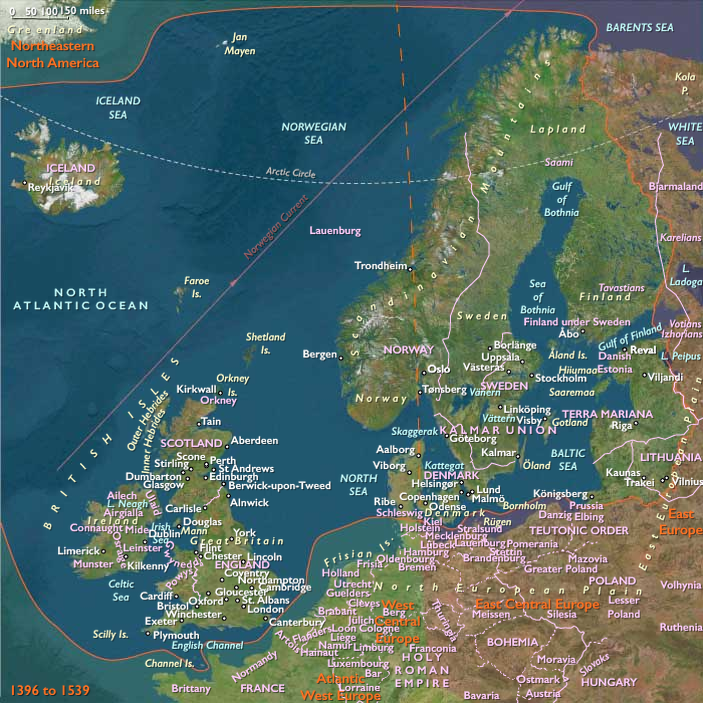
Subregions
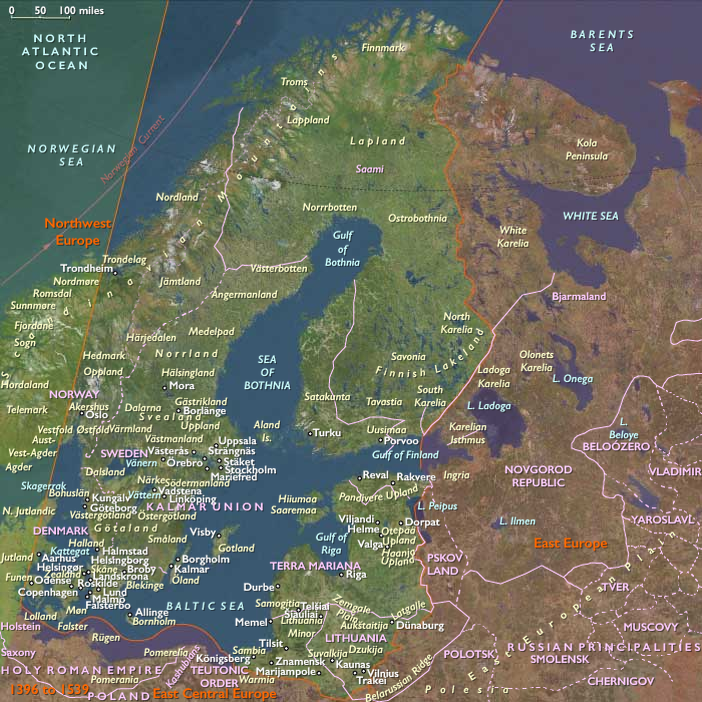
Years: 1504 - 1515
People
Groups
- Polytheism (“paganism”)
- Latvians, or Letts (Eastern Balts)
- Estonians
- Christians, Roman Catholic
- Finland under Swedish rule
- Riga, Bishopric/Archbishopric of
- Terra Mariana (Livonian Confederation)
- Livonian Order
- Teutonic Knights of Prussia, or Monastic state of the Teutonic Knights (House of the Hospitalers of Saint Mary of the Teutons in Jerusalem)
- Hanseatic League
- Crown of the Kingdom of Poland
- Poland of the Jagiellonians, Kingdom of
- Lithuania, Grand Duchy of
- Sweden, autonomous Kingdom of
- Kalmar Union (of Denmark, Norway and Sweden)
Subjects
Regions
Subregions