
Northeast Europe (1480–1491 CE): Deepening Union Fragmentation, …
Years: 1480 - 1491
Northeast Europe (1480–1491 CE): Deepening Union Fragmentation, Polish–Lithuanian Expansion, and Regional Realignments
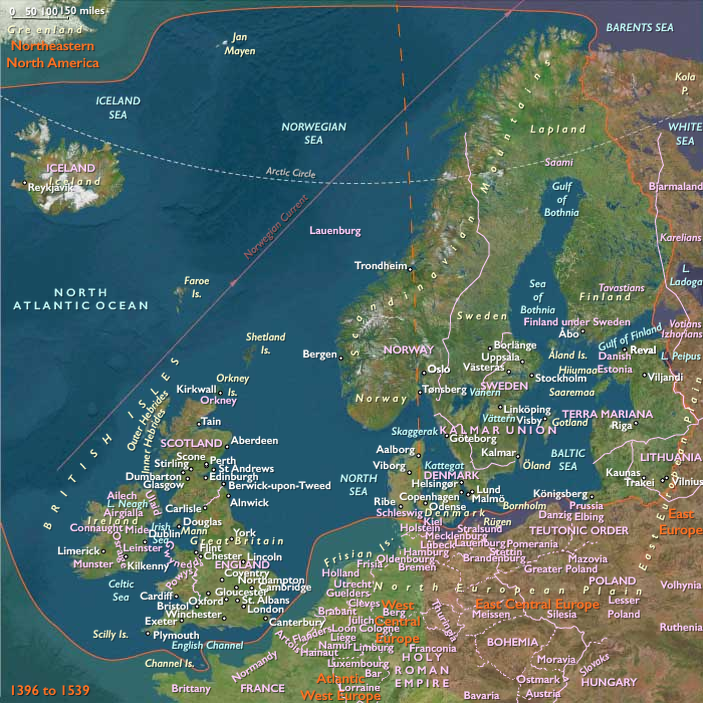
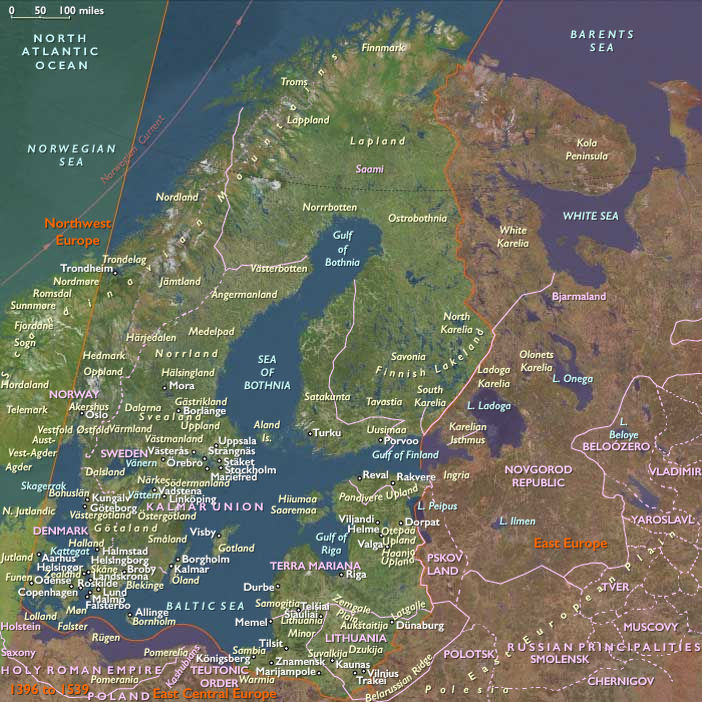
Between 1480 and 1491 CE, Northeast Europe experienced profound political transformations driven by the continued fracturing of the Kalmar Union, sustained Polish–Lithuanian ascendancy, and the ongoing decline of the Teutonic Knights. Strategic diplomatic maneuvers and emerging power dynamics reshaped the geopolitical landscape, setting the stage for critical future developments.
Accelerating Decline of the Teutonic Knights
The Teutonic Knights, severely weakened by internal discord, financial instability, and diplomatic isolation, found their influence increasingly diminished. The Order’s political and territorial control within Prussia continued to erode, facilitating further encroachments by neighboring powers, particularly the strengthening Polish–Lithuanian Union. Unable to reverse their decline, the Teutonic Knights faced intensified pressure and vulnerability during this era.
Fragmentation and Tensions within the Kalmar Union
Conflicts within the Kalmar Union deepened under Danish King John (Hans), who succeeded Christian I in 1481. His reign saw escalating disputes, particularly between Danish central authority and Swedish nobility, further fueling movements for Swedish autonomy. The resulting political instability significantly weakened the cohesion and effectiveness of the Union, increasingly pushing it toward eventual disintegration.
Polish–Lithuanian Union’s Continued Territorial Expansion
Under Casimir IV Jagiellon, the Polish–Lithuanian Union extended its territorial and political influence. Effective diplomatic initiatives and military campaigns solidified its dominance in Eastern Europe, reinforcing regional stability while significantly weakening the strategic positions of rival states, notably the Teutonic Order in Prussia.
Strategic Maneuvering of the Livonian Confederation
The Livonian Confederation, administered from its political and commercial center in Riga, continued adeptly navigating regional complexities. Enhancing its diplomatic alliances, reinforcing defensive structures, and undertaking internal administrative reforms, the Confederation maintained its autonomy and economic prosperity despite the shifting power dynamics in the region.
Continued Integration of Swedish Finland
Despite the increasing fracturing within the Kalmar Union, Sweden continued consolidating its political and administrative control over southern Finland. Investments in fortifications, ecclesiastical infrastructure, and governmental reforms further cemented Finland’s integration, ensuring sustained political and cultural alignment with Sweden amid broader regional uncertainties.
Economic Stability and Urban Prosperity
Major urban centers, including Reval (Tallinn), Riga, Königsberg, and Visby on Gotland, sustained economic growth through robust maritime commerce and expanded trade networks. These cities remained vital economic hubs, providing stability and resilience against the backdrop of political tensions and shifting alliances.
Ecclesiastical Influence and Cultural Cohesion
The significant roles of ecclesiastical institutions—especially the influential Teutonic Order and regional bishoprics—remained central to education, governance, and cultural continuity. Their continued prominence bolstered Latin Christian traditions, enhancing regional stability and identity during an era marked by geopolitical uncertainty.
Ongoing Geopolitical Realignments
Regional geopolitics remained complex, driven by the persistent tensions within the Kalmar Union, Polish–Lithuanian territorial ambitions, and the continued deterioration of the Teutonic Knights’ authority. The period was characterized by strategic diplomatic maneuvering, shifting alliances, and carefully managed conflicts, reflecting the region's intricate political dynamics.
Legacy of the Era
The period from 1480 to 1491 CE was crucial in shaping Northeast Europe’s subsequent historical trajectory, marked by deepening fragmentation within the Kalmar Union, continued expansion of the Polish–Lithuanian Union, and persistent regional economic vitality. These developments profoundly influenced future political alignments, cultural identities, and territorial configurations across Northeast Europe.
People
Groups
- Polytheism (“paganism”)
- Latvians, or Letts (Eastern Balts)
- Estonians
- Christians, Roman Catholic
- Finland under Swedish rule
- Riga, Bishopric/Archbishopric of
- Terra Mariana (Livonian Confederation)
- Livonian Order
- Teutonic Knights of Prussia, or Monastic state of the Teutonic Knights (House of the Hospitalers of Saint Mary of the Teutons in Jerusalem)
- Hanseatic League
- Crown of the Kingdom of Poland
- Poland of the Jagiellonians, Kingdom of
- Lithuania, Grand Duchy of
- Sweden, autonomous Kingdom of
- Kalmar Union (of Denmark, Norway and Sweden)
Subjects
Regions
Subregions
Years: 1480 - 1491
People
Groups
- Polytheism (“paganism”)
- Latvians, or Letts (Eastern Balts)
- Estonians
- Christians, Roman Catholic
- Finland under Swedish rule
- Riga, Bishopric/Archbishopric of
- Terra Mariana (Livonian Confederation)
- Livonian Order
- Teutonic Knights of Prussia, or Monastic state of the Teutonic Knights (House of the Hospitalers of Saint Mary of the Teutons in Jerusalem)
- Hanseatic League
- Crown of the Kingdom of Poland
- Poland of the Jagiellonians, Kingdom of
- Lithuania, Grand Duchy of
- Sweden, autonomous Kingdom of
- Kalmar Union (of Denmark, Norway and Sweden)
Subjects
Regions
Subregions