
Northeast Europe (1468–1479 CE): Internal Union Struggles, …
Years: 1468 - 1479
Northeast Europe (1468–1479 CE): Internal Union Struggles, Persistent Rivalries, and Shifting Alliances
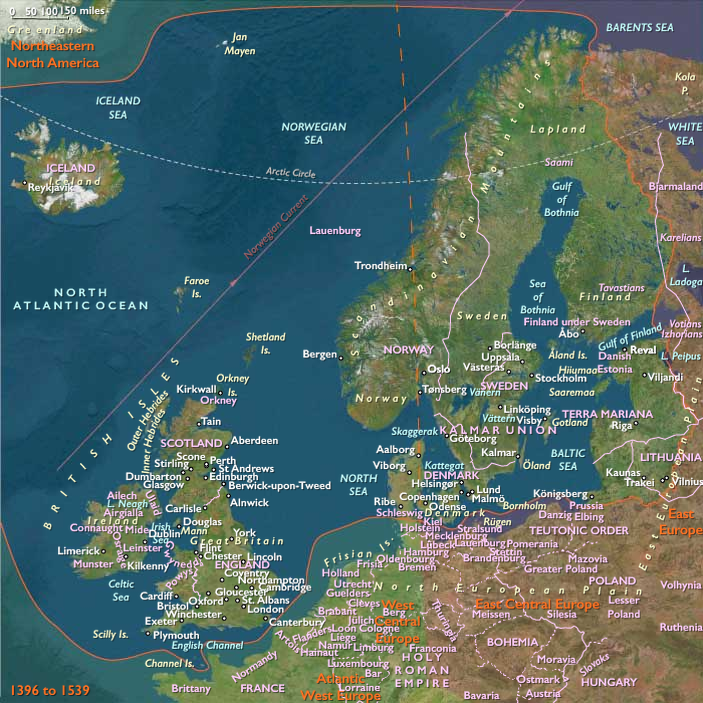
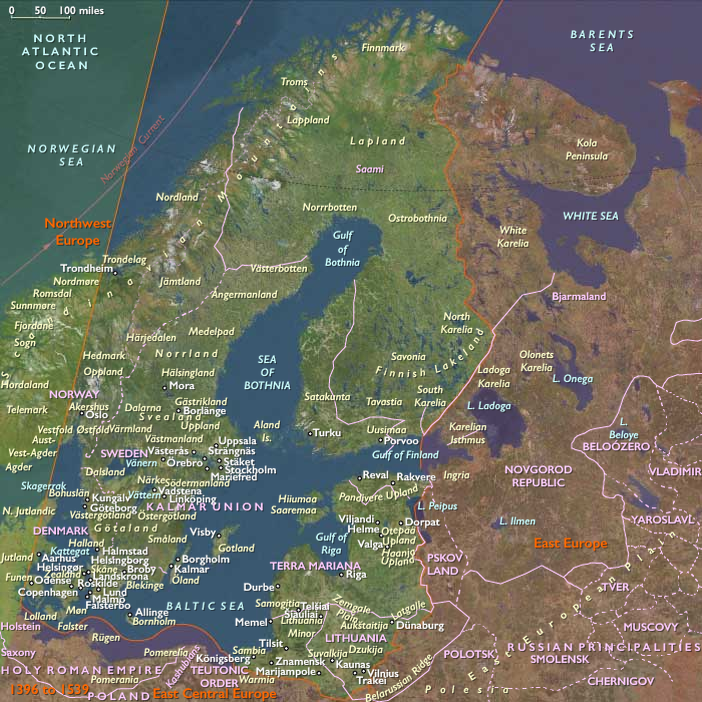
Between 1468 and 1479 CE, Northeast Europe continued experiencing internal tensions within the Kalmar Union, persistent rivalries involving the Teutonic Knights, and sustained dominance by the Polish–Lithuanian Union. Strategic realignments and diplomatic maneuvers significantly shaped the region’s political and economic landscapes, driven by key figures such as Margaret I, Christian I, and Casimir IV Jagiellon.
Teutonic Knights’ Continued Decline
The Teutonic Knights persisted in facing severe internal divisions, economic hardships, and territorial vulnerability within Prussia. Their declining military and political capabilities further limited their regional influence, making them susceptible to diplomatic pressures and territorial encroachments, particularly from Poland and Lithuania.
Escalation of Kalmar Union Conflicts
Conflicts intensified within the Kalmar Union under Danish King Christian I, who struggled to maintain unity following the precedent of centralization set by Margaret I. The Swedish nobility increasingly resisted Danish dominance, and internal autonomy movements gained significant strength, contributing to greater regional instability. This internal discord weakened the Union’s authority, setting the stage for heightened confrontations and eventual disintegration.
Polish–Lithuanian Union’s Continued Dominance
Under King Casimir IV Jagiellon, the Polish–Lithuanian Union continued solidifying its political and territorial authority. Effective diplomacy, military strength, and internal governance strategies maintained regional stability, enabling the union to extend its influence, resist external threats, and reinforce its dominant geopolitical position.
Strategic Adjustments in the Livonian Confederation
The Livonian Confederation, administered from Riga, navigated the complex geopolitical environment strategically. Strengthening fortifications, reinforcing diplomatic ties, and reforming internal governance allowed the Confederation to preserve autonomy, economic stability, and regional relevance amid external pressures.
Strengthened Swedish-Finnish Integration
Despite ongoing Union conflicts, Sweden maintained robust integration and administration of southern Finland. Reinforced defenses, administrative networks, and ecclesiastical institutions facilitated strong political, economic, and cultural alignment between Sweden and Finland, mitigating the broader tensions stemming from the Kalmar Union's instability.
Economic Growth and Urban Prosperity
Urban centers such as Reval (Tallinn), Riga, Königsberg, and Visby on Gotland continued to prosper, benefiting from robust maritime trade and expanded commercial connections. These economic hubs provided vital stability, significantly contributing to regional resilience despite the era’s political complexities.
Ecclesiastical Influence and Cultural Continuity
Ecclesiastical institutions, notably the Teutonic Order and prominent regional bishoprics, continued their essential roles in education, governance, and social stability. Their influence significantly strengthened Latin Christian traditions, contributing to cultural cohesion and regional stability amid geopolitical uncertainties.
Persistent Geopolitical Complexities
The era remained characterized by shifting geopolitical alliances, persistent regional rivalries, and diplomatic complexities. The weakening of the Teutonic Knights, the internal divisions of the Kalmar Union, and the sustained ascendancy of the Polish–Lithuanian Union necessitated ongoing diplomatic negotiations and strategic realignments.
Legacy of the Era
The period from 1468 to 1479 CE was marked by intensifying internal conflicts, continued power struggles, and strategic political realignments shaped by significant historical figures. These dynamics significantly influenced future territorial boundaries, regional political structures, and cultural identities, leaving an enduring legacy across Northeast Europe.
People
Groups
- Polytheism (“paganism”)
- Latvians, or Letts (Eastern Balts)
- Christians, Roman Catholic
- Finland under Swedish rule
- Riga, Bishopric/Archbishopric of
- Terra Mariana (Livonian Confederation)
- Livonian Order
- Teutonic Knights of Prussia, or Monastic state of the Teutonic Knights (House of the Hospitalers of Saint Mary of the Teutons in Jerusalem)
- Hanseatic League
- Crown of the Kingdom of Poland
- Poland of the Jagiellonians, Kingdom of
- Lithuania, Grand Duchy of
- Sweden, autonomous Kingdom of
- Kalmar Union (of Denmark, Norway and Sweden)
Subjects
Regions
Subregions
Years: 1468 - 1479
People
Groups
- Polytheism (“paganism”)
- Latvians, or Letts (Eastern Balts)
- Christians, Roman Catholic
- Finland under Swedish rule
- Riga, Bishopric/Archbishopric of
- Terra Mariana (Livonian Confederation)
- Livonian Order
- Teutonic Knights of Prussia, or Monastic state of the Teutonic Knights (House of the Hospitalers of Saint Mary of the Teutons in Jerusalem)
- Hanseatic League
- Crown of the Kingdom of Poland
- Poland of the Jagiellonians, Kingdom of
- Lithuania, Grand Duchy of
- Sweden, autonomous Kingdom of
- Kalmar Union (of Denmark, Norway and Sweden)
Subjects
Regions
Subregions