
Northeast Europe (1456–1467 CE): Intensifying Union Discord, …
Years: 1456 - 1467
Northeast Europe (1456–1467 CE): Intensifying Union Discord, Teutonic Decline, and Diplomatic Realignments
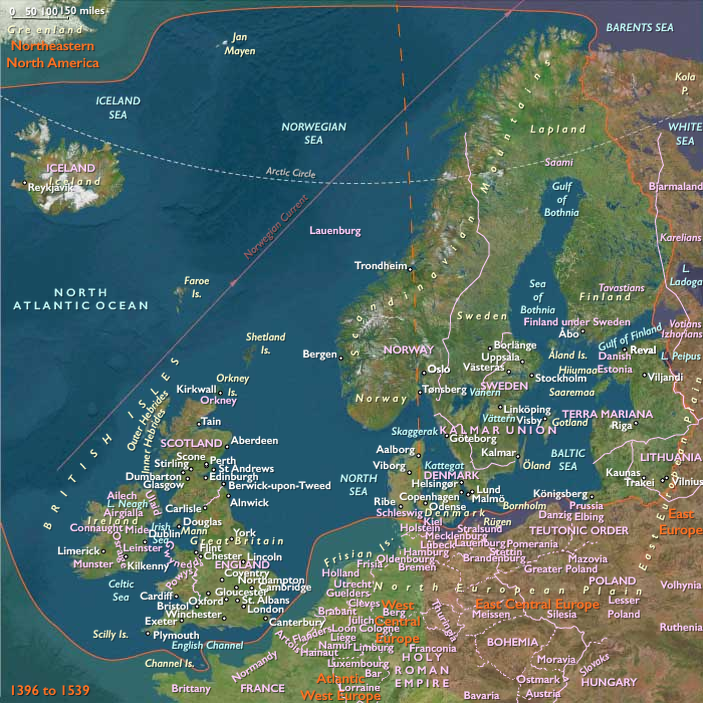
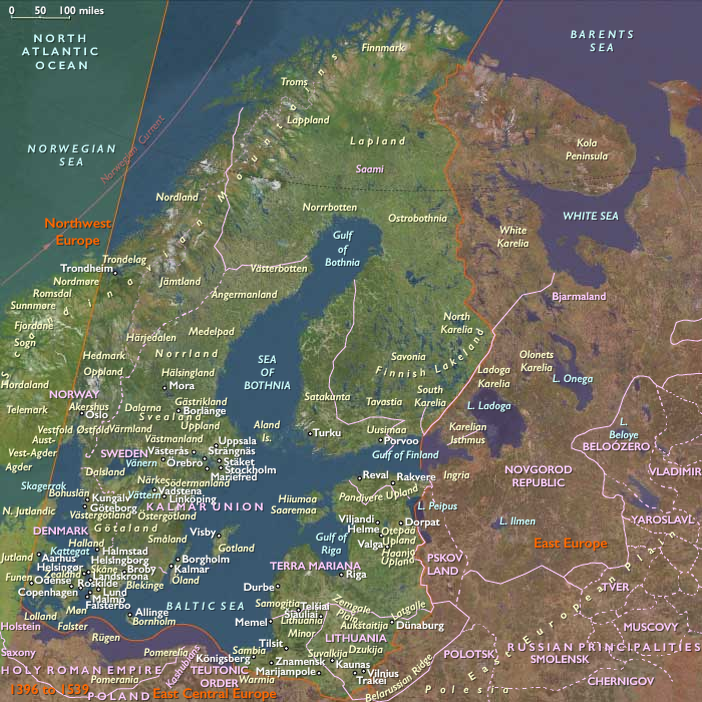
Between 1456 and 1467 CE, Northeast Europe grappled with growing internal divisions, notably within the Kalmar Union, sustained pressures upon the Teutonic Order, and increasingly assertive diplomatic and territorial moves by the Polish–Lithuanian Union. These dynamics significantly influenced the region’s political stability, economic resilience, and strategic alliances.
Increasing Strife Within the Kalmar Union
The Kalmar Union, under King Christian I, experienced escalating internal tensions as Swedish factions increasingly opposed Danish control. Swedish nobility and influential merchant groups resisted centralized authority, leading to administrative challenges, weakened governance, and persistent friction. These developments significantly undermined union cohesion, setting the stage for intensified confrontations and eventual fragmentation.
Continued Weakening of the Teutonic Order
The Teutonic Order faced ongoing internal turmoil and economic hardship, exacerbating vulnerabilities within their territories in Prussia and Estonia. Financial strain from previous conflicts and diplomatic isolation further eroded the Order’s stability and territorial integrity. Efforts to stabilize key urban centers such as Königsberg and Reval (Tallinn)only partially mitigated these pressures, leaving the Order increasingly susceptible to external encroachments, particularly from Poland-Lithuania.
Polish–Lithuanian Union's Growing Regional Influence
Under the leadership of King Casimir IV Jagiellon, the Polish–Lithuanian Union further solidified its position as a dominant regional power. Strategic diplomacy, territorial expansion, and robust military capabilities allowed Poland-Lithuania to assert increased influence, effectively countering the declining authority of the Teutonic Order and reshaping regional geopolitics.
Stability and Autonomy in the Livonian Confederation
The Livonian Confederation, governed from the economically resilient city of Riga, successfully navigated the region’s turbulent geopolitical climate. Through effective internal governance, strategic diplomacy, and fortified urban centers, the Confederation maintained its political autonomy, economic prosperity, and regional relevance.
Reinforced Swedish-Finnish Integration
Despite heightened internal tensions within the Kalmar Union, Sweden continued reinforcing its governance in southern Finland, fortifying defenses, enhancing administrative effectiveness, and expanding ecclesiastical institutions. These efforts ensured cohesive integration, political stability, and regional security, strengthening Finland’s strategic importance within Sweden's broader geopolitical interests.
Economic Prosperity in Major Urban Centers
Key cities, notably Reval (Tallinn), Riga, Königsberg, and Visby on Gotland, continued to experience significant economic growth through expanded maritime trade and commercial networks. Urban resilience provided essential regional stability, significantly offsetting ongoing political disruptions and fostering broader economic prosperity.
Ecclesiastical Influence and Cultural Continuity
Ecclesiastical institutions, particularly influential regional bishoprics and the Teutonic Order, maintained their essential roles in education, governance, and social cohesion. Continued promotion of Latin Christian traditions offered social stability, cultural continuity, and regional unity amidst broader geopolitical uncertainty.
Strategic Diplomatic Maneuvering
Diplomatic interactions among the Kalmar Union, Teutonic Order, Livonian Confederation, and Polish–Lithuanian Union remained critical. These diplomatic engagements aimed at managing territorial disputes, regional rivalries, and internal political challenges through strategic alliances, negotiations, and compromises, thereby stabilizing regional geopolitics.
Legacy of the Era
The era from 1456 to 1467 CE significantly shaped Northeast Europe’s geopolitical landscape through intensified internal union struggles, declining Teutonic influence, and sustained diplomatic realignments. These developments established patterns and tensions influencing future territorial boundaries, political structures, and regional identities, profoundly impacting Northeast Europe’s subsequent historical trajectory.
People
Groups
- Polytheism (“paganism”)
- Latvians, or Letts (Eastern Balts)
- Christians, Roman Catholic
- Finland under Swedish rule
- Riga, Bishopric/Archbishopric of
- Terra Mariana (Livonian Confederation)
- Livonian Order
- Teutonic Knights of Prussia, or Monastic state of the Teutonic Knights (House of the Hospitalers of Saint Mary of the Teutons in Jerusalem)
- Hanseatic League
- Crown of the Kingdom of Poland
- Poland of the Jagiellonians, Kingdom of
- Lithuania, Grand Duchy of
- Sweden, autonomous Kingdom of
- Kalmar Union (of Denmark, Norway and Sweden)
Subjects
Regions
Subregions
Years: 1456 - 1467
People
Groups
- Polytheism (“paganism”)
- Latvians, or Letts (Eastern Balts)
- Christians, Roman Catholic
- Finland under Swedish rule
- Riga, Bishopric/Archbishopric of
- Terra Mariana (Livonian Confederation)
- Livonian Order
- Teutonic Knights of Prussia, or Monastic state of the Teutonic Knights (House of the Hospitalers of Saint Mary of the Teutons in Jerusalem)
- Hanseatic League
- Crown of the Kingdom of Poland
- Poland of the Jagiellonians, Kingdom of
- Lithuania, Grand Duchy of
- Sweden, autonomous Kingdom of
- Kalmar Union (of Denmark, Norway and Sweden)
Subjects
Regions
Subregions