
Northeast Europe (1444–1455 CE): Union Struggles, Territorial …
Years: 1444 - 1455
Northeast Europe (1444–1455 CE): Union Struggles, Territorial Adjustments, and Diplomatic Maneuvers
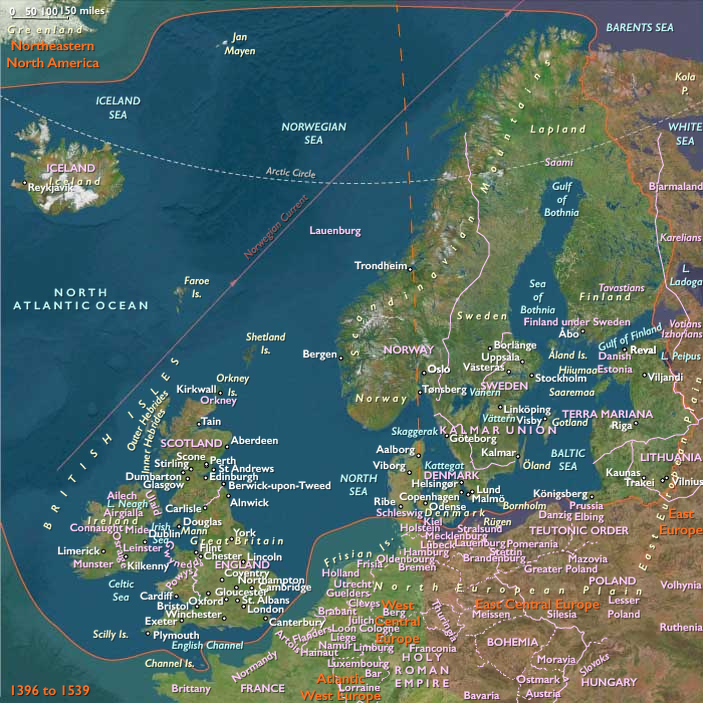
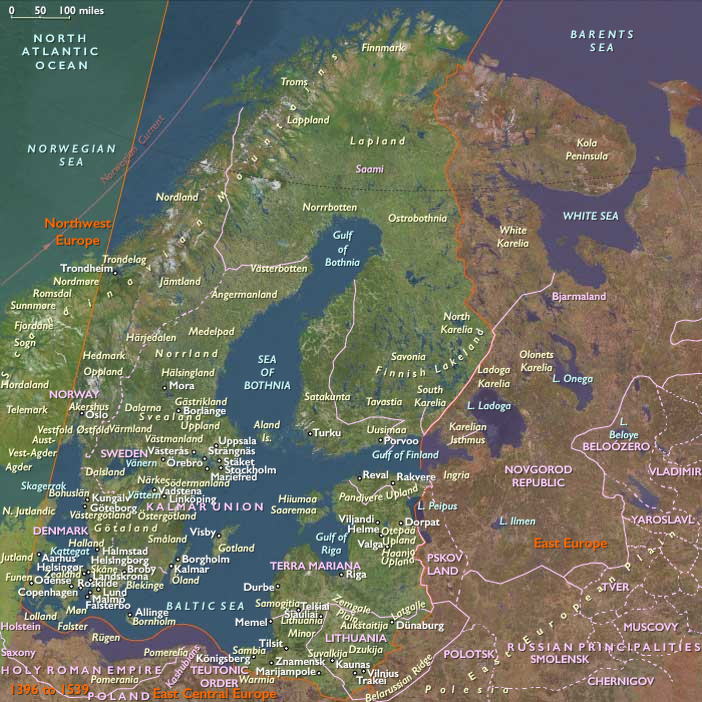
Between 1444 and 1455 CE, Northeast Europe faced ongoing internal tensions within the Kalmar Union, territorial shifts involving the Teutonic Order, and continued geopolitical repositioning among regional powers. Diplomatic engagements and persistent economic resilience significantly shaped the period, laying critical groundwork for future developments.
Internal Tensions and Leadership Changes within the Kalmar Union
During this period, internal strains within the Kalmar Union intensified significantly. The deposition of King Eric of Pomerania in 1439 led to continued political uncertainties and power struggles within the Union. The election of Christopher of Bavaria in 1440 brought temporary stability; however, his reign, lasting until 1448, was marked by unresolved tensions, notably from the Swedish nobility advocating for greater autonomy and lessened Danish influence. Following Christopher's death in 1448, the ascension of Christian I of Oldenburg further reshaped Union dynamics, as internal divisions persisted and political cohesion remained tenuous.
Diplomatic Maneuvers by the Teutonic Order
The Teutonic Order continued its efforts to stabilize territories in Prussia and Estonia, confronting ongoing pressures from the neighboring Polish–Lithuanian Union. Diplomatic initiatives, territorial governance reforms, and fortifications in key centers such as Königsberg and Reval (Tallinn) were critical measures undertaken by the Order, reflecting a strategy focused on maintaining territorial integrity and regional influence despite persistent vulnerabilities.
Livonian Confederation's Economic and Political Stability
The Livonian Confederation, governed from the thriving trade city of Riga, successfully preserved its political autonomy and economic strength. Effective internal governance, strategic diplomacy, and robust trade networks allowed it to navigate complex regional rivalries effectively, reinforcing its status as a stable, prosperous political entity amidst regional uncertainties.
Strengthened Swedish Governance in Finland
Despite internal Union tensions, Sweden reinforced its administrative control and integration of southern Finland, enhancing defensive structures, local governance, and ecclesiastical influence. The sustained focus on regional stability and cohesion underscored Finland’s significance within Sweden’s broader geopolitical and strategic interests.
Economic Stability in Major Urban Centers
Urban centers such as Reval (Tallinn), Riga, Königsberg, and Visby on Gotland continued to prosper, driven by steady maritime trade and expanding commercial networks. Urban governance reforms, merchant activities, and trade stability facilitated broader regional economic resilience despite ongoing political complexities.
Ecclesiastical Institutions and Cultural Cohesion
Ecclesiastical institutions, notably regional bishoprics and the influential Teutonic Order, remained central in maintaining social stability, cultural cohesion, and educational continuity. Their consistent promotion of Latin Christian traditions provided regional stability, reinforcing cohesive social structures during times of political uncertainty.
Strategic Diplomacy and Regional Realignments
Diplomatic interactions remained crucial in managing territorial disputes, internal political tensions, and regional rivalries. Strategic alliances, negotiations, and temporary agreements characterized diplomatic activity among the Kalmar Union members, the Teutonic Order, the Livonian Confederation, and the Polish–Lithuanian Union, reflecting ongoing geopolitical realignments.
Legacy of the Era
The era from 1444 to 1455 CE significantly shaped Northeast Europe's geopolitical trajectory through intensified internal conflicts within political unions, ongoing territorial and diplomatic adjustments, and sustained economic and cultural resilience. These developments influenced subsequent territorial alignments, political structures, and cultural identities, establishing patterns and challenges that would define Northeast Europe’s subsequent historical course.
People
Groups
- Polytheism (“paganism”)
- Latvians, or Letts (Eastern Balts)
- Estonians
- Christians, Roman Catholic
- Finland under Swedish rule
- Riga, Bishopric/Archbishopric of
- Terra Mariana (Livonian Confederation)
- Livonian Order
- Teutonic Knights of Prussia, or Monastic state of the Teutonic Knights (House of the Hospitalers of Saint Mary of the Teutons in Jerusalem)
- Hanseatic League
- Crown of the Kingdom of Poland
- Poland of the Jagiellonians, Kingdom of
- Lithuania, Grand Duchy of
- Sweden, autonomous Kingdom of
- Kalmar Union (of Denmark, Norway and Sweden)
Subjects
Regions
Subregions
Related Events
Showing 2 events out of 2 total
Years: 1444 - 1455
People
Groups
- Polytheism (“paganism”)
- Latvians, or Letts (Eastern Balts)
- Estonians
- Christians, Roman Catholic
- Finland under Swedish rule
- Riga, Bishopric/Archbishopric of
- Terra Mariana (Livonian Confederation)
- Livonian Order
- Teutonic Knights of Prussia, or Monastic state of the Teutonic Knights (House of the Hospitalers of Saint Mary of the Teutons in Jerusalem)
- Hanseatic League
- Crown of the Kingdom of Poland
- Poland of the Jagiellonians, Kingdom of
- Lithuania, Grand Duchy of
- Sweden, autonomous Kingdom of
- Kalmar Union (of Denmark, Norway and Sweden)
Subjects
Regions
Subregions