
Northeast Europe (1432–1443 CE): Union Instability, Internal …
Years: 1432 - 1443
Northeast Europe (1432–1443 CE): Union Instability, Internal Rebellions, and Shifting Regional Dynamics
Between 1432 and 1443 CE, Northeast Europe faced growing internal tensions within the Kalmar Union, regional consolidation following previous conflicts, and persistent diplomatic maneuvering. This era was marked by internal rebellions, particularly in Sweden, continued diplomatic efforts involving the Teutonic Order and the Polish–Lithuanian Union, and resilient economic stability across major urban centers.
Engelbrekt Rebellion and Kalmar Union Tensions
A significant internal crisis emerged within the Kalmar Union, led by the Swedish nobleman Engelbrekt Engelbrektsson, whose rebellion from 1434 to 1436 arose from grievances against centralized Danish rule under Eric of Pomerania. Engelbrekt’s movement reflected broader discontent among the Swedish nobility and peasantry, challenging the Union's authority and leading to temporary decentralization and substantial administrative adjustments. Although the rebellion itself was eventually suppressed, it revealed deep-seated internal fractures that persisted beyond this period.
Ongoing Diplomacy and Teutonic Order Adjustments
The Teutonic Order, weakened by earlier defeats and territorial losses, continued navigating diplomatic complexities to maintain stability within its territories, notably Prussia and Estonia. Efforts to rebuild internal governance, enhance regional fortifications in cities such as Königsberg and Reval (Tallinn), and diplomatic negotiations with neighboring powers, particularly the Polish–Lithuanian Union, characterized this period. Despite lingering vulnerabilities, these measures provided a measure of regional equilibrium.
Stability and Autonomy of the Livonian Confederation
The Livonian Confederation, administered from Riga, successfully maintained its autonomy and economic resilience. Robust trade networks and strategic diplomacy allowed the Confederation to preserve internal stability and economic vitality despite surrounding political turbulence. Its continued prosperity reinforced its position as a significant player in regional trade and diplomacy.
Continued Swedish Governance in Finland
Despite internal strife within the broader Kalmar Union, Sweden maintained steady governance and defensive integration in southern Finland. Strengthened fortifications, administrative institutions, and ecclesiastical influence ensured sustained political cohesion and cultural integration, further solidifying Finland’s strategic importance within the Swedish realm.
Economic Stability in Major Urban Centers
Urban centers such as Reval (Tallinn), Riga, Königsberg, and Visby on Gotland continued to thrive economically, supported by strong maritime trade, expanding commercial networks, and effective urban governance. This economic resilience significantly contributed to broader regional stability amidst ongoing political disruptions.
Ecclesiastical Influence and Cultural Continuity
Ecclesiastical institutions, including influential regional bishoprics and the Teutonic Order, remained central in maintaining social stability, promoting educational initiatives, and reinforcing cultural continuity. Their consistent support of Latin Christian traditions provided cohesive stability across diverse communities.
Strategic Diplomacy Amid Regional Rivalries
Diplomatic initiatives among regional powers, notably involving the Kalmar Union, Teutonic Order, Livonian Confederation, and Polish–Lithuanian Union, remained crucial. Diplomacy emphasized careful strategic negotiation, conflict management, and territorial stabilization, helping to navigate ongoing regional rivalries effectively.
Legacy of the Era
The era from 1432 to 1443 CE significantly influenced Northeast Europe's future by highlighting the inherent fragility of political unions, the persistence of regional autonomy movements, and the enduring importance of strategic diplomacy. These developments shaped subsequent territorial alignments, political structures, and regional identities, leaving a lasting impact on Northeast Europe’s historical trajectory.
People
Groups
- Polytheism (“paganism”)
- Latvians, or Letts (Eastern Balts)
- Christians, Roman Catholic
- Finland under Swedish rule
- Riga, Bishopric/Archbishopric of
- Terra Mariana (Livonian Confederation)
- Livonian Order
- Teutonic Knights of Prussia, or Monastic state of the Teutonic Knights (House of the Hospitalers of Saint Mary of the Teutons in Jerusalem)
- Hanseatic League
- Crown of the Kingdom of Poland
- Poland of the Jagiellonians, Kingdom of
- Lithuania, Grand Duchy of
- Sweden, autonomous Kingdom of
- Kalmar Union (of Denmark, Norway and Sweden)
Subjects
Regions
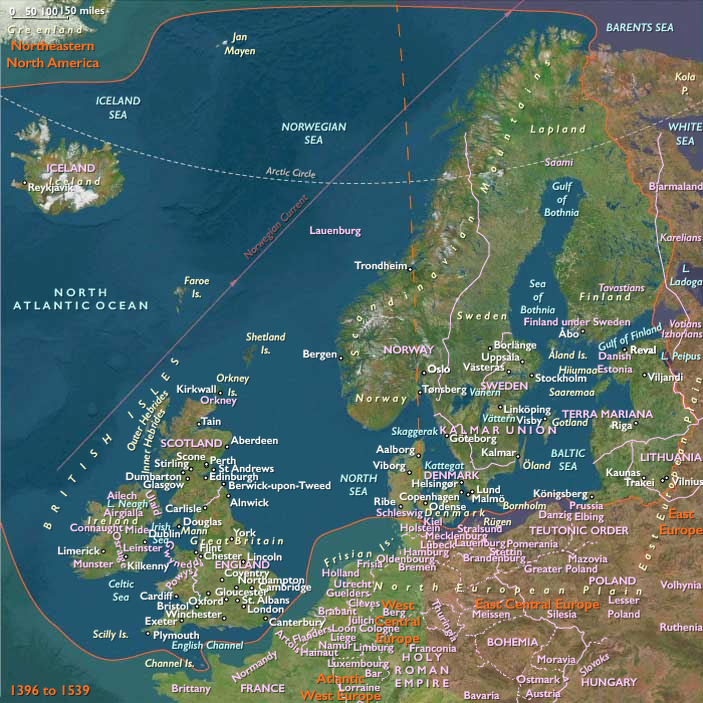
Subregions
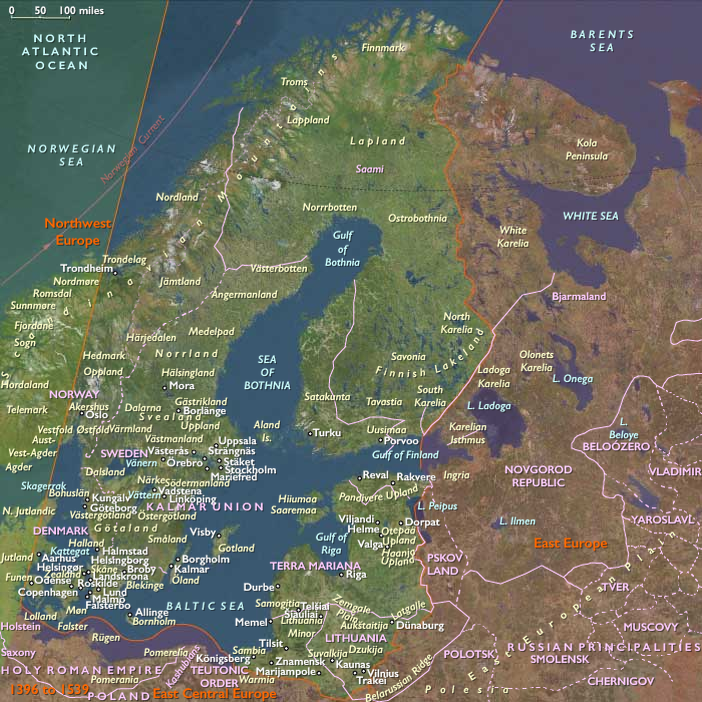
Related Events
Showing 10 events out of 42013 total
Years: 1432 - 1443
People
Groups
- Polytheism (“paganism”)
- Latvians, or Letts (Eastern Balts)
- Christians, Roman Catholic
- Finland under Swedish rule
- Riga, Bishopric/Archbishopric of
- Terra Mariana (Livonian Confederation)
- Livonian Order
- Teutonic Knights of Prussia, or Monastic state of the Teutonic Knights (House of the Hospitalers of Saint Mary of the Teutons in Jerusalem)
- Hanseatic League
- Crown of the Kingdom of Poland
- Poland of the Jagiellonians, Kingdom of
- Lithuania, Grand Duchy of
- Sweden, autonomous Kingdom of
- Kalmar Union (of Denmark, Norway and Sweden)
Subjects
Regions
Subregions