
Northeast Europe (1408–1419 CE): Decisive Conflicts, Kalmar …
Years: 1408 - 1419
Northeast Europe (1408–1419 CE): Decisive Conflicts, Kalmar Unity, and the Lithuanian-Polish Triumph
Introduction
Between 1408 and 1419 CE, Northeast Europe entered a period of intense geopolitical and military confrontation, prominently featuring the culmination of conflicts between the Teutonic Knights and the Polish-Lithuanian Union. Simultaneously, the Kalmar Union solidified internal cohesion under Eric of Pomerania, stabilizing the Scandinavian political landscape. These years saw decisive battles, diplomatic realignments, and significant shifts in regional power dynamics.
The Polish–Lithuanian–Teutonic War (1409–1411)
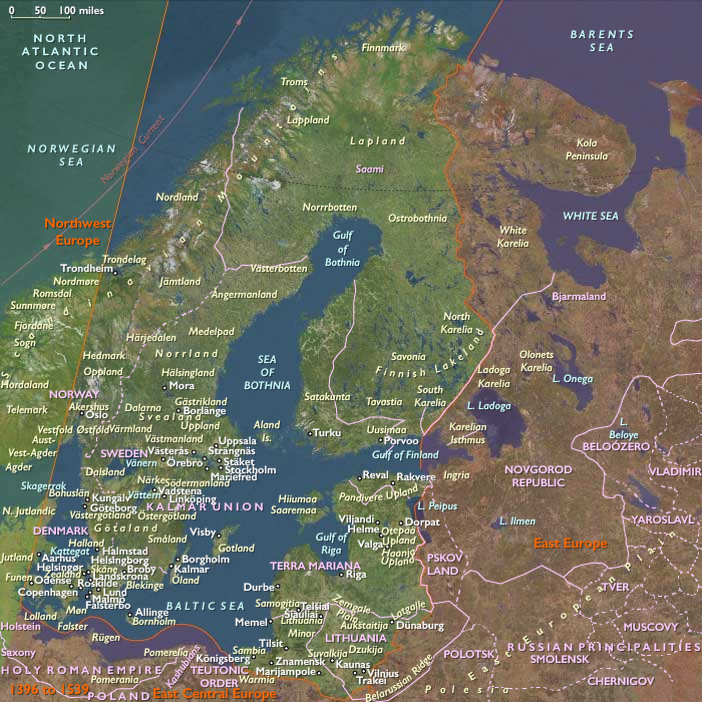
The Polish–Lithuanian–Teutonic War, also known as the Great War, erupted between 1409 and 1411, sparked by a local Samogitian uprising and subsequent Teutonic invasion of Poland in August 1409. Neither side was fully prepared for prolonged conflict, prompting Wenceslaus, King of the Romans, to broker a nine-month truce. After the truce expired in June 1410, the conflict culminated in the decisive Battle of Grunwald (Tannenberg), one of medieval Europe's largest engagements. Most of the Teutonic leadership, including Grand Master Ulrich von Jungingen, were either killed or captured.
Despite this crushing defeat, the Teutonic Knights successfully resisted a siege on their capital, Marienburg (Malbork), ultimately sustaining only minor territorial concessions in the Peace of Thorn (1411). Nevertheless, the war left the Order significantly weakened, financially burdened by war reparations, and plagued by internal conflict and economic decline. Territorial disputes persisted until the Peace of Melno (1422), but the Order never fully recovered its previous power, allowing the Polish–Lithuanian Union to emerge as the dominant regional power.
The Hunger War of 1414
In 1414, tensions resurfaced with the outbreak of the Hunger War (Famine War), a brief conflict driven by unresolved territorial disputes. Characterized by destructive scorched-earth tactics, the war concluded without major political outcomes but severely impacted the population. Famine and plague ravaged Prussia, further crippling the Teutonic Order. Chronicler Johann von Posilge reported that eighty-six knights of the Teutonic Order perished from plague in the war’s aftermath, a heavy toll compared to the approximately four hundred knights who had fallen at Grunwald.
Stability and Prosperity within the Kalmar Union
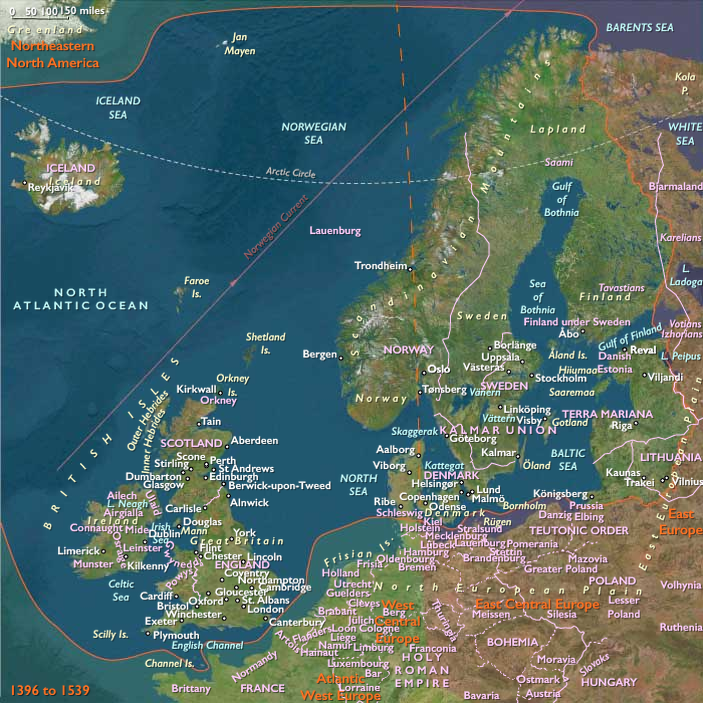
The Kalmar Union, under King Eric of Pomerania, strengthened its political and administrative structures during this period. Stability and centralized authority improved governance across the member kingdoms of Denmark, Norway, and Sweden, enhancing economic coordination, maritime trade, and internal peace.
Danish-controlled Estonia, administered from Reval (Tallinn) and centered around the fortress of Castrum Danorum atop Toompea Hill, remained relatively stable and economically prosperous, benefiting from improved maritime trade routes and strengthened fortifications.
Livonian Confederation's Adjustments
The Livonian Confederation, with its administrative center in Riga, adjusted strategically to the changing regional power dynamics. The Confederation strengthened diplomatic ties, improved its defensive capabilities, and maintained robust commercial networks, thereby ensuring internal stability and continued regional significance despite upheavals experienced by its Prussian counterparts.
Swedish Control and Finnish Integration
Within the framework of the broader Kalmar Union, Sweden further integrated Finland politically, culturally, and economically. Southern Finnish territories saw the reinforcement of defensive fortifications, expanded ecclesiastical influence, and strengthened administrative structures, solidifying their distinct alignment with Swedish governance.
Economic and Urban Growth
Economic prosperity advanced substantially during this era. Major cities, notably Reval (Tallinn), Riga, Königsberg, and Visby on the island of Gotland, thrived as commercial and cultural hubs. Maritime commerce flourished, linking Northeast Europe with broader European markets, and enhancing economic stability throughout the region.
Ecclesiastical Influence and Cultural Integration
Ecclesiastical institutions, particularly the influential Teutonic Order and local bishoprics, remained significant agents of social stability, education, and cultural integration. Monastic establishments played critical roles in fostering Latin Christian identity, shaping educational structures, and promoting regional cohesion amidst geopolitical upheavals.
Heightened Regional Geopolitical Complexity
The dramatic reshuffling of power post-Grunwald significantly reshaped regional alliances and diplomatic strategies. Continued tensions between the Lithuanian-Polish Union and the weakened Teutonic Order, coupled with the Kalmar Union's consolidation, resulted in an era of strategic complexity characterized by shifting alliances and careful diplomatic maneuvering.
Legacy of the Era
The period from 1408 to 1419 CE marked a turning point in Northeast European history, underscored by the Lithuanian-Polish victory at Grunwald, the decline of Teutonic authority, and reinforced stability under the Kalmar Union. These critical events and transformations profoundly influenced regional politics, territorial boundaries, and cultural identities, shaping Northeast Europe's historical trajectory for centuries to follow.
People
Groups
- Polytheism (“paganism”)
- Latvians, or Letts (Eastern Balts)
- Christians, Roman Catholic
- Finland under Swedish rule
- Riga, Bishopric/Archbishopric of
- Terra Mariana (Livonian Confederation)
- Livonian Order
- Teutonic Knights of Prussia, or Monastic state of the Teutonic Knights (House of the Hospitalers of Saint Mary of the Teutons in Jerusalem)
- Hanseatic League
- Crown of the Kingdom of Poland
- Poland of the Jagiellonians, Kingdom of
- Lithuania, Grand Duchy of
- Sweden, autonomous Kingdom of
- Kalmar Union (of Denmark, Norway and Sweden)
Topics
Commodoties
Subjects
Regions
Subregions
Related Events
Showing 10 events out of 42493 total
Years: 1408 - 1419
People
Groups
- Polytheism (“paganism”)
- Latvians, or Letts (Eastern Balts)
- Christians, Roman Catholic
- Finland under Swedish rule
- Riga, Bishopric/Archbishopric of
- Terra Mariana (Livonian Confederation)
- Livonian Order
- Teutonic Knights of Prussia, or Monastic state of the Teutonic Knights (House of the Hospitalers of Saint Mary of the Teutons in Jerusalem)
- Hanseatic League
- Crown of the Kingdom of Poland
- Poland of the Jagiellonians, Kingdom of
- Lithuania, Grand Duchy of
- Sweden, autonomous Kingdom of
- Kalmar Union (of Denmark, Norway and Sweden)
Topics
Commodoties
Subjects
Regions
Subregions