
Northeast Europe (1372–1383 CE): Diplomatic Realignments, Regional …
Years: 1372 - 1383
Northeast Europe (1372–1383 CE): Diplomatic Realignments, Regional Stability, and Economic Resurgence
Between 1372 and 1383 CE, Northeast Europe continued its trajectory toward regional stability, following the severe disruptions caused by earlier demographic crises. The Teutonic Order strengthened its territorial holdings, diplomatic interactions among Scandinavian powers intensified, and economic revival gained momentum, shaping the region's political and economic landscape.
Teutonic Order’s Strengthened Control in Estonia and Prussia
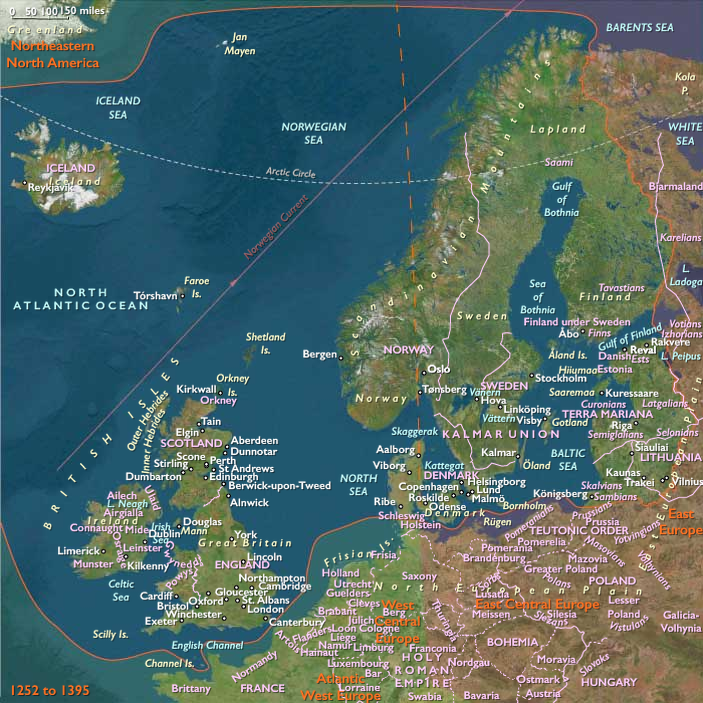
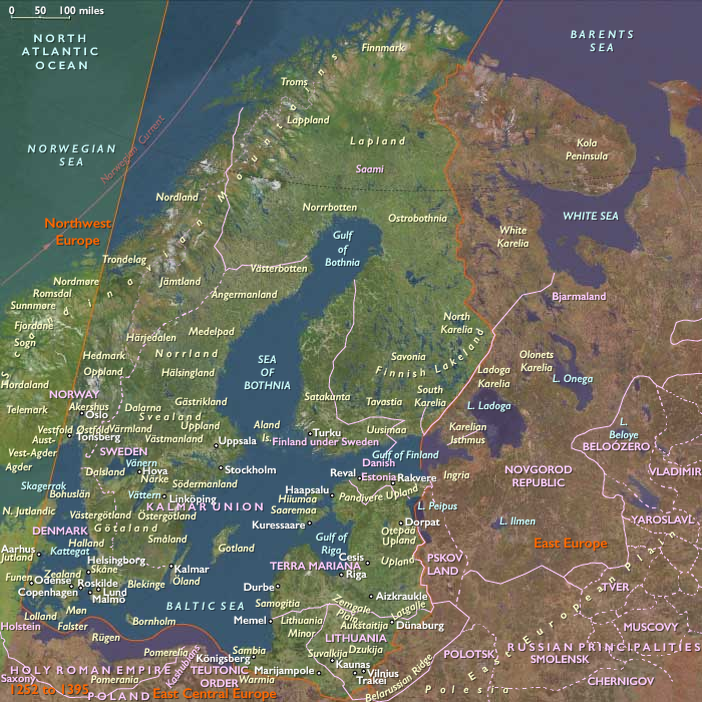
During this period, the Teutonic Order continued consolidating its authority in the recently acquired territory of Estonia (1346). The administrative center of Reval (Tallinn) saw significant military and administrative enhancements, notably on fortified Toompea Hill. Similarly, in Prussia, the Order reinforced its governance structures and fortified cities such as Königsberg, enhancing its political and economic presence across the region.
Diplomatic Foundations Among Scandinavian Powers
Diplomatic engagement among the Scandinavian kingdoms of Denmark, Norway, and Sweden intensified, driven by mutual interests in economic cooperation, maritime trade, and collective security. These ongoing discussions established foundational diplomatic patterns that would later culminate in the Kalmar Union. Strategic considerations, such as countering external threats and promoting internal stability, motivated these initial diplomatic overtures.
Continued Swedish Integration and Administration in Finland
Sweden expanded its efforts to integrate southern Finland politically, economically, and culturally. By reinforcing strategic fortifications, ecclesiastical institutions, and administrative systems, Sweden ensured robust defense and coherent governance in Finnish territories, further solidifying regional stability and cultural integration.
Stability and Prosperity in the Livonian Confederation
The Livonian Confederation, centered in the economically vibrant city of Riga, continued to successfully navigate regional complexities through effective diplomacy, fortified urban defenses, and internal administrative reforms. Leveraging its strategic location for maritime trade, the Confederation maintained economic prosperity and political autonomy, effectively balancing relationships with neighboring powers.
Economic Resurgence in Major Urban Centers
Urban centers, notably Reval (Tallinn), Riga, Königsberg, and Visby on Gotland, experienced sustained economic growth through revitalized trade networks and merchant activities. Maritime commerce expanded significantly, helping cities rebound from prior disruptions and strengthening regional economic stability.
Ecclesiastical Institutions and Cultural Cohesion
Influential ecclesiastical institutions, notably the Teutonic Order and regional bishoprics, remained critical to the region’s social, educational, and cultural continuity. These institutions upheld Latin Christian traditions, supported education and social welfare, and provided cohesive structures during a period of broader geopolitical changes.
Strategic Geopolitical Realignments
Diplomatic engagements and shifting alliances characterized geopolitical interactions across Northeast Europe. The Teutonic Order, Scandinavian kingdoms, and the Livonian Confederation engaged in strategic diplomacy, seeking equilibrium amidst complex regional rivalries and internal challenges. This diplomacy was essential in maintaining regional stability and shaping future political alignments.
Legacy of the Era
The era from 1372 to 1383 CE marked continued territorial consolidation, increased diplomatic interaction, sustained economic revival, and strengthened regional integration. These developments significantly influenced the region’s political structures, economic foundations, and cultural identities, laying critical groundwork for subsequent historical progress in Northeast Europe.
Groups
- Polytheism (“paganism”)
- Latvians, or Letts (Eastern Balts)
- Denmark, Kingdom of
- Norway, independent Kingdom of
- Hanseatic league (informally organized)
- Sweden, Kingdom of
- Christians, Roman Catholic
- Finland under Swedish rule
- Riga, Bishopric/Archbishopric of
- Terra Mariana (Livonian Confederation)
- Livonian Order
- Lithuania, Grand Duchy of
- Teutonic Knights of Prussia, or Monastic state of the Teutonic Knights (House of the Hospitalers of Saint Mary of the Teutons in Jerusalem)
- Denmark, Kingdom of (Personal Union of Denmark and Norway)
Commodoties
Subjects
Regions
Subregions
Related Events
Showing 10 events out of 27 total
Years: 1372 - 1383
Groups
- Polytheism (“paganism”)
- Latvians, or Letts (Eastern Balts)
- Denmark, Kingdom of
- Norway, independent Kingdom of
- Hanseatic league (informally organized)
- Sweden, Kingdom of
- Christians, Roman Catholic
- Finland under Swedish rule
- Riga, Bishopric/Archbishopric of
- Terra Mariana (Livonian Confederation)
- Livonian Order
- Lithuania, Grand Duchy of
- Teutonic Knights of Prussia, or Monastic state of the Teutonic Knights (House of the Hospitalers of Saint Mary of the Teutons in Jerusalem)
- Denmark, Kingdom of (Personal Union of Denmark and Norway)
Commodoties
Subjects
Regions
Subregions