
Northeast Europe (1360–1371 CE): Territorial Consolidation, Economic …
Years: 1360 - 1371
Northeast Europe (1360–1371 CE): Territorial Consolidation, Economic Revival, and Diplomatic Initiatives
Between 1360 and 1371 CE, Northeast Europe witnessed significant territorial consolidation by regional powers, gradual economic revival following the devastations of the Black Death, and early diplomatic movements toward stronger regional alliances. The period was marked by strengthened administration by the Teutonic Order, continued Swedish governance in Finland, and ongoing economic and political stability within the Livonian Confederation.
Consolidation of Teutonic Rule in Estonia and Prussia
The Teutonic Order firmly established its administration in Estonia, which had been acquired from Denmark in 1346. They strengthened strategic sites such as Reval (Tallinn), particularly enhancing fortifications on Toompea Hill. In Prussia, the Order reinforced governance and defense structures, notably in major urban centers like Königsberg, solidifying their regional influence and facilitating economic recovery.
Early Diplomatic Steps Toward Scandinavian Unity
During this era, the kingdoms of Denmark, Norway, and Sweden increased diplomatic interactions to address common economic and security concerns. These early discussions began to lay critical groundwork for what would eventually become the Kalmar Union, driven by the need to counter external threats, stabilize internal politics, and improve economic cooperation, particularly regarding trade and maritime security.
Swedish Integration of Finland
Sweden continued its steady integration and administrative reinforcement of southern Finland. Efforts included building and enhancing fortifications, expanding ecclesiastical and educational institutions, and improving governance frameworks. This integration fostered political cohesion, cultural alignment, and defensive resilience against potential external threats from Eastern Baltic neighbors.
Stability within the Livonian Confederation
The Livonian Confederation, governed from the influential trade hub of Riga, maintained political autonomy and economic resilience. Its strategic location supported the Confederation’s robust maritime trade network, ensuring sustained prosperity. Diplomatic and administrative reforms allowed it to navigate regional challenges successfully and maintain a balanced position between competing powers.
Economic Revival and Urban Prosperity
Major cities, including Reval (Tallinn), Riga, Königsberg, and Visby on Gotland, experienced economic recovery through revived trade and commerce. Strengthened merchant guilds, expanded maritime activity, and enhanced urban governance enabled economic growth, contributing to regional stability and prosperity.
Ecclesiastical Influence and Cultural Stability
Ecclesiastical institutions, particularly the Teutonic Order and regional bishoprics, remained influential. They played central roles in education, cultural continuity, and social governance, fostering cohesion through Latin Christian traditions, and providing stability in the aftermath of the Black Death’s disruptions.
Strategic Diplomacy and Regional Alliances
Geopolitical stability in this period hinged upon diplomatic interactions among regional powers, including the Teutonic Order, Scandinavian kingdoms, and Livonian Confederation. Diplomatic engagements involved careful negotiation, balancing interests, and laying the foundations for broader regional cooperation and unity.
Legacy of the Era
The years 1360–1371 CE significantly shaped Northeast Europe's political, economic, and cultural landscape. Territorial consolidation by the Teutonic Order, strategic diplomacy among Scandinavian kingdoms, sustained economic revival, and enhanced regional cohesion established enduring patterns of governance, diplomacy, and cooperation, influencing Northeast Europe's future trajectory profoundly.
Groups
- Polytheism (“paganism”)
- Latvians, or Letts (Eastern Balts)
- Denmark, Kingdom of
- Norway, independent Kingdom of
- Hanseatic league (informally organized)
- Sweden, Kingdom of
- Christians, Roman Catholic
- Finland under Swedish rule
- Riga, Bishopric/Archbishopric of
- Terra Mariana (Livonian Confederation)
- Livonian Order
- Lithuania, Grand Duchy of
- Teutonic Knights of Prussia, or Monastic state of the Teutonic Knights (House of the Hospitalers of Saint Mary of the Teutons in Jerusalem)
Commodoties
Subjects
Regions
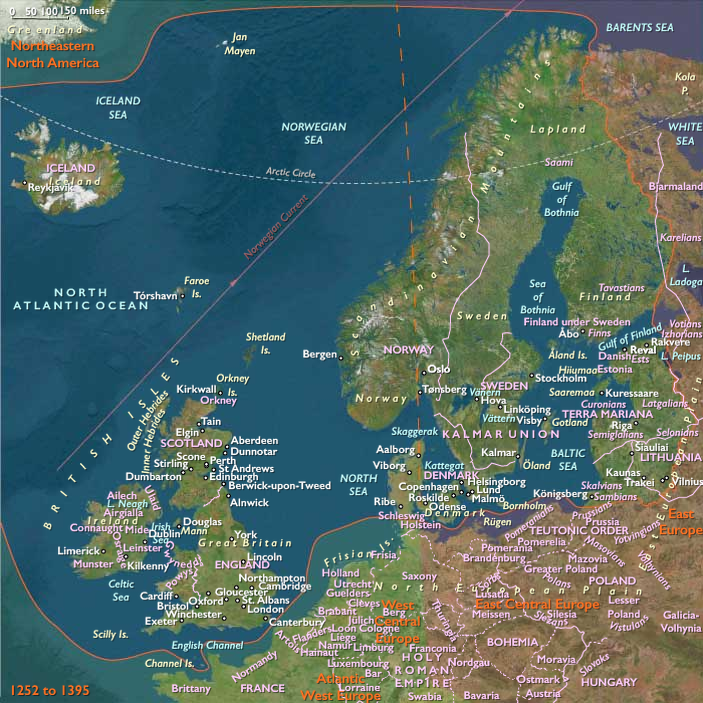
Subregions
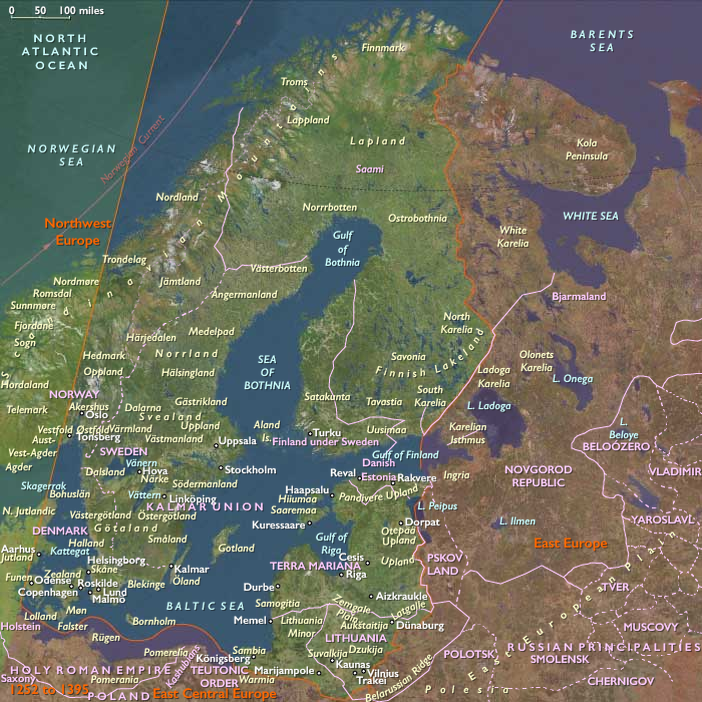
Years: 1360 - 1371
Groups
- Polytheism (“paganism”)
- Latvians, or Letts (Eastern Balts)
- Denmark, Kingdom of
- Norway, independent Kingdom of
- Hanseatic league (informally organized)
- Sweden, Kingdom of
- Christians, Roman Catholic
- Finland under Swedish rule
- Riga, Bishopric/Archbishopric of
- Terra Mariana (Livonian Confederation)
- Livonian Order
- Lithuania, Grand Duchy of
- Teutonic Knights of Prussia, or Monastic state of the Teutonic Knights (House of the Hospitalers of Saint Mary of the Teutons in Jerusalem)
Commodoties
Subjects
Regions
Subregions