
Northeast Europe (1300–1311 CE): Stabilization of Crusader …
Years: 1300 - 1311
Northeast Europe (1300–1311 CE): Stabilization of Crusader Authority, Lithuanian Resistance, and Cultural Transformation
Introduction
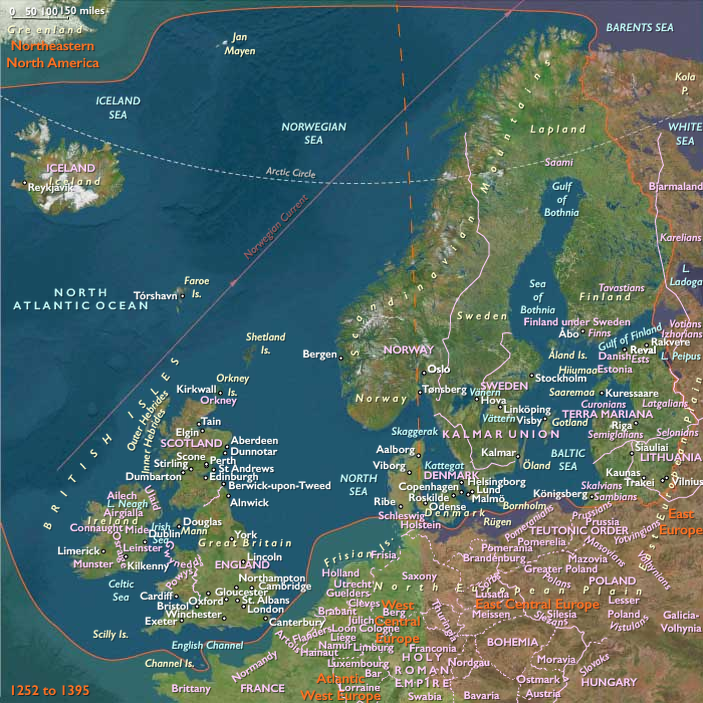
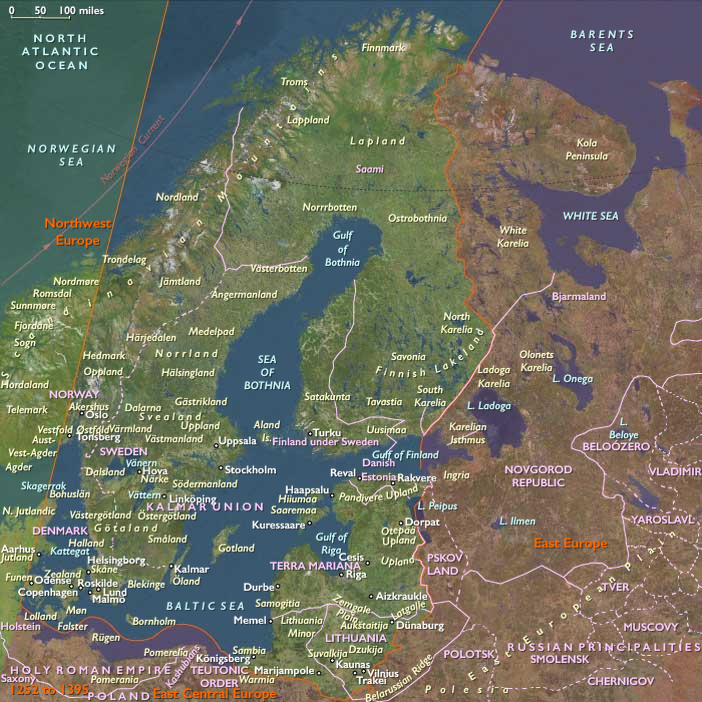
Between 1300 and 1311 CE, Northeast Europe entered a period marked by the stabilization and cultural consolidation of crusader territories, robust resistance from the emerging Lithuanian state, and ongoing Swedish expansion in Finland. This era solidified Germanic dominance in formerly Baltic lands, particularly in Prussia, profoundly reshaping the region's political and cultural landscape.
Final Consolidation of Teutonic Rule in Prussia
With the final suppression of the last significant Prussian uprisings at the close of the previous century, the Teutonic Knights successfully established lasting control over Prussia, turning it decisively into a German-speaking territory. Waves of settlers from various German states, along with other European migrants, arrived, permanently altering the region's demographic and cultural character. By 1311, Prussia had effectively completed its transition into a thoroughly Germanized territory, deeply embedded within the broader Germanic cultural sphere.
Stability in Danish Estonia and Livonian Confederation
The Danish administration of Estonia, centered on Reval (Tallinn) and anchored by the fortress Castrum Danorum atop Toompea Hill, continued to thrive economically and politically. Danish rule provided relative peace, enabling urban prosperity and the steady growth of trade networks.
Simultaneously, the German-dominated Livonian Confederation, governed from Riga, further strengthened its administrative structures, achieving a stable political environment. Economic development accelerated as Riga emerged as a prominent commercial center, solidifying the confederation's influence over the Baltic region.
Continued Swedish Expansion into Finland
Sweden maintained its vigorous colonization and integration efforts in southern Finland, consolidating administrative control, developing fortified settlements, and expanding ecclesiastical networks. The deepening Swedish presence permanently differentiated Finland's cultural and political trajectory from the increasingly Germanized and Danish-influenced Baltic regions to the south.
Lithuanian Resistance and Regional Power
Throughout this period, Lithuania remained a major source of resistance against crusader expansion, demonstrating considerable military and political strength. Lithuanian leaders conducted frequent raids into Livonian and Prussian territories, asserting independence and vigorously resisting Christianization. Lithuania's growing power and continued defiance posed a significant strategic challenge, forcing crusader states into persistent defensive stances.
Economic Prosperity and Urbanization
Urban centers continued to flourish across crusader territories. Economic hubs such as Reval (Tallinn), Riga, and Königsberg expanded significantly, benefiting from increased trade and commerce. The maritime city of Visby on Gotland remained vital, reinforcing the region’s economic ties with broader European markets.
Ecclesiastical and Cultural Integration
The ecclesiastical authorities, especially the Teutonic Knights and associated monastic orders, played central roles in governing, educating, and culturally assimilating local populations. The establishment of German-language schools, ecclesiastical courts, and widespread churches further cemented Latin Christianity and Germanic cultural norms within conquered Baltic territories.
Regional Rivalries and Geopolitical Dynamics
Growing geopolitical tensions characterized this era, particularly along the borders of Lithuania and various Russian principalities. Crusader states increasingly faced threats from the well-organized Lithuanian forces and neighboring powers, resulting in fortified borders, defensive alliances, and heightened military preparedness.
Legacy of the Era
The years 1300–1311 CE significantly transformed Northeast Europe, finalizing the Germanization of Prussia, stabilizing crusader dominion, and solidifying the regional prominence of Lithuanian resistance. These developments permanently altered cultural identities, political boundaries, and regional dynamics, setting a framework that shaped the subsequent historical trajectory of Northeast Europe for generations to come.
Groups
- Polytheism (“paganism”)
- Prussians, Old, or Baltic (Western Balts)
- Finns
- Semigallians (Eastern Balts)
- Curonians (Western Balts)
- Latvians, or Letts (Eastern Balts)
- Estonians
- Denmark, Kingdom of
- Norway, independent Kingdom of
- Hanseatic league (informally organized)
- Sweden, Kingdom of
- Christians, Roman Catholic
- Finland under Swedish rule
- Riga, Bishopric/Archbishopric of
- Terra Mariana (Livonian Confederation)
- Estonia, Danish
- Ordensstaat (Monastic state of the Teutonic Knights)
- Livonian Order
- Lithuania, Grand Duchy of
- Teutonic Knights of Prussia, or Monastic state of the Teutonic Knights (House of the Hospitalers of Saint Mary of the Teutons in Jerusalem)
Topics
Subjects
Regions
Subregions
Years: 1300 - 1311
Groups
- Polytheism (“paganism”)
- Prussians, Old, or Baltic (Western Balts)
- Finns
- Semigallians (Eastern Balts)
- Curonians (Western Balts)
- Latvians, or Letts (Eastern Balts)
- Estonians
- Denmark, Kingdom of
- Norway, independent Kingdom of
- Hanseatic league (informally organized)
- Sweden, Kingdom of
- Christians, Roman Catholic
- Finland under Swedish rule
- Riga, Bishopric/Archbishopric of
- Terra Mariana (Livonian Confederation)
- Estonia, Danish
- Ordensstaat (Monastic state of the Teutonic Knights)
- Livonian Order
- Lithuania, Grand Duchy of
- Teutonic Knights of Prussia, or Monastic state of the Teutonic Knights (House of the Hospitalers of Saint Mary of the Teutons in Jerusalem)
Topics
Subjects
Regions
Subregions