
Northeast Europe (1288–1299 CE): The End of …
Years: 1288 - 1299
Northeast Europe (1288–1299 CE): The End of the Prussian Crusades, Germanization, and Baltic Realignments
Introduction
Between 1288 and 1299 CE, Northeast Europe experienced the definitive conclusion of the Prussian Crusade, significant consolidation of crusader territories, and the final large-scale resistance by Baltic peoples. This era saw the last of the Prussian uprisings, intensified settlement and cultural integration by crusader states, and increasing regional tensions.
The End of the Prussian Crusades
This period marked the conclusion of the series of Prussian uprisings against the Teutonic Knights. The last significant rebellion, occurring in 1295, was relatively brief and quickly suppressed, as were two other lesser uprisings in this era, each failing within one or two years due to limited support and overwhelming crusader military response. With the defeat of this final rebellion, the Prussian Crusade effectively ended, cementing Teutonic control over Prussia.
Consequently, Prussia rapidly transformed into a German-speaking region, welcoming significant numbers of settlers from various German states and refugees from across Europe. This demographic shift accelerated cultural assimilation, permanently altering Prussia's ethnic and linguistic landscape.
Continued Stability in Crusader Territories
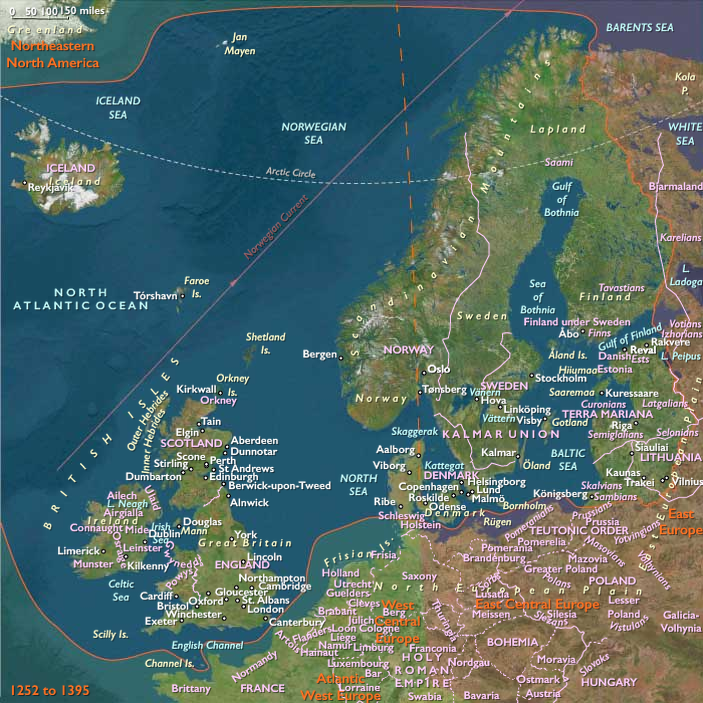
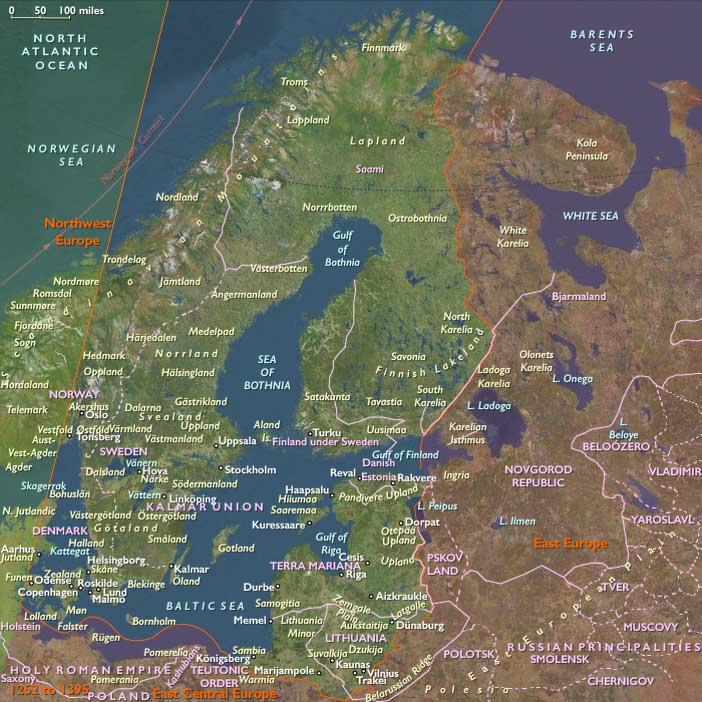
Danish Estonia, centered at Reval (Tallinn), and the Livonian Confederation under German rule, maintained political and economic stability. Danish control around the fortress of Castrum Danorum at Toompea Hill facilitated continued urban growth and trade prosperity.
German-dominated Livonia, anchored at Riga, solidified its authority through strengthened administrative and ecclesiastical structures. Likewise, the Teutonic Order, firmly entrenched in Königsberg, secured its authority across Prussian territories.
Swedish Consolidation in Finland
Sweden further entrenched its control over southern Finland during this period, strengthening administrative governance, fortifications, and settlement expansion. This reinforced Finland’s alignment with Scandinavia, contrasting increasingly with the Germanized and Danish-influenced regions to the south.
Lithuanian Resistance and Regional Power
While Prussian resistance was effectively crushed by the end of this era, the Lithuanians emerged as the primary remaining opposition force in the region. Lithuanian tribes, now organized and increasingly powerful, mounted significant military campaigns against the crusader states, conducting repeated raids into Livonian and Prussian territories and setting the stage for persistent future conflict.
Economic Expansion and Urban Development
Economic prosperity in Northeast Europe further expanded during this period. Urban centers such as Reval (Tallinn), Riga, and Königsberg experienced sustained growth as major trade hubs, while Visby on Gotland continued its central role in maritime commerce, facilitating deeper integration into wider European trade networks.
Ecclesiastical Integration and Cultural Assimilation
The Teutonic Knights and other ecclesiastical authorities actively promoted cultural assimilation, systematically embedding Latin Christianity and Germanic influences across conquered territories. Ecclesiastical and educational institutions fostered widespread literacy, religious indoctrination, and legal reforms, significantly reshaping the cultural identity of the region.
Emerging Geopolitical Rivalries
This era saw increased geopolitical tensions between the consolidated crusader states and the rising power of Lithuania, as well as with Russian principalities. The stabilization of crusader rule, particularly in Prussia, intensified these rivalries, laying groundwork for ongoing military confrontations and complex alliances.
Legacy of the Era
The period from 1288 to 1299 CE marked a critical turning point in Northeast European history, concluding the Prussian Crusades and ushering in a new era of Germanization and territorial stability. The region’s demographic, linguistic, and cultural landscapes were permanently altered, and ongoing Lithuanian resistance ensured continued geopolitical tensions, profoundly influencing subsequent historical developments.
Groups
- Polytheism (“paganism”)
- Prussians, Old, or Baltic (Western Balts)
- Finns
- Latvians, or Letts (Eastern Balts)
- Estonians
- Denmark, Kingdom of
- Norway, independent Kingdom of
- Hanseatic league (informally organized)
- Sweden, Kingdom of
- Christians, Roman Catholic
- Finland under Swedish rule
- Riga, Bishopric/Archbishopric of
- Teutonic Knights of Acre (House of the Hospitalers of Saint Mary of the Teutons in Jerusalem)
- Terra Mariana (Livonian Confederation)
- Estonia, Danish
- Ordensstaat (Monastic state of the Teutonic Knights)
- Livonian Order
- Lithuania, Grand Duchy of
- Teutonic Knights of Venice (House of the Hospitalers of Saint Mary of the Teutons in Jerusalem)
Topics
- Crusades, The
- Northern Crusades, or Baltic Crusades
- Livonian Crusade
- Teutonic Knights' Conquest of Prussia
- Prussian Uprising, Great
Subjects
Regions
Subregions
Related Events
Showing 10 events out of 45370 total
Years: 1288 - 1299
Groups
- Polytheism (“paganism”)
- Prussians, Old, or Baltic (Western Balts)
- Finns
- Latvians, or Letts (Eastern Balts)
- Estonians
- Denmark, Kingdom of
- Norway, independent Kingdom of
- Hanseatic league (informally organized)
- Sweden, Kingdom of
- Christians, Roman Catholic
- Finland under Swedish rule
- Riga, Bishopric/Archbishopric of
- Teutonic Knights of Acre (House of the Hospitalers of Saint Mary of the Teutons in Jerusalem)
- Terra Mariana (Livonian Confederation)
- Estonia, Danish
- Ordensstaat (Monastic state of the Teutonic Knights)
- Livonian Order
- Lithuania, Grand Duchy of
- Teutonic Knights of Venice (House of the Hospitalers of Saint Mary of the Teutons in Jerusalem)
Topics
- Crusades, The
- Northern Crusades, or Baltic Crusades
- Livonian Crusade
- Teutonic Knights' Conquest of Prussia
- Prussian Uprising, Great
Subjects
Regions
Subregions