
Northeast Europe (1276–1287 CE): Crusader Consolidation, Renewed …
Years: 1276 - 1287
Northeast Europe (1276–1287 CE): Crusader Consolidation, Renewed Baltic Resistance, and Expanding Influence
Introduction
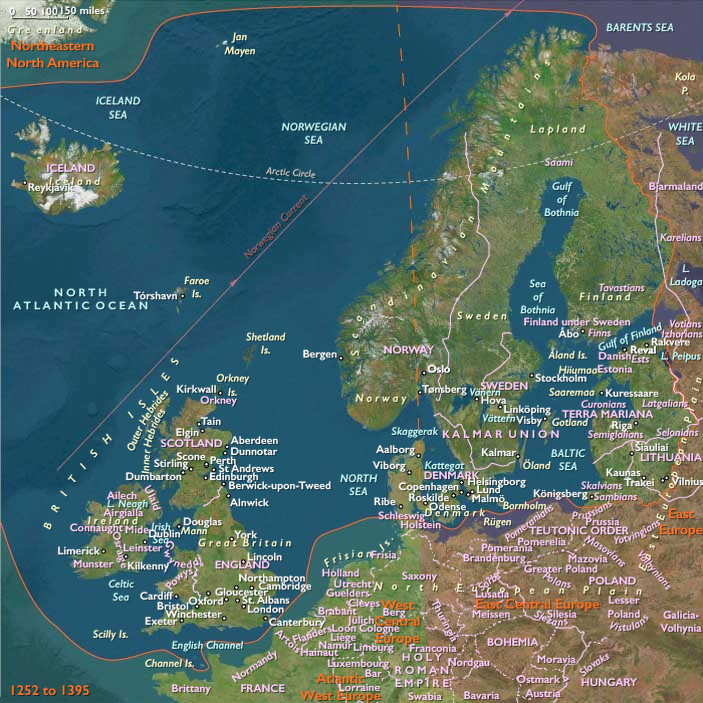
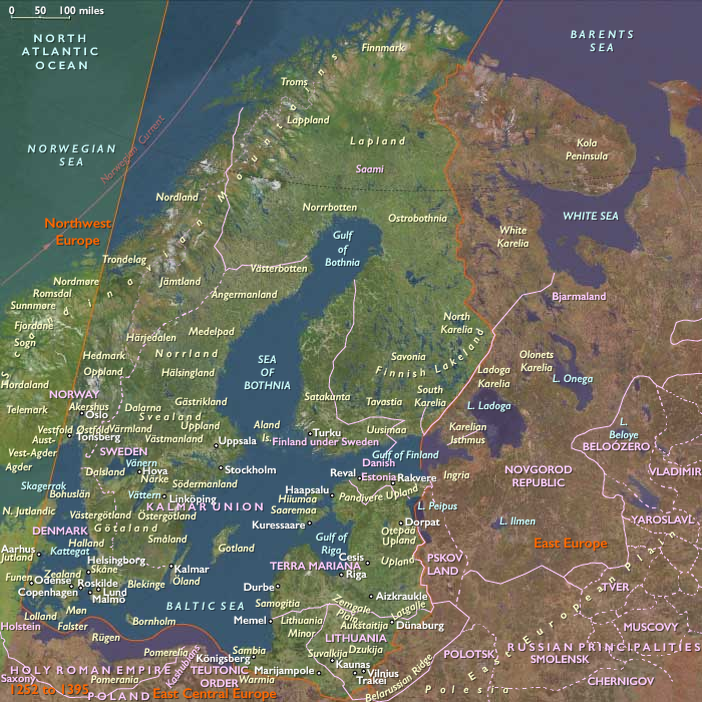
Between 1276 and 1287 CE, Northeast Europe experienced further stabilization and expansion of crusader states, renewed resistance from Baltic tribes, and increasingly complex geopolitical dynamics. German, Danish, and Swedish territorial authorities strengthened their economic and political hold, while the Baltic tribes, notably the Lithuanians, persisted in formidable opposition, reshaping regional tensions.
Crusader State Consolidation
Danish-controlled Estonia, with its administrative and military center at Reval (Tallinn), solidified governance, enhancing infrastructure and fortifications. The fortress of Castrum Danorum continued as a vital symbol of Danish rule, anchoring further economic and urban growth.
In the Livonian Confederation, German authorities, centralized at Riga, deepened their political and ecclesiastical influence. Likewise, the Teutonic Knights solidified their grip over Prussia, effectively reinforcing their military and administrative structures through an extensive network of castles, notably strengthening Königsberg as a critical regional power center.
Resurgence of Baltic Resistance and Lithuanian Strength
Renewed resistance by Baltic peoples characterized this period. The Lithuanians, in particular, emerged as a powerful regional opponent, actively resisting crusader incursions and initiating frequent raids into Livonian and Prussian territories. Their organized military strength posed a significant ongoing challenge to crusader ambitions, forcing a continual defensive posture.
Other Baltic tribes, including the Curonians, Semigallians, and remaining Prussian elements, periodically engaged in guerrilla resistance, demonstrating their resilience despite overwhelming military pressure.
Continued Swedish Expansion in Finland
Swedish influence in southern Finland deepened further, solidifying its political and cultural integration with Sweden. Expanded fortifications, settlements, and ecclesiastical institutions marked sustained Swedish investment, reinforcing Finland's distinct path toward a Scandinavian alignment.
Economic Prosperity and Urban Expansion
Cities within crusader-controlled territories flourished significantly during this era. Reval (Tallinn), Riga, and Königsberg further developed as vibrant centers of trade, governance, and cultural exchange. Visby on Gotland retained its status as a vital maritime hub, strongly connecting Northeast Europe with wider European trade routes.
Ecclesiastical Influence and Cultural Integration
The ecclesiastical hierarchy, especially under the Teutonic Order, maintained its central role in governance, education, and cultural assimilation throughout the region. Monastic institutions and bishops effectively promoted Latin Christendom, further embedding Christian norms and practices deeply within the local populations.
Geopolitical Complexity and Emerging Conflicts
This era witnessed escalating geopolitical complexities. Crusader states encountered heightened tensions along their borders, particularly with the growing power of Lithuania and various Russian principalities. The militarization of borders intensified, signaling impending future conflicts and shifting alliances that would define subsequent decades.
Legacy of the Era
The period from 1276 to 1287 CE profoundly shaped Northeast Europe's future trajectory. Continued crusader consolidation, robust Baltic resistance—especially Lithuanian opposition—and sustained Swedish expansion into Finland created lasting patterns of political, cultural, and economic interaction. These developments laid essential foundations for the region's ongoing evolution, defining the historical dynamics that persisted into subsequent centuries.
Groups
- Polytheism (“paganism”)
- Prussians, Old, or Baltic (Western Balts)
- Finns
- Sami people
- Semigallians (Eastern Balts)
- Curonians (Western Balts)
- Latvians, or Letts (Eastern Balts)
- Estonians
- Estonia, independent
- Denmark, Kingdom of
- Norway, independent Kingdom of
- Hanseatic league (informally organized)
- Sweden, Kingdom of
- Christians, Roman Catholic
- Finland under Swedish rule
- Riga, Bishopric/Archbishopric of
- Teutonic Knights of Acre (House of the Hospitalers of Saint Mary of the Teutons in Jerusalem)
- Terra Mariana (Livonian Confederation)
- Estonia, Danish
- Ordensstaat (Monastic state of the Teutonic Knights)
- Livonian Order
- Lithuania, Grand Duchy of
Topics
- Crusades, The
- Northern Crusades, or Baltic Crusades
- Livonian Crusade
- Teutonic Knights' Conquest of Prussia
- Prussian Uprising, Great
Subjects
Regions
Subregions
Years: 1276 - 1287
Groups
- Polytheism (“paganism”)
- Prussians, Old, or Baltic (Western Balts)
- Finns
- Sami people
- Semigallians (Eastern Balts)
- Curonians (Western Balts)
- Latvians, or Letts (Eastern Balts)
- Estonians
- Estonia, independent
- Denmark, Kingdom of
- Norway, independent Kingdom of
- Hanseatic league (informally organized)
- Sweden, Kingdom of
- Christians, Roman Catholic
- Finland under Swedish rule
- Riga, Bishopric/Archbishopric of
- Teutonic Knights of Acre (House of the Hospitalers of Saint Mary of the Teutons in Jerusalem)
- Terra Mariana (Livonian Confederation)
- Estonia, Danish
- Ordensstaat (Monastic state of the Teutonic Knights)
- Livonian Order
- Lithuania, Grand Duchy of
Topics
- Crusades, The
- Northern Crusades, or Baltic Crusades
- Livonian Crusade
- Teutonic Knights' Conquest of Prussia
- Prussian Uprising, Great
Subjects
Regions
Subregions