
Northeast Europe (1396–1539 CE): Kalmar Union, Hanseatic …
Years: 1396 - 1539
Northeast Europe (1396–1539 CE): Kalmar Union, Hanseatic Hubs, and Baltic Frontiers
Geographic & Environmental Context
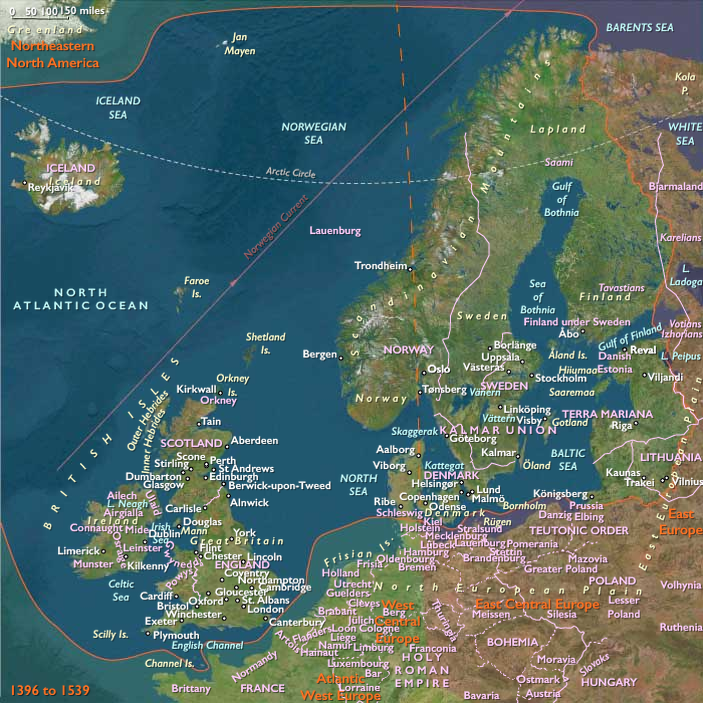
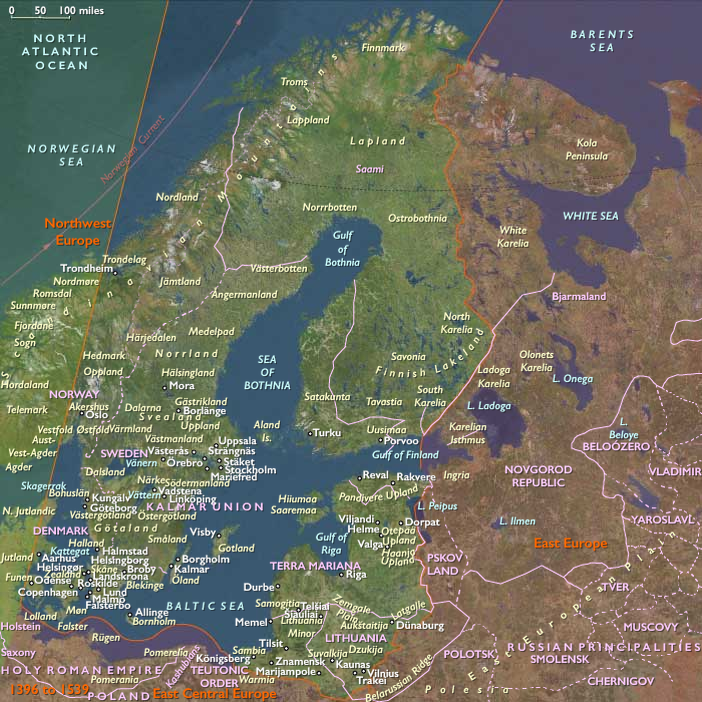
The subregion of Northeast Europe includes Sweden, Finland, Lithuania, Latvia, Estonia, eastern Denmark (with Copenhagen), eastern Norway (with Oslo), and the Kaliningrad enclave. Anchors spanned the Baltic Sea and Gulf of Finland, the Bothnian Gulf, the Scandinavian lake–forest interior, and the Lithuanian–Livonian plains. Forests, lakes, and rivers fed into the Baltic maritime corridor, while upland pastures, iron-bearing districts, and fishing zones shaped inland economies.
Climate & Environmental Shifts
The Little Ice Age deepened seasonal extremes.
-
Winters: longer freezes locked harbors and rivers, delaying trade;
-
Summers: shorter, sometimes wet, affecting grain harvests in Sweden, Finland, and Livonia;
-
Forests & lakes: supplied furs, timber, and fish to buffer poor grain years.
Sea ice spread widely in severe winters, but milder decades allowed sustained shipping across the Baltic.
Subsistence & Settlement
-
Scandinavia (Sweden, Finland, Norway east): Rye, barley, oats, and peas were staples; fishing and stock herding were critical supplements; iron mining grew in Bergslagen (Sweden).
-
Denmark (eastern provinces): Grain, dairy, and fishing supported Copenhagen, an emerging royal hub.
-
Baltic states (Lithuania, Latvia, Estonia): Cereal farming (rye, barley), cattle herding, flax, and honey; coastal towns drew supplies from inland peasants.
-
Kaliningrad (Prussian coast): Mixed farming with rye and livestock; amber collecting continued.
Technology & Material Culture
-
Agriculture: wooden plows, iron-tipped tools, watermills; three-field rotations in Baltic plains.
-
Mining & craft: Swedish ironworks expanded, producing bars for Hanseatic trade.
-
Maritime: cogs and hulks carried timber, tar, grain, and iron; Danish and Swedish shipwrights innovated in response to naval rivalries.
-
Architecture & art: Brick Gothic churches, Hanseatic warehouses, and castle fortresses (Tallinn, Riga, Stockholm, Vilnius); altarpieces and icon painting reflected Catholic and Orthodox patronage.
Movement & Interaction Corridors
-
Hanseatic League: Lübeck, Tallinn, Riga, and Stockholm tied the region into North Sea–Baltic trade; furs, timber, wax, and grain moved outward, textiles and salt inward.
-
Kalmar Union (1397): Linked Denmark, Norway, and Sweden under one crown; tensions between Danish monarchs and Swedish nobility fueled civil wars.
-
Lithuania: Stretched from Baltic to Black Sea; in union with Poland (from 1386) but retained distinct identity; trade routes through Vilnius connected to Muscovy.
-
Livonian Order: German knights ruled Estonia and Latvia, defending ports while exploiting peasantry.
-
Novgorod & Muscovy: Baltic trade drew in Russian fur and wax via Novgorod until its annexation by Moscow in 1478.
Cultural & Symbolic Expressions
-
Catholicism: Dominant in Denmark, Sweden, Norway, and Baltic towns; monasteries, cathedrals, and feast calendars organized social life.
-
Orthodoxy: Endured in eastern Lithuania and among Russian enclaves; Pskov and Novgorod influenced nearby Baltic cultures.
-
Local traditions: Folk epics, runo-songs, and sagas persisted in Finland and Karelia; seasonal rites tied to agriculture and fishing.
-
Art & letters: Lithuania fostered chronicles; Swedish and Danish courts commissioned sagas and chronicles; German-language urban culture dominated Hanseatic towns.
Environmental Adaptation & Resilience
-
Grain storage: Granaries and trade surpluses in Lübeck and Riga redistributed food in famine.
-
Diversification: Fishing, forestry, hunting, and livestock offset poor harvests.
-
Architecture: Log houses and turf-roofed structures insulated against cold; fortified towns stored supplies.
-
Mobility: Seasonal herding, timber floating, and coastal shipping buffered communities against local scarcity.
Technology & Power Shifts (Conflict Dynamics)
-
Kalmar Union: Swedish nobles resisted Danish dominance; Engelbrekt rebellion (1430s) and wars in the late 15th century destabilized the union.
-
Sweden: Broke definitively from Denmark in 1523 under Gustav Vasa, founding a hereditary monarchy and initiating the Lutheran Reformation.
-
Norway: Remained bound to Denmark until the 19th century, with Oslo as an eastern hub.
-
Lithuania: Fought Muscovy on its eastern frontier; preserved autonomy in the Polish–Lithuanian union.
-
Livonian Order: Contested with Russians and Lithuanians; relied on Hanseatic allies for survival.
-
Kaliningrad coast (Prussia): Under Teutonic Knights, weakened after defeat at Tannenberg/Grunwald (1410), shifting toward Polish suzerainty.
Transition
By 1539 CE, Northeast Europe was fractured but dynamic: the Kalmar Union was collapsing, Sweden independent under Gustav Vasa and entering Lutheran reform; Lithuania remained powerful but pressured by Muscovy; Livonia survived precariously between neighbors; Hanseatic ports still dominated Baltic trade, though in decline. Orthodox, Catholic, and Protestant frontiers overlapped across the region, foreshadowing wars of confession and imperial competition.
People
- Christian III
- Engelbrekt Engelbrektsson
- Eric of Pomerania
- Gustav I Vasa
- Jogaila (Władysław II)
- Margaret I of Denmark
- Sten Sture the Elder
- Sten Sture the Younger
- Valdemar IV of Denmark
Groups
- Polytheism (“paganism”)
- Finns
- Sami people
- Karelians
- Tavastians
- Estonians
- Balts
- Latvians, or Letts (Eastern Balts)
- Sweden, Kingdom of
- Christians, Roman Catholic
- Riga, Bishopric/Archbishopric of
- Terra Mariana (Livonian Confederation)
- Estonia, Danish
- Ordensstaat (Monastic state of the Teutonic Knights)
- Livonian Order
- Estonian Swedes
- Hanseatic League
- Denmark, Kingdom of (Personal Union of Denmark and Norway)
- Poland of the Jagiellonians, Kingdom of
- Lithuania, Grand Duchy of
- Kalmar Union (of Denmark, Norway and Sweden)
- Protestantism
- Kalmar Union (of Denmark and Norway)
- Denmark-Norway, Kingdom of
Topics
Commodoties
Subjects
Regions
Subregions
Related Events
Showing 10 events out of 43406 total
Years: 1396 - 1539
People
- Christian III
- Engelbrekt Engelbrektsson
- Eric of Pomerania
- Gustav I Vasa
- Jogaila (Władysław II)
- Margaret I of Denmark
- Sten Sture the Elder
- Sten Sture the Younger
- Valdemar IV of Denmark
Groups
- Polytheism (“paganism”)
- Finns
- Sami people
- Karelians
- Tavastians
- Estonians
- Balts
- Latvians, or Letts (Eastern Balts)
- Sweden, Kingdom of
- Christians, Roman Catholic
- Riga, Bishopric/Archbishopric of
- Terra Mariana (Livonian Confederation)
- Estonia, Danish
- Ordensstaat (Monastic state of the Teutonic Knights)
- Livonian Order
- Estonian Swedes
- Hanseatic League
- Denmark, Kingdom of (Personal Union of Denmark and Norway)
- Poland of the Jagiellonians, Kingdom of
- Lithuania, Grand Duchy of
- Kalmar Union (of Denmark, Norway and Sweden)
- Protestantism
- Kalmar Union (of Denmark and Norway)
- Denmark-Norway, Kingdom of
Topics
Commodoties
Subjects
Regions
Subregions