
Northeast Europe (1264–1275 CE): Crusader Dominance, Baltic …
Years: 1264 - 1275
Northeast Europe (1264–1275 CE): Crusader Dominance, Baltic Resistance, and Regional Stabilization
Introduction
Between 1264 and 1275 CE, Northeast Europe witnessed the aftermath of significant uprisings, the further consolidation of crusader dominance, and persistent resistance from Baltic tribes. This era was characterized by the stabilization of Danish and German territories, renewed efforts by the Teutonic Knights to reassert authority in Prussia, and Sweden's continued expansion into Finland.
Aftermath of the Great Prussian Uprising
Following the dramatic peak of the Great Prussian Uprising, the Teutonic Knights began reasserting their control across the Prussian territories. The rebellion's suppression allowed the Knights to regain territories lost during earlier conflicts. They reinforced strongholds, notably Königsberg, consolidating their rule through aggressive military occupation, forced conversions, and the imposition of strict administrative structures.
Despite these advances, Prussian clans maintained sporadic resistance and conducted guerrilla operations, highlighting persistent tensions and the deep-seated resistance of local populations to Teutonic dominance.
Consolidation of Danish Estonia and the Livonian Confederation
Danish rule in Estonia continued to stabilize under the administration centered at Reval (Tallinn), marked by increased economic prosperity and urban growth. The fortress Castrum Danorum on Toompea Hill symbolized Danish sovereignty and facilitated tighter control over the region.
Similarly, the Livonian Confederation, anchored by the strategic city of Riga, experienced growing economic stability and political maturity. German ecclesiastical and secular authorities coordinated effectively, enabling steady governance despite occasional resistance from local populations.
Swedish Influence and Finnish Integration
Sweden sustained its colonization and missionary expansion into southern Finland, bolstering settlement infrastructure and ecclesiastical establishments. The Swedish crown increasingly integrated these Finnish territories administratively and culturally into the Scandinavian sphere, deepening the cultural division between Finnish regions and their Baltic neighbors.
Persistent Baltic Resistance and Lithuanian Ascendancy
Baltic resistance remained resilient despite increased pressure from crusader states. Tribes such as the Curonians, Semigallians, and especially the increasingly powerful Lithuanians mounted continuous opposition. Lithuania emerged as a formidable regional power, successfully resisting repeated crusader incursions and laying foundations for an independent, centralized state capable of opposing crusader advances.
Economic Prosperity and Urban Development
Economic growth flourished across crusader-held territories. Cities such as Reval (Tallinn), Riga, and Königsberg expanded as vital commercial and administrative hubs. Trade with the rest of Europe intensified, with Visby on Gotland continuing to prosper as a crucial maritime trading center, connecting the Baltic to wider European markets.
Ecclesiastical Authority and Cultural Consolidation
Ecclesiastical institutions, particularly the Teutonic Order, continued to embed their presence throughout Northeast Europe. Monastic communities and diocesan authorities fostered cultural integration, imposed Christian doctrine, and managed educational institutions, deeply influencing the social and cultural fabric of the region.
Emerging Geopolitical Tensions
This era saw increasing tensions between crusader states and regional powers, notably Lithuania and various Russian principalities. Borders became increasingly militarized, reflecting growing mutual distrust. These tensions set the stage for ongoing regional conflicts and shifting alliances, shaping Northeast Europe's geopolitical landscape for decades to come.
Legacy of the Era
The years 1264–1275 CE were a critical period in Northeast Europe's development. The suppression of Baltic uprisings, consolidation of crusader control, and the sustained emergence of Lithuania as a regional power profoundly influenced the political, cultural, and economic landscape. These developments shaped enduring historical patterns, setting the stage for future interactions, conflicts, and cultural exchanges in Northeast Europe.
Groups
- Polytheism (“paganism”)
- Prussians, Old, or Baltic (Western Balts)
- Finns
- Semigallians (Eastern Balts)
- Curonians (Western Balts)
- Latvians, or Letts (Eastern Balts)
- Estonians
- Denmark, Kingdom of
- Norway, independent Kingdom of
- Hanseatic league (informally organized)
- Sweden, Kingdom of
- Christians, Roman Catholic
- Finland under Swedish rule
- Riga, Bishopric/Archbishopric of
- Teutonic Knights of Acre (House of the Hospitalers of Saint Mary of the Teutons in Jerusalem)
- Terra Mariana (Livonian Confederation)
- Estonia, Danish
- Ordensstaat (Monastic state of the Teutonic Knights)
- Livonian Order
- Lithuania, Grand Duchy of
Topics
- Crusades, The
- Northern Crusades, or Baltic Crusades
- Livonian Crusade
- Teutonic Knights' Conquest of Prussia
- Prussian Uprising, Great
Subjects
Regions
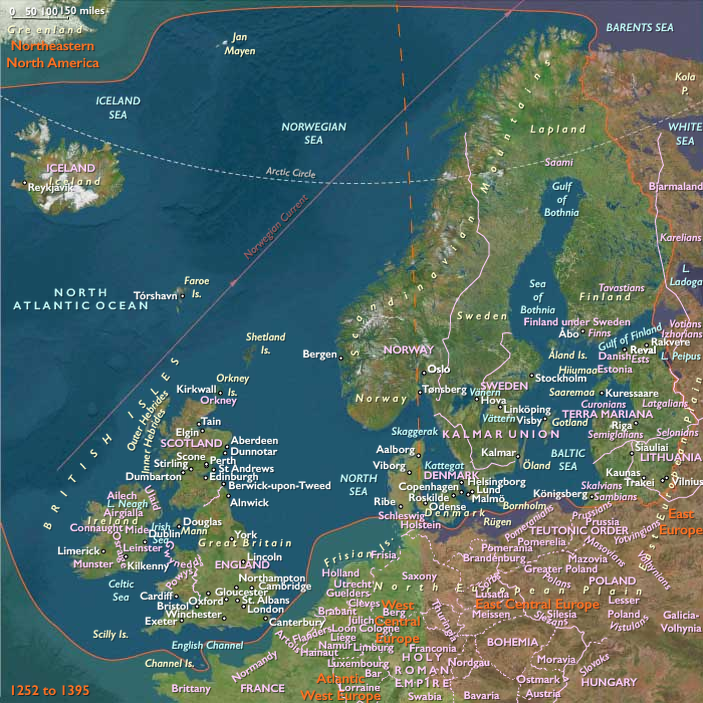
Subregions
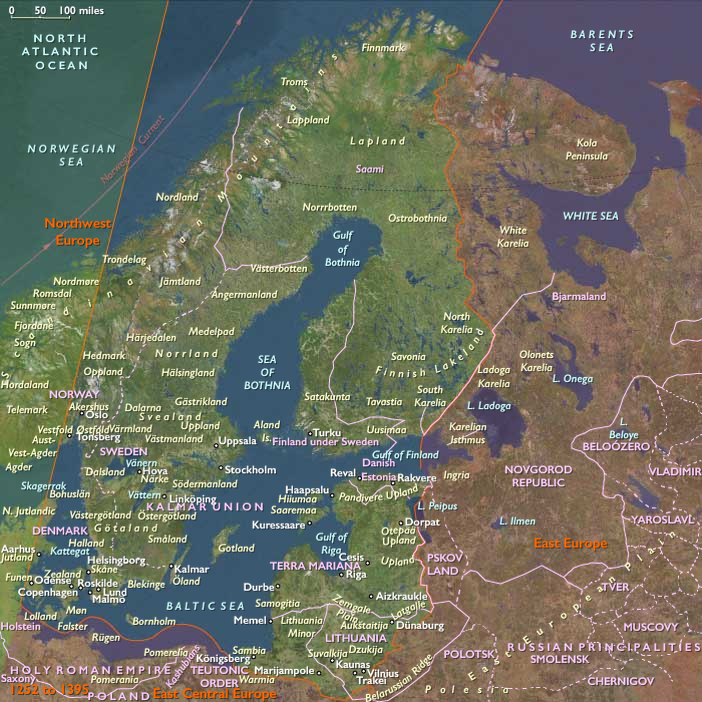
Related Events
Showing 5 events out of 5 total
Years: 1264 - 1275
Groups
- Polytheism (“paganism”)
- Prussians, Old, or Baltic (Western Balts)
- Finns
- Semigallians (Eastern Balts)
- Curonians (Western Balts)
- Latvians, or Letts (Eastern Balts)
- Estonians
- Denmark, Kingdom of
- Norway, independent Kingdom of
- Hanseatic league (informally organized)
- Sweden, Kingdom of
- Christians, Roman Catholic
- Finland under Swedish rule
- Riga, Bishopric/Archbishopric of
- Teutonic Knights of Acre (House of the Hospitalers of Saint Mary of the Teutons in Jerusalem)
- Terra Mariana (Livonian Confederation)
- Estonia, Danish
- Ordensstaat (Monastic state of the Teutonic Knights)
- Livonian Order
- Lithuania, Grand Duchy of
Topics
- Crusades, The
- Northern Crusades, or Baltic Crusades
- Livonian Crusade
- Teutonic Knights' Conquest of Prussia
- Prussian Uprising, Great
Subjects
Regions
Subregions