
Northeast Europe (1228–1239 CE): Continued Crusader Expansion …
Years: 1228 - 1239
Northeast Europe (1228–1239 CE): Continued Crusader Expansion and Baltic Resistance
Introduction
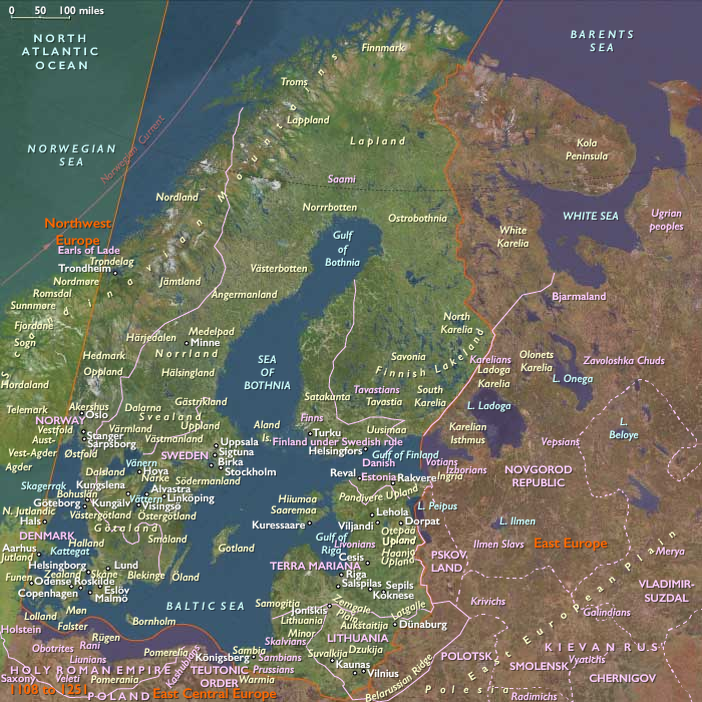
Between 1228 and 1239 CE, Northeast Europe experienced continued territorial expansion by Danish and German crusaders, ongoing Swedish colonization efforts, and persistent resistance by Baltic tribes. The political and cultural landscapes of the region were further reshaped as foreign powers deepened their authority, intensifying local conflicts and embedding Christianity across conquered lands.
Danish Estonia and Livonian Consolidation
The territorial organization established by earlier conquests solidified during this era. In Danish Estonia, with its capital at Reval (Tallinn)—founded after the Danish conquest of Lyndanisse in 1219—the Danish crown further entrenched its rule through fortified strongholds, notably the strategic fortress Castrum Danorum at Toompea Hill. Danish authority solidified as local administration and ecclesiastical structures were firmly established.
Simultaneously, the Livonian Confederation, under German crusader and clerical administration, expanded control over the southern Baltic territories, encompassing modern-day Latvia and southern Estonia. German crusaders fortified their positions, especially through the strongholds in Riga, consolidating political, military, and ecclesiastical dominance.
The Teutonic Order and Prussian Conquests
The arrival and rapid territorial expansion of the Teutonic Knights marked a significant development during this period. These powerful German crusaders intensified their conquest of pagan territories further south in Prussia, systematically subjugating local tribes. Their military dominance reshaped the political structure of the southeastern Baltic and initiated widespread cultural and religious transformation, increasingly interconnecting Prussia with Livonian and Danish territories.
Continued Swedish Expansion in Finland
Sweden further advanced its territorial and religious ambitions in southern Finland during this period, establishing additional fortified settlements and expanding Christian missionary activities. Swedish colonization deepened, entrenching cultural and political divisions between the Finnic populations in Finland and their Baltic kinsmen, particularly the Estonians under Danish and German domination.
Baltic Resistance and Major Uprisings
Baltic tribes maintained robust resistance against Danish and German crusader forces. Significant rebellions occurred during this period, notably among the Estonians and Curonians, whose defiance compelled continuous military responses from the crusaders. The tribes developed increasingly organized defensive strategies and alliances, highlighting their sustained determination to preserve independence and cultural traditions despite heavy pressures.
Economic Expansion and Urban Growth
Economic prosperity continued to expand in the key Baltic cities established by the crusaders. Reval (Tallinn) and Riga rapidly developed into vital commercial hubs, linking Northeast Europe with broader European trade networks. Traditional economic centers, including Visby on Gotland, thrived as critical nodes of maritime commerce, enhancing regional wealth and urbanization.
Ecclesiastical Influence and Cultural Integration
Ecclesiastical institutions further extended their authority across Northeast Europe, systematically embedding Christianity in conquered territories. Clerical leaders and monastic communities, particularly the Cistercians and the Teutonic Order, facilitated widespread cultural integration through missionary efforts, education, legal reform, and local administration. The establishment of dioceses in newly conquered areas, particularly in Livonia and Prussia, deepened Christian cultural dominance.
Legacy of the Era
The period 1228–1239 CE critically influenced the future of Northeast Europe. The consolidation of Danish and German control, Swedish colonization in Finland, persistent Baltic resistance, and rapid ecclesiastical expansion laid lasting foundations. This era established enduring political boundaries, cultural divisions, and social structures that continued to shape the historical development of Northeast Europe for centuries.
Groups
- Polytheism (“paganism”)
- Prussians, Old, or Baltic (Western Balts)
- Finns
- Latvians, or Letts (Eastern Balts)
- Lithuanians (Eastern Balts)
- Estonians
- Denmark, Kingdom of
- Norway, independent Kingdom of
- Hanseatic league (informally organized)
- Sweden, Kingdom of
- Christians, Roman Catholic
- Finland under Swedish rule
- Riga, Bishopric/Archbishopric of
- Teutonic Knights of Acre (House of the Hospitalers of Saint Mary of the Teutons in Jerusalem)
- Knights of the Sword (Order of the Livonian Brothers of the Sword, or Livonian Knights)
- Terra Mariana (Livonian Confederation)
- Estonia, Danish
- Ordensstaat (Monastic state of the Teutonic Knights)
- Gdańsk, Duchy of
- Livonian Order
Topics
- Crusades, The
- Northern Crusades, or Baltic Crusades
- Livonian Crusade
- Teutonic Knights' Conquest of Prussia
Subjects
Regions

Subregions
Related Events
Showing 9 events out of 9 total
Years: 1228 - 1239
Groups
- Polytheism (“paganism”)
- Prussians, Old, or Baltic (Western Balts)
- Finns
- Latvians, or Letts (Eastern Balts)
- Lithuanians (Eastern Balts)
- Estonians
- Denmark, Kingdom of
- Norway, independent Kingdom of
- Hanseatic league (informally organized)
- Sweden, Kingdom of
- Christians, Roman Catholic
- Finland under Swedish rule
- Riga, Bishopric/Archbishopric of
- Teutonic Knights of Acre (House of the Hospitalers of Saint Mary of the Teutons in Jerusalem)
- Knights of the Sword (Order of the Livonian Brothers of the Sword, or Livonian Knights)
- Terra Mariana (Livonian Confederation)
- Estonia, Danish
- Ordensstaat (Monastic state of the Teutonic Knights)
- Gdańsk, Duchy of
- Livonian Order
Topics
- Crusades, The
- Northern Crusades, or Baltic Crusades
- Livonian Crusade
- Teutonic Knights' Conquest of Prussia
Subjects
Regions
Subregions