
Northeast Europe (1216–1227 CE): Danish and German …
Years: 1216 - 1227
Northeast Europe (1216–1227 CE): Danish and German Dominance, Baltic Resistance, and the Formation of Danish Estonia
Introduction
Between 1216 and 1227 CE, Northeast Europe saw decisive military successes of the Northern Crusades, the formation of organized crusader states, and continued resilience among the Baltic peoples. The era notably witnessed the territorial division following the Livonian Crusade, with the establishment of Danish Estonia and the Livonian Confederation under German control, fundamentally reshaping the political and cultural landscape of the eastern Baltic.
Danish Estonia and the Founding of Reval (Tallinn)
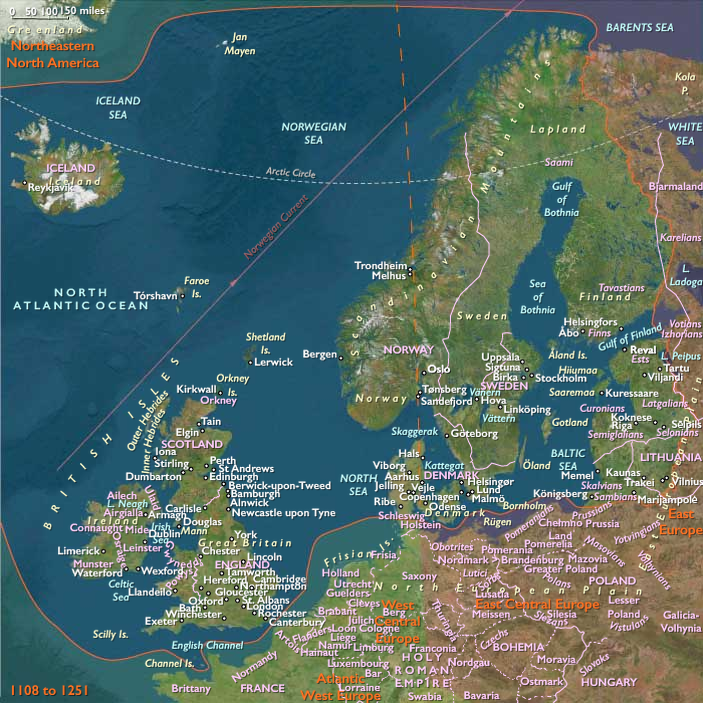
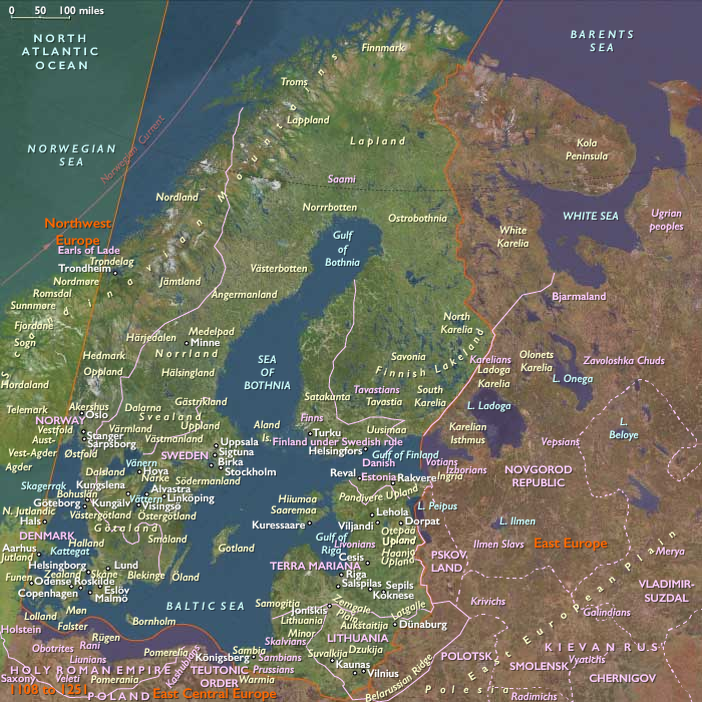
Following significant territorial conquests during the Livonian Crusade, the German- and Danish-occupied Baltic territories were formally divided. The northern territories fell under direct Danish control, forming Danish Estonia. In 1219, Danish King Valdemar II "the Victorious" led a crucial invasion at Lyndanisse, resulting in the founding of Reval (modern-day Tallinn). Here, the Danes constructed the prominent fortress known as Castrum Danorum ("Danish Castle") atop Toompea Hill, symbolizing Danish authority and dominance.
The city's Estonian name, "Tallinn," is often linked through urban legend to Taani linna, meaning "Danish town" or "castle," reflecting Denmark's lasting imprint on local historical memory.
Livonian Confederation under German Influence
Concurrently, the southern territories conquered by German crusading orders were organized into the Livonian Confederation by the Papal legate William of Modena. This confederation encompassed significant parts of modern-day Latvia and Estonia, where German crusaders and clergy firmly established political and ecclesiastical dominance. The Confederation became a crucial stronghold, serving as a military, economic, and ecclesiastical center integral to the wider crusading effort.
Continued Swedish Expansion in Finland
Swedish colonization and missionary work persisted vigorously in southern Finland, consolidating earlier gains. The accelerated settlement and cultural integration deepened Finland’s ties to Sweden, setting it apart politically and culturally from its Finnic relatives to the south, especially the Estonians under Danish and German rule.
Persistent Baltic Resistance and Rebellions
Despite substantial territorial losses and crusader occupation, Baltic tribes—particularly Estonians, Latvians, Curonians, and Semigallians—remained defiant. Numerous rebellions erupted, challenging foreign rule, and forcing Danish and German forces to maintain strong military presences and extensive fortifications throughout occupied lands. This ongoing resistance emphasized local determination to preserve autonomy and traditional cultural identities.
Economic Prosperity and Urbanization
The establishment of Reval (Tallinn) under Danish rule, along with the already thriving German-founded city of Riga, significantly expanded regional trade and urban development. Both cities became key economic hubs, fostering trade between the Scandinavian, Baltic, and broader European markets. Commerce in established centers such as Visby on Gotland continued to flourish, underscoring the expanding influence of merchant guilds and urban life.
Ecclesiastical Dominance and Cultural Integration
Ecclesiastical institutions significantly expanded their influence during this era, consolidating their power through bishoprics and monastic establishments across newly conquered territories. The establishment of the Livonian Confederation reinforced the ecclesiastical structure, as German clergy and monastic orders actively managed the religious, educational, and cultural integration of local populations into Latin Christendom.
Legacy of the Era
The era from 1216 to 1227 CE profoundly influenced Northeast Europe's historical trajectory. The territorial division of Baltic lands into Danish Estonia and the German-dominated Livonian Confederation reshaped regional political boundaries, fortified urban growth, and entrenched ecclesiastical authority. Persistent Baltic resistance highlighted the ongoing struggle between conquest and autonomy, setting enduring cultural and political patterns that would significantly impact future centuries.
People
Groups
- Polytheism (“paganism”)
- Finns
- Semigallians (Eastern Balts)
- Curonians (Western Balts)
- Latvians, or Letts (Eastern Balts)
- Lithuanians (Eastern Balts)
- Estonians
- Estonia, independent
- Denmark, Kingdom of
- Norway, independent Kingdom of
- Hanseatic league (informally organized)
- Sweden, Kingdom of
- Christians, Roman Catholic
- Finland under Swedish rule
- Riga, Bishopric/Archbishopric of
- Teutonic Knights of Acre (House of the Hospitalers of Saint Mary of the Teutons in Jerusalem)
- Knights of the Sword (Order of the Livonian Brothers of the Sword, or Livonian Knights)
- Terra Mariana (Livonian Confederation)
- Estonia, Danish
- Ordensstaat (Monastic state of the Teutonic Knights)
Topics
Subjects
Regions
Subregions
Related Events
Showing 10 events out of 13 total
Years: 1216 - 1227
People
Groups
- Polytheism (“paganism”)
- Finns
- Semigallians (Eastern Balts)
- Curonians (Western Balts)
- Latvians, or Letts (Eastern Balts)
- Lithuanians (Eastern Balts)
- Estonians
- Estonia, independent
- Denmark, Kingdom of
- Norway, independent Kingdom of
- Hanseatic league (informally organized)
- Sweden, Kingdom of
- Christians, Roman Catholic
- Finland under Swedish rule
- Riga, Bishopric/Archbishopric of
- Teutonic Knights of Acre (House of the Hospitalers of Saint Mary of the Teutons in Jerusalem)
- Knights of the Sword (Order of the Livonian Brothers of the Sword, or Livonian Knights)
- Terra Mariana (Livonian Confederation)
- Estonia, Danish
- Ordensstaat (Monastic state of the Teutonic Knights)
Topics
Subjects
Regions
Subregions