
Northeast Europe (1180–1191 CE): Expansion, Crusader Fortresses, …
Years: 1180 - 1191
Northeast Europe (1180–1191 CE): Expansion, Crusader Fortresses, and Baltic Defiance
Introduction
From 1180 to 1191 CE, Northeast Europe experienced heightened crusading activity, the strengthening of royal power, and persistent Baltic resistance. This era witnessed strategic territorial expansions by Denmark and Sweden, increased fortifications by crusaders, and growing determination among Baltic peoples to preserve their independence and cultural identity.
Strengthening Royal Authority
In Denmark, under King Valdemar I the Great (r. 1157–1182) and subsequently his successor King Canute VI (r. 1182–1202), royal authority was firmly consolidated. Canute VI built upon his father's successes, reinforcing centralized governance, fortifying Denmark's influence in the southern Baltic, and securing control over previously pagan territories, especially on the island of Rügen and along the Pomeranian coast.
In Sweden, dynastic rivalries persisted, yet central authority strengthened gradually, allowing continued colonization efforts in southern Finland and greater engagement in crusading missions. Swedish kings increasingly projected power across the Baltic Sea, setting foundations for long-term Swedish presence in the eastern Baltic region.
Expansion and Consolidation of the Northern Crusades
This era marked intensified crusading efforts by German, Danish, and Swedish forces. Denmark expanded aggressively southward and eastward, fortifying strategic points and establishing Christian rule over local populations. Notably, Danish authorities continued consolidating control around recently conquered regions, particularly on the Baltic coast near Pomerania.
In Finland, Swedish settlement and missionary activity advanced significantly. Colonization accelerated, leading to deeper integration of southern Finland into the Swedish sphere of influence. This process intensified the cultural and political estrangement between Finnic communities north of the Gulf of Finland and their Baltic kin, especially the Estonians to the south.
Emergence of Crusader Fortresses
To secure territorial gains and protect expanding Christian domains, crusaders constructed numerous fortified strongholds throughout newly conquered territories. Key locations, such as the fortress towns emerging in Estonia and the recently secured regions of Rügen and southern Finland, served as bases for continued missionary and military operations, significantly bolstering Christian control.
Urban and Economic Growth
Economic vitality increased markedly during this period. Major trading hubs, particularly Visby on Gotland, solidified their central role in regional commerce, connecting Scandinavian merchants with Baltic and European markets. Danish towns such as Roskilde and Lund continued to flourish under royal patronage, driven by expanding trade and increased urbanization facilitated by merchant guilds.
Baltic Resistance and Defensive Alliances
Pagan populations of the Baltic region—particularly ancestors of the modern Estonians, Latvians, and Lithuanians—continued vigorous resistance against crusading incursions. Tribes intensified their defensive measures, strengthened alliances, and launched frequent counterattacks against encroaching crusader forces, demonstrating resilience and determination to maintain autonomy.
Ecclesiastical Influence and Cultural Foundations
Ecclesiastical institutions significantly expanded their influence during this era. Monastic establishments, particularly those of the Cistercian Order, grew more numerous and influential, promoting literacy, education, and the spread of ecclesiastical law. Bishops and clergy played pivotal roles in governance and cultural transformation, strengthening Christian influence throughout Northeast Europe.
Legacy of the Era
The years 1180 to 1191 CE significantly shaped the future trajectory of Northeast Europe. The strengthening of Danish and Swedish royal authority, establishment of strategic crusader fortresses, heightened cultural divisions among Baltic peoples, and sustained resistance to Christian incursions laid enduring foundations. This period's developments influenced subsequent centuries, profoundly affecting political alliances, territorial control, and cultural dynamics across the region.
People
Groups
- Polytheism (“paganism”)
- Latvians, or Letts (Eastern Balts)
- Lithuanians (Eastern Balts)
- Estonians
- Estonia, independent
- Denmark, Kingdom of
- Swedes (North Germanic tribe)
- Norway, independent Kingdom of
- Hanseatic league (informally organized)
- Sweden, Kingdom of
- Christians, Roman Catholic
- Cistercians, Order of the (White Friars)
- Finland under Swedish rule
Subjects
Regions
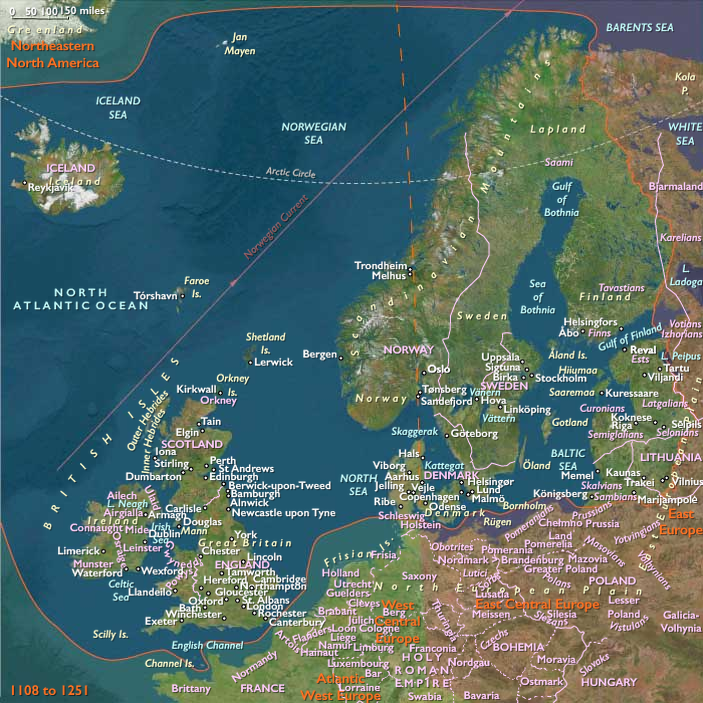
Subregions
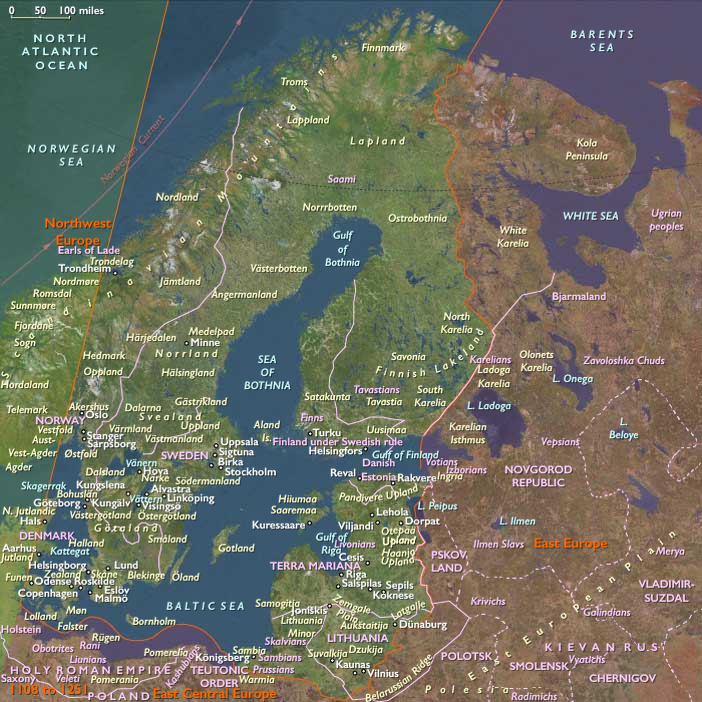
Related Events
Showing 10 events out of 21 total
Years: 1180 - 1191
People
Groups
- Polytheism (“paganism”)
- Latvians, or Letts (Eastern Balts)
- Lithuanians (Eastern Balts)
- Estonians
- Estonia, independent
- Denmark, Kingdom of
- Swedes (North Germanic tribe)
- Norway, independent Kingdom of
- Hanseatic league (informally organized)
- Sweden, Kingdom of
- Christians, Roman Catholic
- Cistercians, Order of the (White Friars)
- Finland under Swedish rule
Subjects
Regions
Subregions