
Northeast Europe (1168–1179 CE): Royal Ascendancy, Crusading …
Years: 1168 - 1179
Northeast Europe (1168–1179 CE): Royal Ascendancy, Crusading Momentum, and Baltic Resilience
Introduction
From 1168 to 1179 CE, Northeast Europe experienced a significant consolidation of royal authority, the growing momentum of crusading efforts, and ongoing resistance from the Baltic populations. This era notably marked Denmark's assertive expansion under King Valdemar I the Great, intensified missionary activities, and increasingly organized resistance among Baltic tribes against Christian encroachment.
Consolidation of Royal Power
In Denmark, the reign of Valdemar I the Great (r. 1157–1182) represented a period of pronounced royal consolidation and territorial expansion. Valdemar's leadership effectively ended decades of internal strife, establishing centralized authority through decisive victories against rival claimants. His reign notably included aggressive campaigns into pagan Baltic territories, significantly extending Danish influence and paving the way for a strengthened monarchy.
In Sweden, internal dynastic conflicts persisted between the Sverker and Erik families. Following the assassination of King Charles VII Sverkersson in 1167, political instability intensified. Nevertheless, emerging leaders continued attempts to centralize royal power, balancing internal feuds with territorial and missionary ambitions in the east.
Crusading Momentum and Expansion
The momentum of the Northern Crusades notably increased during this era. In 1168, under the leadership of King Valdemar I and Bishop Absalon of Roskilde, Danish forces decisively captured the strategic pagan stronghold at Arkona on the island of Rügen, dramatically expanding Christian influence in the southern Baltic. This event represented a major milestone in the northern expansion of Christianity, significantly emboldening crusaders' ambitions and serving as a springboard for further campaigns into the Baltic interior.
Missionary activities also continued in Finland and the eastern Baltic regions. Despite the earlier legendary First Swedish Crusade, persistent missionary incursions and military campaigns gradually reinforced Christian influence among resistant pagan populations.
Urban and Economic Development
Economic vitality and urbanization continued to flourish during this era. Visby on Gotland remained central to Baltic commerce, facilitating extensive trade exchanges with Scandinavia, northern Germany, and beyond. Danish towns, particularly Roskilde and Lund, grew notably, benefiting from increased economic activity, royal patronage, and the expanding influence of merchant guilds.
Baltic Resistance and Defensive Strategies
Baltic tribes, including the ancestors of modern Estonians, Latvians, and Lithuanians, responded to intensified Christian incursions by fortifying settlements, strengthening alliances, and launching coordinated counterattacks. The fall of Arkona in 1168 significantly alarmed these communities, prompting them to increase defensive measures and collaborative efforts to resist further crusading incursions effectively.
Ecclesiastical Influence and Cultural Expansion
The influence of ecclesiastical institutions continued to grow. The expansion of Cistercian monasteries significantly shaped regional cultural and educational life, spreading Latin literacy and ecclesiastical law. Bishop Absalon of Roskilde emerged as a prominent ecclesiastical and political figure, instrumental in promoting crusading ideology, bolstering royal authority, and advancing ecclesiastical structures throughout Denmark and newly conquered Baltic territories.
Legacy of the Era
The era 1168–1179 CE was pivotal in shaping Northeast Europe's historical trajectory. Enhanced royal authority in Denmark under Valdemar I, heightened momentum of the Northern Crusades, and resolute Baltic resistance collectively defined this transformative period. These developments laid crucial foundations for the continuing integration of Northeast Europe into broader European religious, cultural, and political spheres.
People
Groups
- Polytheism (“paganism”)
- Finns
- Latvians, or Letts (Eastern Balts)
- Lithuanians (Eastern Balts)
- Estonians
- Estonia, independent
- Rani (Slavic tribe)
- Denmark, Kingdom of
- Norway, independent Kingdom of
- Hanseatic league (informally organized)
- Sweden, Kingdom of
- Christians, Roman Catholic
- Cistercians, Order of the (White Friars)
- Finland under Swedish rule
Topics
Subjects
Regions
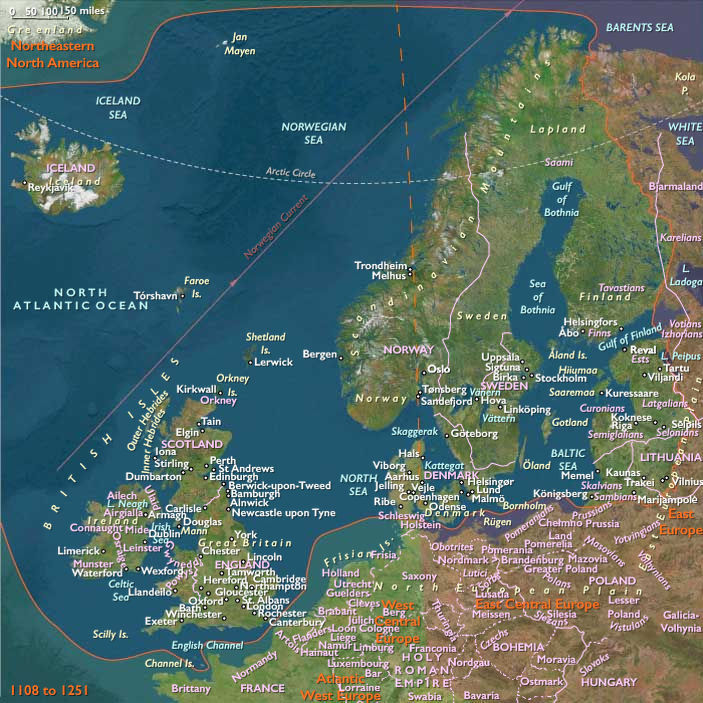
Subregions
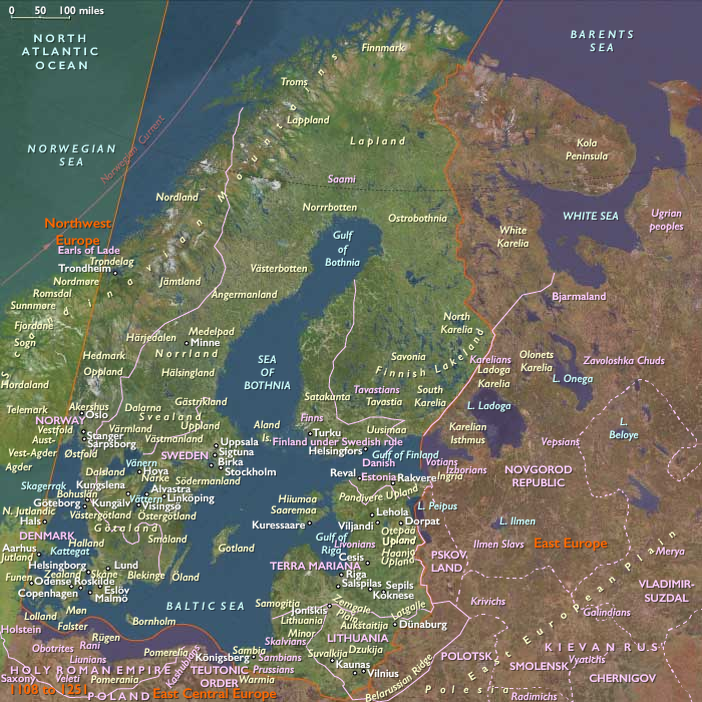
Years: 1168 - 1179
People
Groups
- Polytheism (“paganism”)
- Finns
- Latvians, or Letts (Eastern Balts)
- Lithuanians (Eastern Balts)
- Estonians
- Estonia, independent
- Rani (Slavic tribe)
- Denmark, Kingdom of
- Norway, independent Kingdom of
- Hanseatic league (informally organized)
- Sweden, Kingdom of
- Christians, Roman Catholic
- Cistercians, Order of the (White Friars)
- Finland under Swedish rule
Topics
Subjects
Regions
Subregions