
Northeast Europe (1156–1167 CE): Dynastic Conflicts, Crusading …
Years: 1156 - 1167
Northeast Europe (1156–1167 CE): Dynastic Conflicts, Crusading Intensification, and Baltic Resistance
Introduction
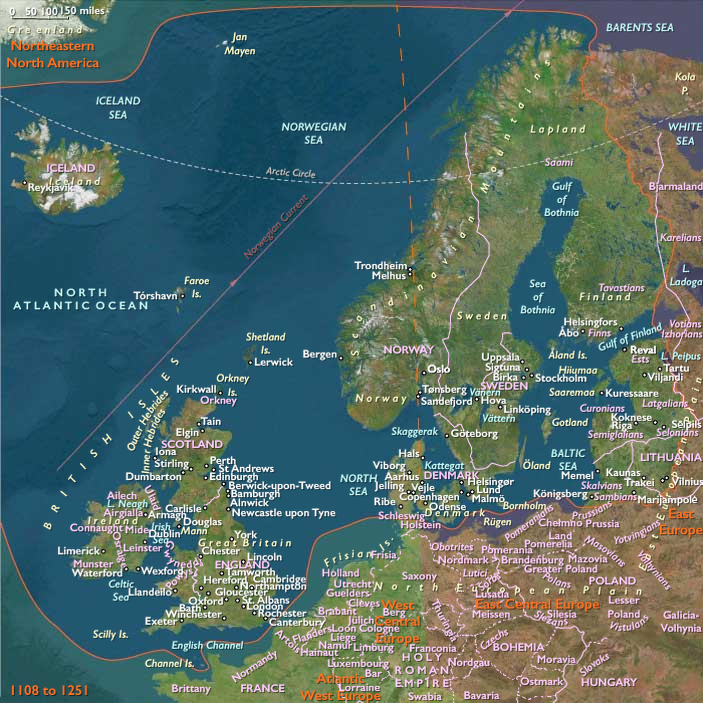
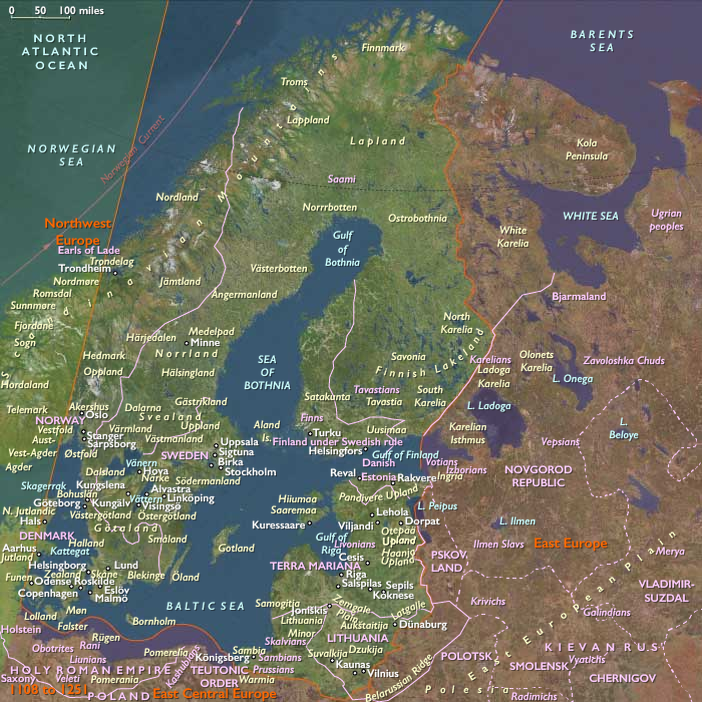
Between 1156 and 1167 CE, Northeast Europe witnessed heightened dynastic rivalry, the intensification of crusading campaigns, and increased tension between Christian kingdoms and pagan Baltic populations. The period saw crucial developments, including the consolidation of royal authority in Sweden and Denmark, and further advances of the Northern Crusades, reshaping regional political dynamics.
Dynastic Conflicts and Monarchical Consolidation
In Denmark, internal dynastic struggles continued to plague royal stability following the reign of Sweyn III Grathe (r. 1146–1157). A critical turning point came with the rise of Valdemar I the Great (r. 1157–1182), who emerged victorious from civil wars in 1157, restoring order and consolidating royal authority. Valdemar's reign marked the beginning of a period of Danish strength and centralized power.
In Sweden, the reign of King Eric IX ("Saint Erik," r. ca. 1156–1160) was brief but impactful, strongly associated with early crusading efforts. After Erik’s death, likely around 1160, dynastic tensions resurged, involving the Sverker and Erik families in recurring conflicts for control over the throne. Despite these tensions, efforts to centralize royal power gradually progressed, setting foundations for a stronger monarchy.
Expansion and Intensification of the Northern Crusades
The crusading fervor that began in earlier decades significantly intensified during this era. The Northern Crusades, now firmly underway, continued their aggressive targeting of pagan Baltic tribes, including the Estonians, Latvians, Lithuanians, and Finnic peoples. Crusaders, notably from German territories, increased their incursions and fortified their presence along the Baltic shores.
Following the legendary First Swedish Crusade to Finland around 1155, missionary and military campaigns continued in earnest. These expeditions aimed to convert local pagan populations forcibly, initiating centuries-long religious and cultural transformation throughout the region.
Urban and Economic Development
Economic activity and urbanization steadily progressed, especially in key trade centers. The strategic city of Visby on Gotland further solidified its role as a principal node in Baltic maritime commerce, connecting Scandinavia with continental Europe. Urban growth also continued in Danish and Swedish towns such as Roskilde, Lund, and the emerging settlement of Stockholm, reflecting increased economic activity and expanding trade networks.
Baltic Resistance and Fortifications
Throughout this period, Baltic populations maintained staunch resistance against crusading incursions. Tribes across modern-day Estonia, Latvia, and Lithuania fortified their settlements and engaged in active resistance, forming strategic alliances against foreign aggression. Their steadfast defense, marked by frequent raids and battles, highlighted the enduring determination of these communities to maintain their autonomy and cultural identity.
Ecclesiastical Influence and Cultural Foundations
Ecclesiastical institutions grew increasingly influential, further embedding Christianity into regional governance and cultural life. Monastic foundations, especially the expanding presence of Cistercian monasteries, provided essential centers for education, religious instruction, and Latin scholarship. The church's strengthening presence significantly influenced societal norms, legal codes, and political structures throughout Northeast Europe.
Legacy of the Era
The years 1156 to 1167 CE left a significant imprint on Northeast Europe's subsequent history. Consolidation of royal authority, intensification of the Northern Crusades, sustained Baltic resistance, and steady urban expansion profoundly shaped regional dynamics. These developments laid critical groundwork for future centuries, defining patterns of religious, cultural, and political interaction that would continue to influence Northeast Europe's historical trajectory.
People
Groups
- Polytheism (“paganism”)
- Finns
- Latvians, or Letts (Eastern Balts)
- Lithuanians (Eastern Balts)
- Estonians
- Estonia, independent
- Denmark, Kingdom of
- Norway, independent Kingdom of
- Hanseatic league (informally organized)
- Sweden, Kingdom of
- Christians, Roman Catholic
- Cistercians, Order of the (White Friars)
- Finland under Swedish rule
Topics
Subjects
Regions
Subregions
Related Events
Showing 10 events out of 48604 total
Years: 1156 - 1167
People
Groups
- Polytheism (“paganism”)
- Finns
- Latvians, or Letts (Eastern Balts)
- Lithuanians (Eastern Balts)
- Estonians
- Estonia, independent
- Denmark, Kingdom of
- Norway, independent Kingdom of
- Hanseatic league (informally organized)
- Sweden, Kingdom of
- Christians, Roman Catholic
- Cistercians, Order of the (White Friars)
- Finland under Swedish rule
Topics
Subjects
Regions
Subregions