
Northeast Europe (1132–1143 CE): Internal Struggles and …
Years: 1132 - 1143
Northeast Europe (1132–1143 CE): Internal Struggles and Expansion of Christian Influence
Introduction
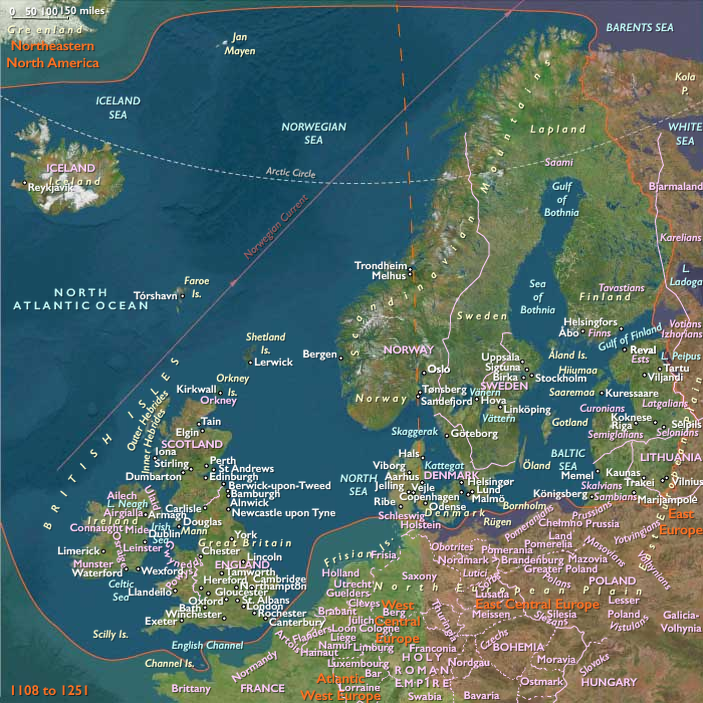
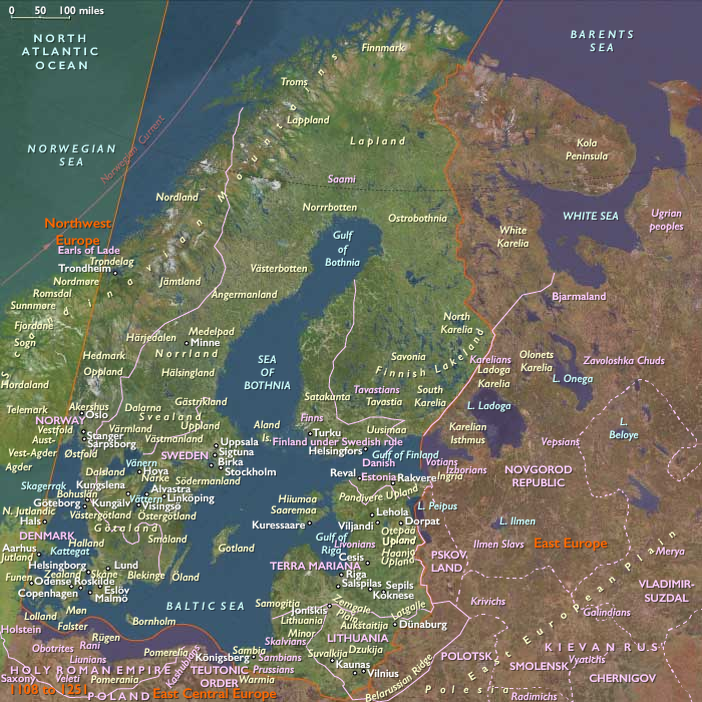
From 1132 to 1143 CE, Northeast Europe experienced significant internal political strife, further expansion of Christian missionary influence, and incremental urban growth. The period was marked by heightened dynastic rivalry, notably within Denmark and Sweden, alongside growing interactions—often conflictual—with neighboring Baltic populations.
Dynastic Struggles and Monarchical Consolidation
In Denmark, King Niels faced escalating internal opposition from rival claimants to the throne, particularly from his nephew, Erik Emune. The rivalry culminated in a destructive civil conflict, weakening central authority and contributing to internal instability that persisted throughout the era.
In Sweden, dynastic disputes intensified between the Sverker and Erik families. King Sverker I (ascended ca. 1130) sought to strengthen royal authority amid considerable internal tensions. His reign was characterized by efforts to unify disparate territories, thus laying foundations for subsequent stable rule.
Early Baltic Crusades and Christianization Efforts
Danish and Swedish missionary efforts intensified along the Baltic coasts during this period, serving as precursors to the later, full-scale crusades of the late twelfth and early thirteenth centuries. These missions primarily targeted pagan populations, notably in areas that would become Estonia and Finland. Initial contacts, though often hostile, gradually increased Scandinavian presence and cultural influence along Baltic shores.
Urban and Economic Development
The era witnessed further growth of emerging urban centers. Visby on Gotland continued to solidify its status as a pivotal Baltic trade hub, facilitating commerce between Scandinavia, the Baltic peoples, and the broader European continent. Similarly, towns such as Roskilde and early iterations of Stockholm and Lund saw modest but steady development, influenced by expanding regional trade networks and local artisan guilds.
Resistance and Fortification among the Baltic Tribes
Baltic tribes intensified defensive efforts against expanding Scandinavian incursions. Ancestors of the Estonians, Latvians, and Lithuanians fortified settlements and increasingly organized resistance. Early Scandinavian attempts to penetrate these regions, though limited in scope, fostered a tradition of fierce resistance among local populations, laying the groundwork for more structured resistance in subsequent decades.
Ecclesiastical Expansion and Cultural Influence
The growth of ecclesiastical institutions continued, particularly through monastic foundations such as Benedictine and early Cistercian monasteries. These institutions played central roles in local education, Latin literacy, and ecclesiastical governance. Christianity gradually permeated deeper into social life, influencing legal practices, cultural norms, and regional governance.
Legacy of the Era
The era from 1132 to 1143 CE significantly shaped Northeast Europe's future through intensified dynastic conflicts, preliminary missionary activities, and growing urban centers. It marked the gradual extension of Christian influence and set foundational precedents for intensified regional interactions, conflicts, and crusading efforts that would decisively shape the historical trajectory of the Baltic and Scandinavian lands.
People
Groups
- Polytheism (“paganism”)
- Finns
- Latvians, or Letts (Eastern Balts)
- Lithuanians (Eastern Balts)
- Estonians
- Estonia, independent
- Benedictines, or Order of St. Benedict
- Denmark, Kingdom of
- Norway, independent Kingdom of
- Hanseatic league (informally organized)
- Sweden, Kingdom of
- Christians, Roman Catholic
- Cistercians, Order of the (White Friars)
Subjects
Regions
Subregions
Related Events
Showing 5 events out of 5 total
Years: 1132 - 1143
People
Groups
- Polytheism (“paganism”)
- Finns
- Latvians, or Letts (Eastern Balts)
- Lithuanians (Eastern Balts)
- Estonians
- Estonia, independent
- Benedictines, or Order of St. Benedict
- Denmark, Kingdom of
- Norway, independent Kingdom of
- Hanseatic league (informally organized)
- Sweden, Kingdom of
- Christians, Roman Catholic
- Cistercians, Order of the (White Friars)
Subjects
Regions
Subregions