
Northeast Europe (1108–1119 CE): Crusades, Kingdom Building, …
Years: 1108 - 1119
Northeast Europe (1108–1119 CE): Crusades, Kingdom Building, and Early Consolidation
Introduction
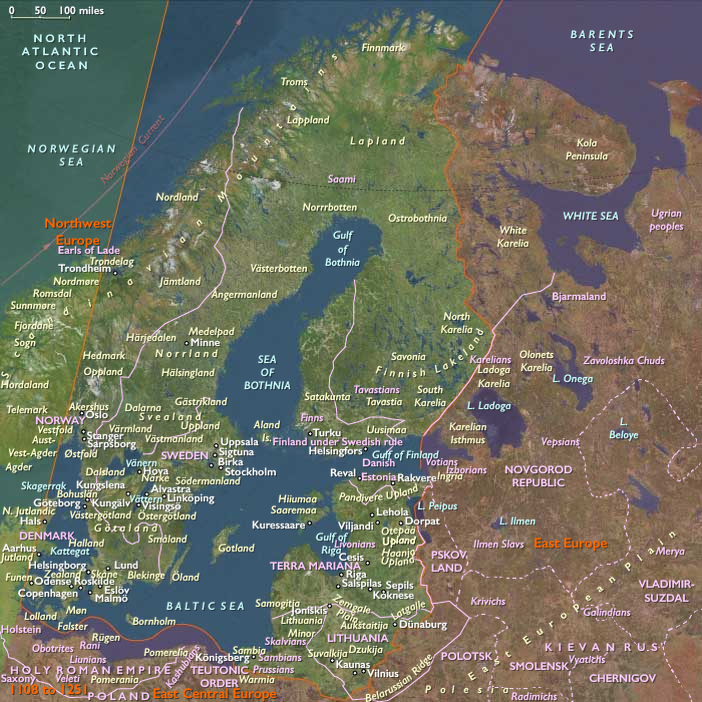
The era from 1108 to 1119 CE in Northeast Europe was characterized by intensified missionary activity, initial phases of political consolidation, and the early emergence of fortified urban centers. The period laid critical foundations for later developments across Finland, Sweden, Denmark, and the Baltic lands.
Crusading and Missionary Activities
During this period, Danish and Swedish rulers significantly increased their efforts to convert pagan communities along the Baltic shores. The Danish king Niels (r. 1104–1134) continued his predecessors' missionary policies, consolidating Christianity in his realms and setting his sights further eastward. At the same time, Sweden under the rule of King Inge the Younger (r. 1110–1125) intensified its Christianization efforts along its eastern borders, laying the groundwork for the later famed expeditions into Finland.
Political Consolidation and Territorial Control
In Denmark, King Niels sought to consolidate royal authority amidst the complexities of noble rivalries. While his reign faced internal strife, notably from ambitious regional nobles, his efforts significantly stabilized central royal authority in Denmark.
Sweden experienced internal struggles and continued to witness power struggles between the Sverker and Erik dynasties. Despite these internal divisions, efforts towards strengthening monarchical authority continued, setting the stage for later unified governance.
Early Development of Trade and Towns
The early twelfth century marked continued growth in trade and urbanization in Northeast Europe. Towns like Roskilde in Denmark, Visby on Gotland, and emerging trade hubs in Sweden gradually expanded their influence through increased commerce, linking Baltic regions more closely with Western European trade networks.
The Hanseatic League had not yet officially formed but preliminary merchant networks and guild systems laid groundwork during this period, enhancing regional trade integration and facilitating cultural exchanges.
Baltic Peoples and Early Resistance
Baltic tribes in what are now Estonia, Latvia, and Lithuania maintained their fiercely independent stance, responding to external pressures with intensified fortification of settlements and intermittent resistance against incursions. While significant crusading attempts had yet to reach these regions fully, early interactions during this period set the tone for later intensified crusades and conflicts.
Cultural Developments and Early Ecclesiastical Organization
Throughout Denmark and Sweden, the early twelfth century saw the further establishment of ecclesiastical institutions, such as monastic communities, that would significantly influence cultural and educational life. The Church continued to consolidate its local organizational structures, promoting Latin literacy and ecclesiastical reform that increasingly shaped societal norms and governance.
Legacy of the Era
The brief but crucial era from 1108 to 1119 CE set important foundations for Northeast Europe's future trajectory. Increased missionary activity, initial political consolidation, early urban development, and ongoing regional resistance shaped subsequent centuries. The incremental establishment of ecclesiastical influence and royal authority during these formative years contributed significantly to the region's later integration into broader European cultural, political, and economic frameworks.
People
Groups
- Polytheism (“paganism”)
- Prussians, Old, or Baltic (Western Balts)
- Finns
- Samogitians, or Lowland Lithuanians (Eastern Balts)
- Semigallians (Eastern Balts)
- Curonians (Western Balts)
- Latgalians (Eastern Balts)
- Selonians (Eastern Balts)
- Yotvingians, or Sudovians (Western Balts)
- Skalvians, or Scalovians (Western Balts)
- Sambians (Western Balts)
- Latvians, or Letts (Eastern Balts)
- Lithuanians (Eastern Balts)
- Aukstaitians, or Highland Lithuanians (Eastern Balts)
- Estonians
- Estonia, independent
- Denmark, Kingdom of
- Danes (Scandinavians)
- Swedes (North Germanic tribe)
- Norse
- Warmians (Prussian Clan)
- Norway, independent Kingdom of
- Hanseatic league (informally organized)
- Sweden, Kingdom of
- Christians, Roman Catholic
- Natangians (Prussian clan)
Subjects
Regions

Subregions
Related Events
Showing 10 events out of 49873 total
Years: 1108 - 1119
People
Groups
- Polytheism (“paganism”)
- Prussians, Old, or Baltic (Western Balts)
- Finns
- Samogitians, or Lowland Lithuanians (Eastern Balts)
- Semigallians (Eastern Balts)
- Curonians (Western Balts)
- Latgalians (Eastern Balts)
- Selonians (Eastern Balts)
- Yotvingians, or Sudovians (Western Balts)
- Skalvians, or Scalovians (Western Balts)
- Sambians (Western Balts)
- Latvians, or Letts (Eastern Balts)
- Lithuanians (Eastern Balts)
- Aukstaitians, or Highland Lithuanians (Eastern Balts)
- Estonians
- Estonia, independent
- Denmark, Kingdom of
- Danes (Scandinavians)
- Swedes (North Germanic tribe)
- Norse
- Warmians (Prussian Clan)
- Norway, independent Kingdom of
- Hanseatic league (informally organized)
- Sweden, Kingdom of
- Christians, Roman Catholic
- Natangians (Prussian clan)
Subjects
Regions
Subregions