
Northeast Europe (1120–1131 CE): Strengthening Monarchies and …
Years: 1120 - 1131
Northeast Europe (1120–1131 CE): Strengthening Monarchies and Early Crusades
Introduction
Between 1120 and 1131 CE, Northeast Europe witnessed continued efforts toward political centralization, emerging patterns of regional power, and increasingly organized missionary activity. This period saw both internal consolidation and external expansion efforts, notably through early crusading activities targeting the pagan populations around the Baltic.
Consolidation of Royal Authority
In Denmark, King Niels (r. 1104–1134) continued his efforts to reinforce central authority despite ongoing resistance from regional noble factions. His reign featured enhanced administrative structures and strengthened alliances, which bolstered his position and laid a foundation for increased royal influence.
In Sweden, the ongoing struggle between competing dynastic factions—particularly between the Sverker and Erik dynasties—shaped internal politics. King Inge the Younger (r. 1110–1125) faced internal dissent but managed to retain authority, allowing for a degree of stability that facilitated early expansion and missionary activities eastward.
Early Crusading and Missionary Efforts
During this era, increased missionary zeal motivated Danish and Swedish rulers to undertake early expeditions targeting pagan populations in neighboring territories, notably in Finland and the eastern Baltic coast. Though full-scale crusades would not be realized until later in the century, these preliminary missionary efforts laid important groundwork, gradually extending Christian influence.
In Denmark, King Niels supported ecclesiastical expansion through missionary bishops and monastic settlements, preparing the terrain for subsequent crusading missions to the southern and eastern Baltic coasts.
Development of Urban Centers and Trade
Urban growth accelerated during this period, particularly in emerging trade centers. Visby, on the island of Gotland, increasingly became a prominent trading hub, connecting northern Europe to the broader European trade networks. Roskilde and other Danish towns similarly saw steady growth, driven by expanding trade and early guild activity.
Although formal Hanseatic League structures had yet to form, merchant guilds in Northeast European towns laid vital foundations for future regional economic cooperation.
Baltic Peoples and Early Resistance
The Baltic peoples, including the ancestors of modern Estonians, Latvians, and Lithuanians, actively resisted external pressures from increasingly aggressive Scandinavian kingdoms. Fortified settlements multiplied, signaling early organized resistance to encroachment by Christian missionaries and regional powers. These communities prepared the foundations for extended resistance efforts, culminating in later centuries.
Cultural and Ecclesiastical Expansion
Cultural life was notably enhanced through the establishment and expansion of monastic institutions. The Church consolidated its local authority by reinforcing episcopal structures and supporting literacy and education, predominantly through Latin ecclesiastical scholarship. This period marked the continued integration of Scandinavian and Baltic societies into broader European religious and cultural frameworks.
Legacy of the Era
The era of 1120–1131 CE significantly shaped Northeast Europe's subsequent development. Increased royal authority, preliminary missionary activities, early urbanization, and persistent regional resistance were foundational to later historical trajectories. These efforts set the stage for extensive crusading movements and provided crucial foundations for the region's cultural and political integration into European Christendom.
People
Groups
- Polytheism (“paganism”)
- Prussians, Old, or Baltic (Western Balts)
- Latvians, or Letts (Eastern Balts)
- Lithuanians (Eastern Balts)
- Estonians
- Denmark, Kingdom of
- Norway, independent Kingdom of
- Hanseatic league (informally organized)
- Sweden, Kingdom of
- Christians, Roman Catholic
Subjects
Regions
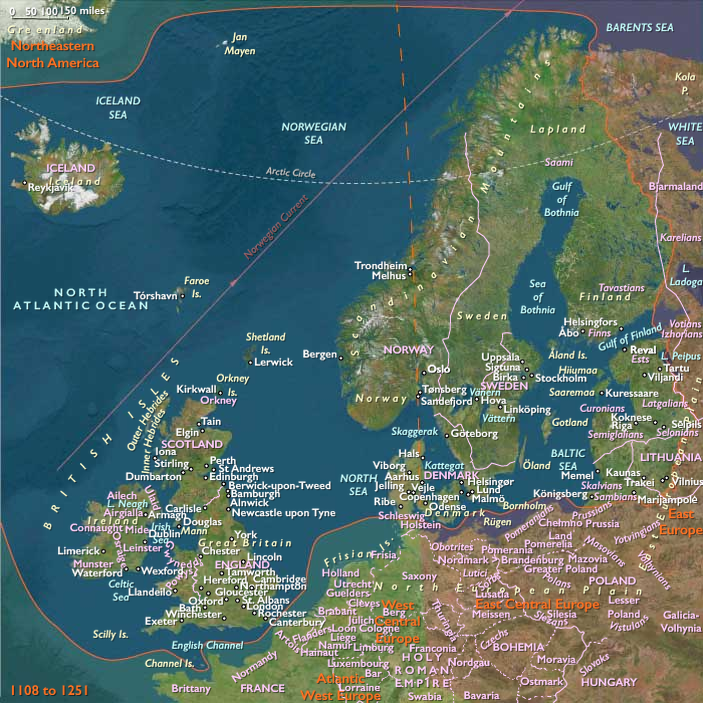
Subregions
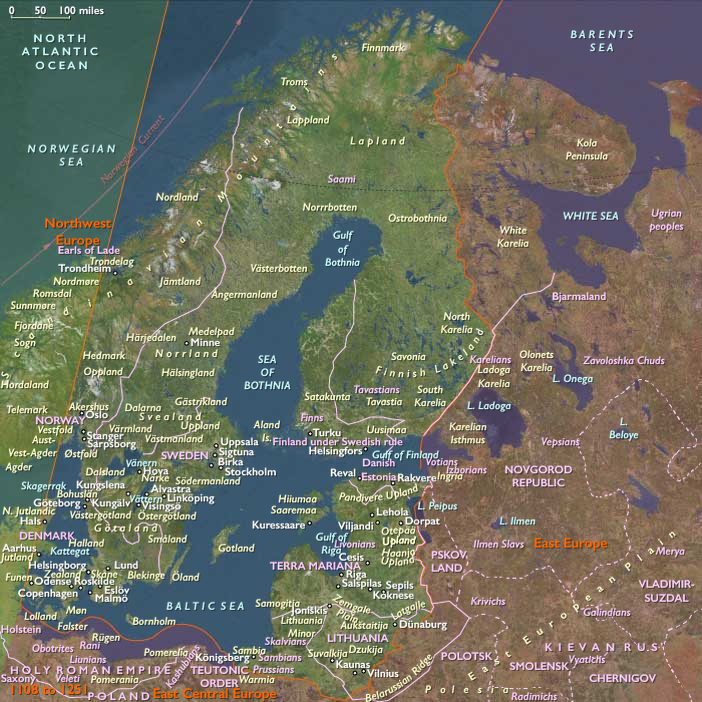
Years: 1120 - 1131
People
Groups
- Polytheism (“paganism”)
- Prussians, Old, or Baltic (Western Balts)
- Latvians, or Letts (Eastern Balts)
- Lithuanians (Eastern Balts)
- Estonians
- Denmark, Kingdom of
- Norway, independent Kingdom of
- Hanseatic league (informally organized)
- Sweden, Kingdom of
- Christians, Roman Catholic
Subjects
Regions
Subregions