
North Europe (1108 – 1251 CE): Crusades, …
Years: 1108 - 1251
North Europe (1108 – 1251 CE): Crusades, Kingdoms, and the Northern Seas
Between 1108 and 1251 CE, the northern world—stretching from the British Isles to the Baltic—entered a transformative age.
It was a time when Christian monarchies consolidated power, crusades reached the Arctic forests, and seafaring linked the fjords of Norway with the markets of Flanders and the fur frontiers of Novgorod.
While England and France clashed for continental supremacy, Scandinavian and German crusaders advanced eastward, reshaping the Baltic and Finnic worlds.
This was the age when the North became both frontier and center—a maritime and mercantile sphere binding the Atlantic to the forests of Eurasia.
Geographic and Environmental Context
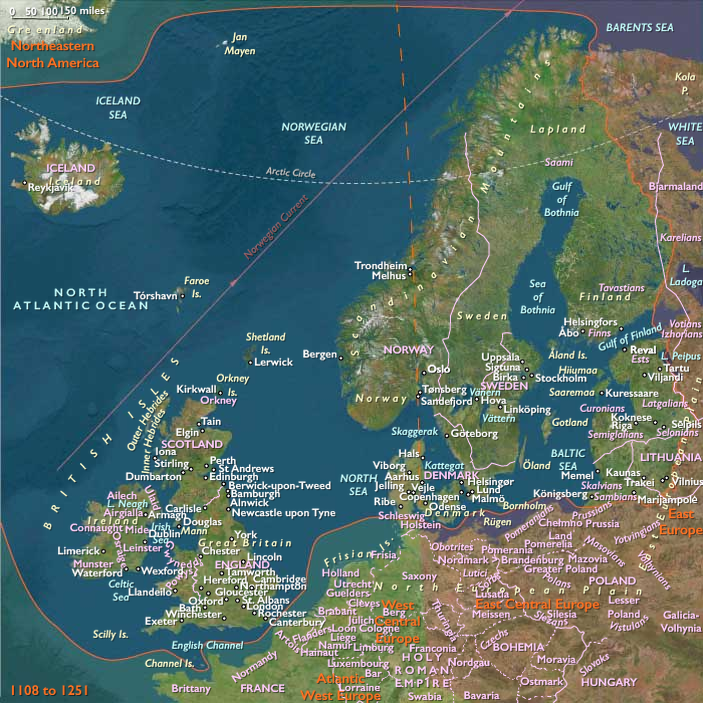
North Europe encompassed the British Isles, Scandinavia, Iceland, the Baltic coasts, and the North Sea—a world of fjords, forests, and fertile river valleys encircling the Northern Seas.
-
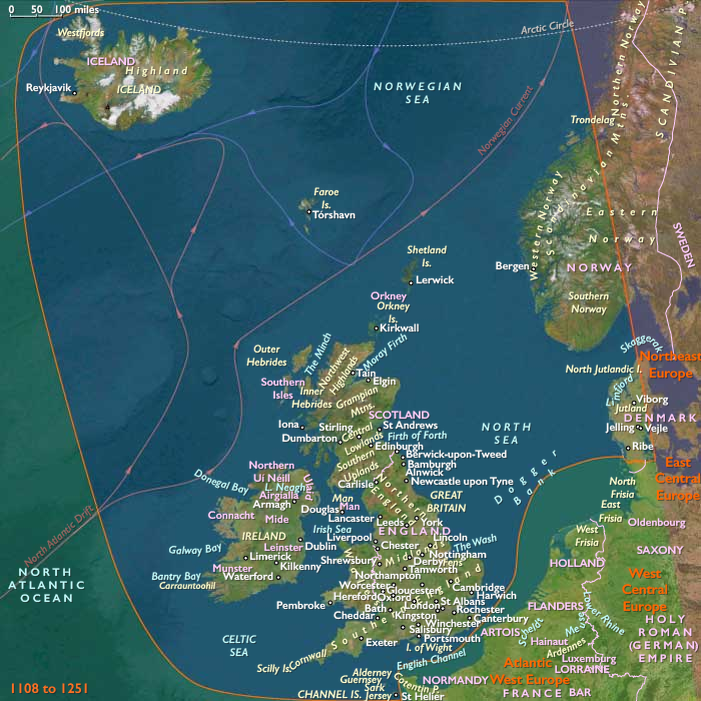
The British Isles combined agrarian lowlands and mountainous hinterlands, surrounded by a constellation of trade ports from London to Dublin and Bristol.
-
Scandinavia, spanning Norway, Denmark, and Sweden, linked Atlantic and Baltic routes.
-
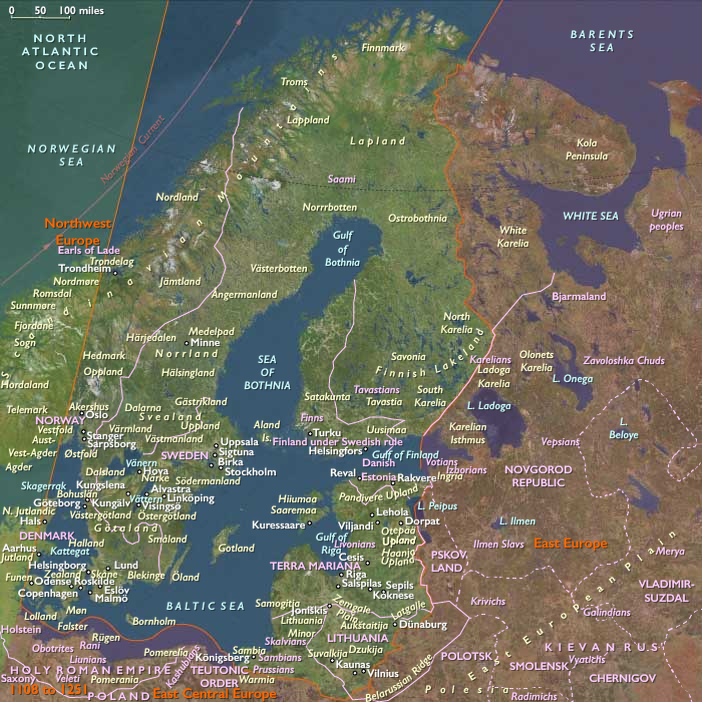
The Baltic frontier included Finland, Estonia, Latvia, and Lithuania, bordered by the Orthodox state of Novgorod.
-
Iceland, the Orkneys, and the Shetlands marked the North Atlantic periphery.
Together, these lands formed the maritime and cultural bridge between Latin Christendom and the eastern forests of Rus’.
Climate and Environmental Shifts
The High Medieval Warm Period (c. 950–1250) brought longer summers, milder winters, and population growth.
In England and Denmark, new farmlands replaced forests; in Sweden and Finland, agriculture spread northward.
The North Atlantic fisheries of Iceland and Norway became vital sources of protein and trade.
Warm, stable conditions fostered both agricultural surplus and the revival of long-distance seafaring, while forests and waterways provided furs, timber, and tar—the commodities of the northern economy.
Political and Military Developments
The British Isles and the Angevin World:
-
England, under Henry II (1154–1189), forged the Angevin Empire, stretching from the Pyrenees to the Scottish border.
-
The Magna Carta (1215) limited royal power, establishing principles of law and counsel that endured.
-
Ireland, invaded by Anglo-Norman barons after 1169, fell under English control, its Gaelic kings confined to the west.
-
Scotland, under David I and Alexander II, adopted feudal institutions and episcopal structures, balancing English influence with Celtic tradition.
-
Wales, under Llywelyn the Great, resisted Norman marcher lords, preserving independence through strategic diplomacy.
Scandinavia and the Baltic Kingdoms:
-
Denmark, at its zenith under Valdemar I–II (1157–1241), dominated southern Baltic trade and launched crusades into Estonia and Livonia.
-
Sweden consolidated around Uppsala and Västergötland, expanding east into Finland through both colonization and crusade.
-
Norway, after a century of civil wars (1130–1240), reunited under Håkon IV, restoring royal authority and overseas trade.
-
Iceland, governed by local chieftains (goðar), remained culturally vibrant but politically fractured, leading to submission to Norway in 1262 (beyond this period).
The Baltic Crusades and Novgorodian Influence:
-
The Livonian Brothers of the Sword (founded 1202) and the Teutonic Order (merged 1237) conquered Latvia and Estonia, founding Riga and Reval (Tallinn) as fortress-towns of the crusader state.
-
Lithuania, still pagan, resisted conversion and began unifying under native princes.
-
Novgorod extended Orthodox influence into Karelia and Finland, balancing trade and mission against Latin incursion.
By mid-century, the Baltic had become both Christianized and militarized—Europe’s newest frontier.
Economy and Trade
The northern economy thrived on its integration of land and sea:
-
England’s wool fed Flemish looms, generating vast export wealth through ports like Bristol, Boston, and London.
-
Norwegian stockfish (dried cod) and timber supplied continental markets.
-
Baltic furs, wax, and honey from Finnic and Rus’ lands moved through Novgorod to Western Europe.
-
Danish and German merchants laid the foundations for the Hanseatic League, linking Lübeck, Hamburg, and Visby into a proto-network of northern trade.
-
Agricultural expansion—rye, barley, oats—transformed Sweden and the Baltic, while shipbuilding and ironworking flourished in Scandinavian yards.
The Baltic Sea became the “new Mediterranean” of the north—an enclosed sea of commerce, crusade, and colonization.
Society, Faith, and Culture
Christianization and Crusade:
By 1200, Christianity was universal in Scandinavia and Britain, enforced by kings and monasteries.
In the Baltic, missionary wars replaced diplomacy: cathedrals rose over pagan sanctuaries in Riga and Dorpat, while Orthodox monasteries anchored Novgorodian Karelia.
The Northern Crusades fused faith and conquest, extending Latin Christendom’s frontiers.
Art and Architecture:
Romanesque and early Gothic churches appeared from Canterbury and Lincoln to Uppsala and Trondheim.
In England, Gothic innovation produced Salisbury Cathedral (begun 1220) and Westminster Abbey.
Runic traditions faded as Latin literacy spread; illuminated manuscripts, stone crosses, and wooden stave churches preserved local artistry.
Learning and Law:
Cathedrals and monasteries became schools of governance.
The English common law, Scottish charters, and Scandinavian law codes (Gulating, Uppland) established enduring legal cultures.
In the Baltic, Latin and German law (Riga Charter, Lübeck Law) laid civic foundations for later Hanseatic cities.
Movement and Interaction Corridors
-
The North Sea route — London ⇄ Bruges ⇄ Bergen ⇄ Trondheim — maritime commerce and exchange of goods and pilgrims.
-
The Baltic Sea loop — Lübeck ⇄ Visby ⇄ Riga ⇄ Novgorod — the crucible of early Hanseatic trade.
-
Atlantic passages — Bristol ⇄ Dublin ⇄ Reykjavík ⇄ Trondheim — sustaining Norse and English contact.
-
Crusader corridors — Lübeck ⇄ Riga ⇄ Livonia — conduits of conquest and colonization.
-
Overland routes — through Denmark and Sweden, connecting the Baltic to continental Europe’s interior.
By uniting these corridors, the Northern Seas became the commercial frontier of Latin Christendom.
Adaptation and Resilience
-
Maritime adaptation: Viking-era seamanship evolved into large cargo fleets for trade and war.
-
Agrarian diversification: Mixed farming and grazing stabilized local economies.
-
Ecological resilience: Fishing, forestry, and fur-trapping buffered societies against crop failure.
-
Political flexibility: Monarchies and chieftaincies balanced feudal forms with local assemblies (thing, althing, lagting).
-
Religious integration: Pagan and Christian traditions blended in folklore and festival, softening conversion shocks.
These adaptive systems ensured both survival and expansion across one of Europe’s most climatically and politically challenging frontiers.
Long-Term Significance
By 1251 CE, North Europe had become a unified yet diverse zone of Christian monarchy and maritime trade:
-
England emerged as a centralized kingdom with parliamentary roots.
-
Scotland and Wales asserted identities under reforming kings and native princes.
-
Norway, Denmark, and Sweden stood as stable Christian monarchies, projecting power across the Baltic and Atlantic.
-
Novgorod extended Orthodox influence, while German crusading orders entrenched Catholic dominance in Livonia and Prussia.
-
Lithuania, still pagan, remained independent—the last great frontier of conversion.
The northern seas—once Viking waters—became arteries of commerce and Christendom, setting the stage for the Hanseatic League, Scandinavian expansion, and the political unifications of the late Middle Ages.
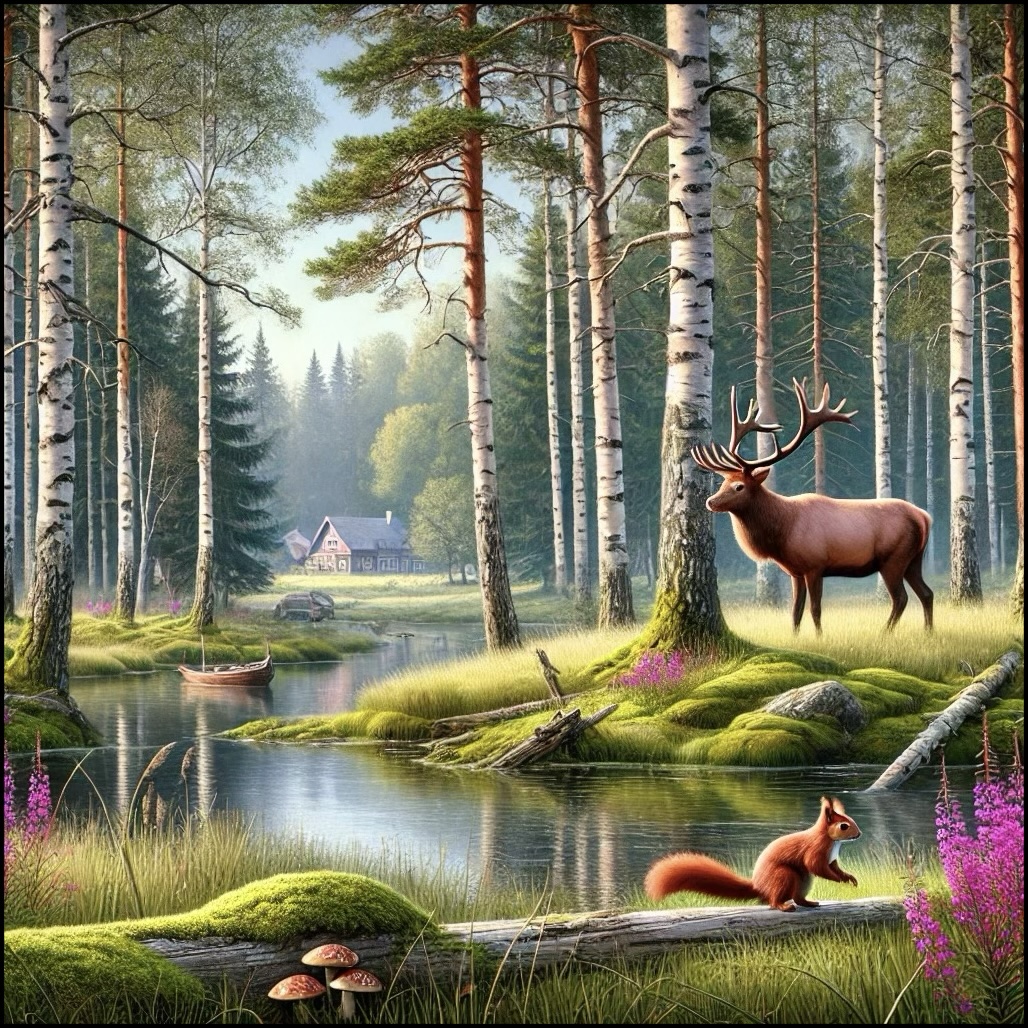
Northeast Europe (with civilization) ©2024-25 Electric Prism, Inc. All rights reserved.
Groups
- Polytheism (“paganism”)
- Finns
- Balts
- Latvians, or Letts (Eastern Balts)
- Lithuanians (Eastern Balts)
- Estonians
- Estonia, independent
- Denmark, Kingdom of
- Norway, independent Kingdom of
- Hanseatic league (informally organized)
- Sweden, Kingdom of
- Christians, Roman Catholic
- Cistercians, Order of the (White Friars)
- Knights of the Sword (Order of the Livonian Brothers of the Sword, or Livonian Knights)
- Dominicans, or Order of St. Dominic
- Estonia, Danish
- Ordensstaat (Monastic state of the Teutonic Knights)
Topics
Commodoties
Subjects
Regions
Subregions
Related Events
Showing 10 events out of 49873 total
Years: 1108 - 1251
Northeast Europe (with civilization) ©2024-25 Electric Prism, Inc. All rights reserved.
Groups
- Polytheism (“paganism”)
- Finns
- Balts
- Latvians, or Letts (Eastern Balts)
- Lithuanians (Eastern Balts)
- Estonians
- Estonia, independent
- Denmark, Kingdom of
- Norway, independent Kingdom of
- Hanseatic league (informally organized)
- Sweden, Kingdom of
- Christians, Roman Catholic
- Cistercians, Order of the (White Friars)
- Knights of the Sword (Order of the Livonian Brothers of the Sword, or Livonian Knights)
- Dominicans, or Order of St. Dominic
- Estonia, Danish
- Ordensstaat (Monastic state of the Teutonic Knights)
Topics
Commodoties
Subjects
Regions
Subregions