
Northeast Asia (909 BCE – 819 CE): …
Years: 909BCE - 819
Northeast Asia (909 BCE – 819 CE): River Kingdoms, Coastal Specialists, and Toward Satsumon and Okhotsk
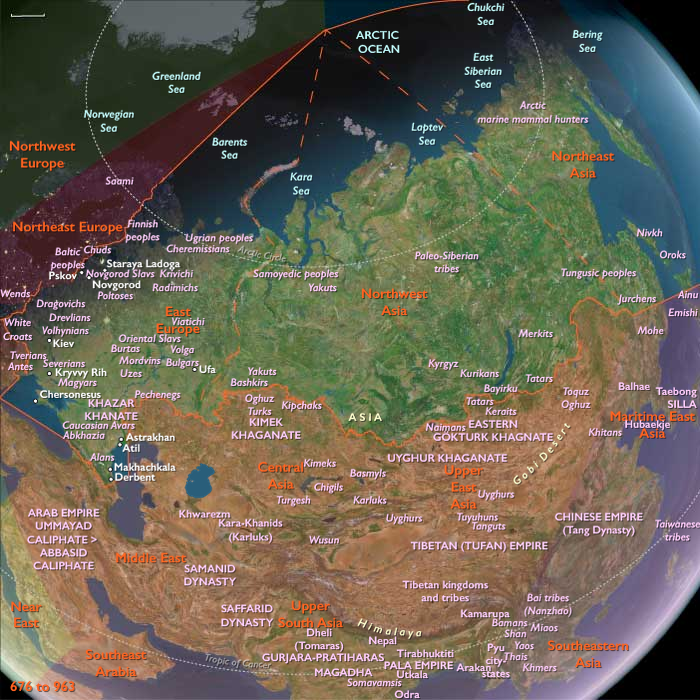
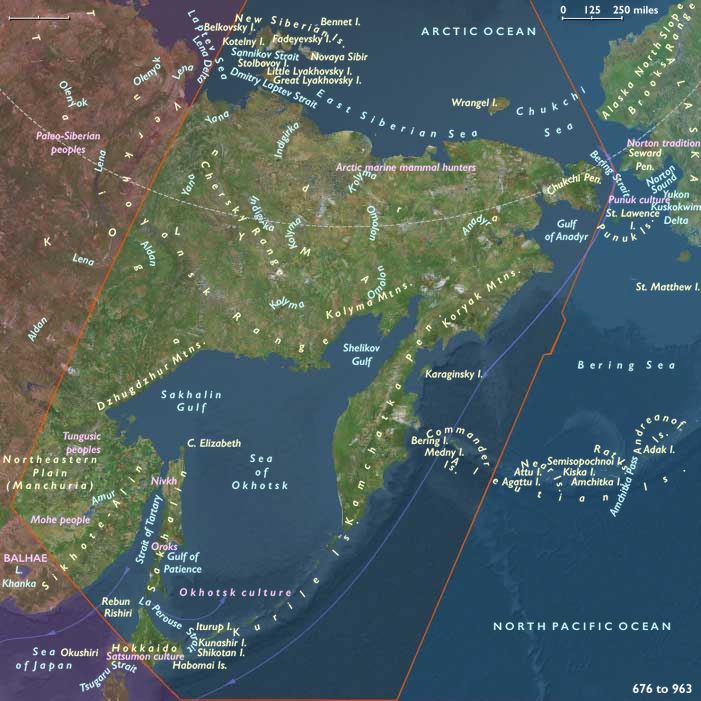
Northeast Asia includes eastern Siberia east of the Lena River to the Pacific, the Russian Far East (excluding the southern Primorsky/Vladivostok corner), northern Hokkaidō (above its southwestern peninsula), and extreme northeastern Heilongjiang.
-
Anchors: Lower Amur polities (proto-Mohe/Sushen), Ussuri towns, Sakhalin landing nodes, Okhotsk seal/whale stations, northern Hokkaidō (Epi-Jōmon → Satsumon trajectory).
Climate & Environmental Shifts
-
First-millennium variability; ice-edge polynyas reliable; river freeze–thaw structured travel calendars.
Subsistence & Settlement
-
Amur river kingdoms consolidated tribute in fish, furs, and horses; fortified villages with plank halls and big storage.
-
Okhotsk coastal specialists (mid–late 1st millennium CE) mastered sealing/whaling, dog-keeping, and winter oil technologies; shell mounds and bear rites diagnostic.
-
Northern Hokkaidō transitioned from Epi-Jōmon to early Satsumon (late in period), with pottery change, iron use, and limited cultivation at southern margins.
Technology & Material Culture
-
Iron from mainland routes integrated into knives, awls, spearheads; bone harpoons with toggling heads remained indispensable.
-
Pottery diversified (thicker-walled cooking/storage), soapstone lamps, leather/skin parkas; skis and snowshoes inland.
Movement & Interaction Corridors
-
Amur–Sungari–Korean axis funneled iron and horses; Sakhalin–Hokkaidō ferries moved metals and ceramics; Okhotsk coastal runs spread salt and oils.
Cultural & Symbolic Expressions
-
Bear-sending rituals, first-salmon rites, and ancestor memorials knit communities; lineage emblems appeared on grave goods and house posts.
Environmental Adaptation & Resilience
-
Tri-zonal adaptation (riverine storage, coastal sealing, taiga hunting) created redundancy; iron adoption enhanced woodworking/canoe repair and sewing.
Legacy & Transition
By 819 CE, Northeast Asia exhibited the cultural precursors of the medieval Okhotsk sphere and Hokkaidō’s Satsumon communities—maritime specialists and riverine chiefdoms enmeshed in Amur–Japan Sea exchange, setting the stage for later Ainu ethnogenesis and North Pacific interactions.
Groups
- Chukchi
- Koryaks
- Evens, or Eveny
- Yukaghirs
- Emishi
- Yamato people
- Japan, Yayoi Period
- Japan, Yamato Kofun Period
- Okhotsk culture
- Japan, Yamato Hakuho (Late Asuka) Period
Commodoties
Subjects
Regions
Subregions
Years: 909BCE - 819
Groups
- Chukchi
- Koryaks
- Evens, or Eveny
- Yukaghirs
- Emishi
- Yamato people
- Japan, Yayoi Period
- Japan, Yamato Kofun Period
- Okhotsk culture
- Japan, Yamato Hakuho (Late Asuka) Period
Commodoties
Subjects
Regions
Subregions