
Northeast Asia (1816–1827 CE) Consolidation, Commercial …
Years: 1816 - 1827
Northeast Asia (1816–1827 CE)
Consolidation, Commercial Growth, and International Observations
Between 1816 and 1827, Northeast Asia experienced significant administrative consolidation, infrastructural improvements, and deepening commercial interactions, driven predominantly by Russian enterprises and global interests in Pacific maritime trade.
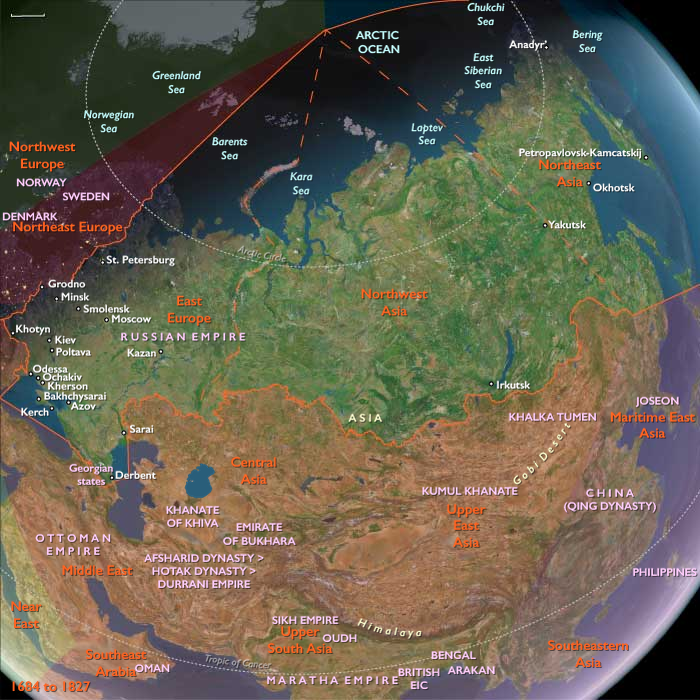
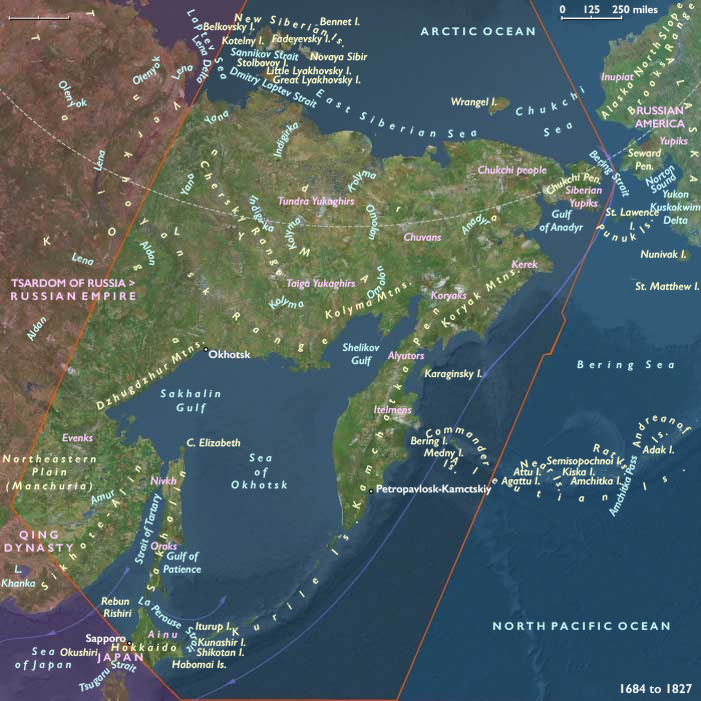
The port of Petropavlovsk-Kamchatsky continued to rise in importance, solidifying its status as the premier administrative and supply hub for Russian operations across the Pacific region, while the historically crucial but persistently problematic port of Okhotsk remained indispensable. Despite its ongoing logistical difficulties—such as shallow waters, short sailing seasons, and frequent flooding—the port served as an essential conduit connecting Siberian inland routes to Kamchatka and Russian America.
Russian trade networks intensified around the lucrative maritime fur trade, driven by persistent demand from Qing China and other global markets. Valuable pelts—especially those of sea otters, fur seals, and sable—were gathered from Kamchatka, the Aleutians, and nearby coastal islands, then transported through Petropavlovsk and Okhotsk. From there, these goods were routed overland across Siberia to the trading outpost at Kyakhta on the Mongolian frontier, reinforcing expansive transcontinental commerce.
In 1822, the English traveler Captain John Dundas Cochrane observed Okhotsk favorably, ranking it just after Barnaul as one of Siberia's neatest, cleanest, and most pleasant towns. Cochrane, an illegitimate son of Scottish adventurer Andrew Cochrane-Johnstone, had traveled extensively by foot across France, Spain, Portugal, Germany, Russia, and Asia—earning him the nickname "the Pedestrian Traveller" (voyageur pédestre). In Okhotsk, he married Ksenia Ivanovna Loginova (1807–1870), the adoptive daughter of Admiral Pyotr Rikord, then the Russian governor of Kamchatka.
Despite these positive descriptions, Okhotsk's severe logistical issues persisted. The Okhotsk saltworks, established in 1737 and still active in 1827, employed around 150 exiles and about a hundred guards and overseers, reflecting the continued reliance on forced labor for regional economic activities.
The operations of the Russian-American Company significantly shaped regional dynamics during this period. Company vessels frequented both Okhotsk and Petropavlovsk, supporting the administrative, logistical, and commercial activities essential to Russia’s broader Pacific ventures. The expansion of the Russian-American Company’s activities necessitated increased interactions—ranging from trade to conflict—with indigenous peoples including the Chukchi, Koryaks, Itelmen, Ainu, and Nivkh, all drawn deeper into commercial exchanges while often facing resource pressures and cultural disruption.
Japan under the Tokugawa shogunate remained wary of Russian encroachments, continuing its policy of exclusion but bolstering direct administrative control over Hokkaidō, Sakhalin, and the Kuril Islands to deter potential Russian advancement.
Infrastructure development during this era, particularly the port enhancements at Petropavlovsk, facilitated improved provisioning and maintenance of Russia's Pacific fleet. Yet Okhotsk remained hindered by persistent difficulties, including the inadequate pasture for pack animals, leading to significant transportation challenges and occasionally requiring horses to return unloaded to Yakutsk.
Overall, this era marked a period of notable consolidation, infrastructural developments, international interactions, and intensified commercial activities in Northeast Asia, laying critical foundations for subsequent developments across the broader Pacific region.
Groups
- Koryaks
- Chukchi
- Nivkh people
- Evens, or Eveny
- Yukaghirs
- Buddhism
- Ainu people
- Japanese people
- Itelmens
- Siberian Yupiks
- Evenks
- Alyutors
- Kereks
- Japan, Tokugawa, or Edo, Period
- Russian Empire
- Russian America
- Russian-American Company
Topics
Commodoties
Subjects
Regions
Subregions
Years: 1816 - 1827
Groups
- Koryaks
- Chukchi
- Nivkh people
- Evens, or Eveny
- Yukaghirs
- Buddhism
- Ainu people
- Japanese people
- Itelmens
- Siberian Yupiks
- Evenks
- Alyutors
- Kereks
- Japan, Tokugawa, or Edo, Period
- Russian Empire
- Russian America
- Russian-American Company
Topics
Commodoties
Subjects
Regions
Subregions