
Northeast Asia (1792–1803 CE) Consolidation of …
Years: 1792 - 1803
Northeast Asia (1792–1803 CE)
Consolidation of Russian Control and Intercultural Encounters
From 1792 to 1803, Russian control over Northeast Asia continued to strengthen, bolstered by strategic settlement expansion and vigorous maritime fur-trading activities. Russian traders and settlers extended their influence deeper into Kamchatka, the Aleutian Islands, and other northern territories, increasingly integrating these remote areas into a broader imperial economic network.
Kamchatka remained vital as a regional base, with the settlement at Petropavlovsk gaining prominence due to its superior harbor compared to the older and logistically challenging port of Okhotsk. Nevertheless, Okhotsk continued to function as an essential hub for maritime logistics despite the harsh climate and persistent shortages in local agricultural productivity. In 1799, the establishment of the Russian-American Company based in Okhotsk brought increased economic activity and investment to the region.
Over one hundred private fur trading and hunting voyages had already sailed from Kamchatka to North America from 1743 up to the founding of the Russian-American Company. In total, these voyages generated revenues exceeding eight million silver rubles, highlighting the economic significance of the region's fur trade.
During this period, notable intercultural exchanges further highlighted the complex dynamics of Russian and indigenous relationships. In 1792, the Japanese castaway Daikokuya Kōdayū and his surviving companions, who had previously reached Kamchatka from the Aleutian Islands, traveled to Okhotsk, where they remained for several years. Their remarkable journey attracted attention from both Russian and international observers, further opening Russian eyes to potential interactions and diplomatic relations with Japan.
Expeditions and trading activities in the region intensified ecological pressures on marine wildlife populations, notably sea otters, fur seals, and foxes, whose pelts continued to fuel the lucrative fur trade with China via the trading town of Kyakhta. Russian authorities began implementing more systematic administrative and economic controls, including the establishment of fortified outposts along key trade routes, aimed at managing the region's vast natural resources more effectively and consolidating imperial control.
Simultaneously, diplomatic and exploratory interactions continued. French explorer and diplomat Barthélemy de Lesseps, who had previously carried records of the Lapérouse expedition to France, published extensive accounts of his Siberian journey, further illuminating European understanding of the region and contributing to international interest in Northeast Asia. Russian exploration and settlement during this period set crucial groundwork for future diplomatic initiatives and territorial consolidations.
People
Groups
- Koryaks
- Chukchi
- Nivkh people
- Evens, or Eveny
- Yukaghirs
- Buddhism
- Ainu people
- Japanese people
- Itelmens
- Siberian Yupiks
- Evenks
- Alyutors
- Kereks
- Japan, Tokugawa, or Edo, Period
- Russian Empire
- Russian America
- Russian-American Company
Topics
Commodoties
Subjects
Regions
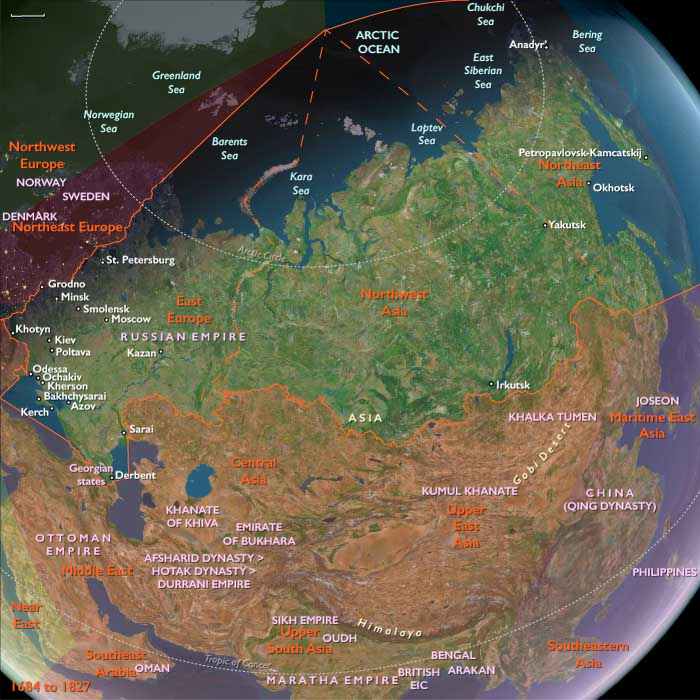
Subregions
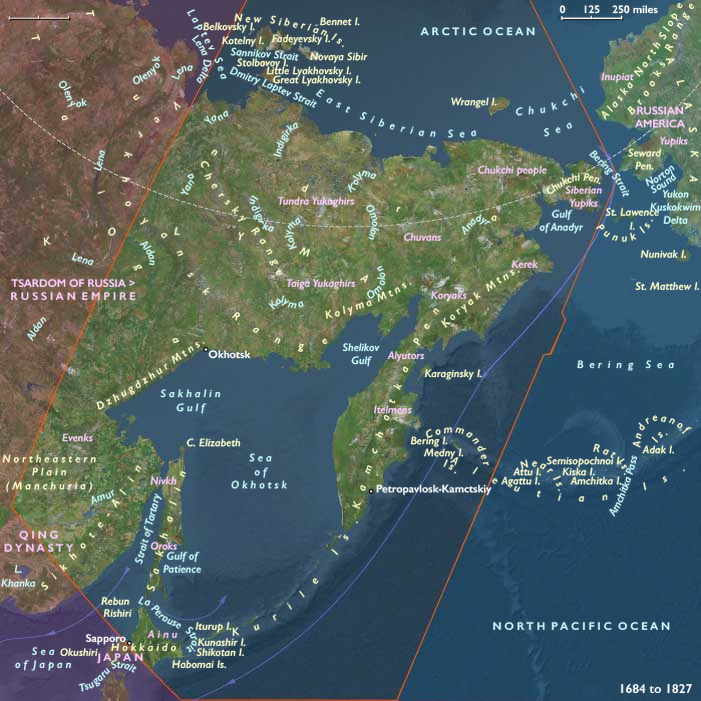
Years: 1792 - 1803
People
Groups
- Koryaks
- Chukchi
- Nivkh people
- Evens, or Eveny
- Yukaghirs
- Buddhism
- Ainu people
- Japanese people
- Itelmens
- Siberian Yupiks
- Evenks
- Alyutors
- Kereks
- Japan, Tokugawa, or Edo, Period
- Russian Empire
- Russian America
- Russian-American Company
Topics
Commodoties
Subjects
Regions
Subregions