
Northeast Asia (1768–1779 CE) Russian Maritime …
Years: 1768 - 1779
Northeast Asia (1768–1779 CE)
Russian Maritime Exploration and Ecological Impact
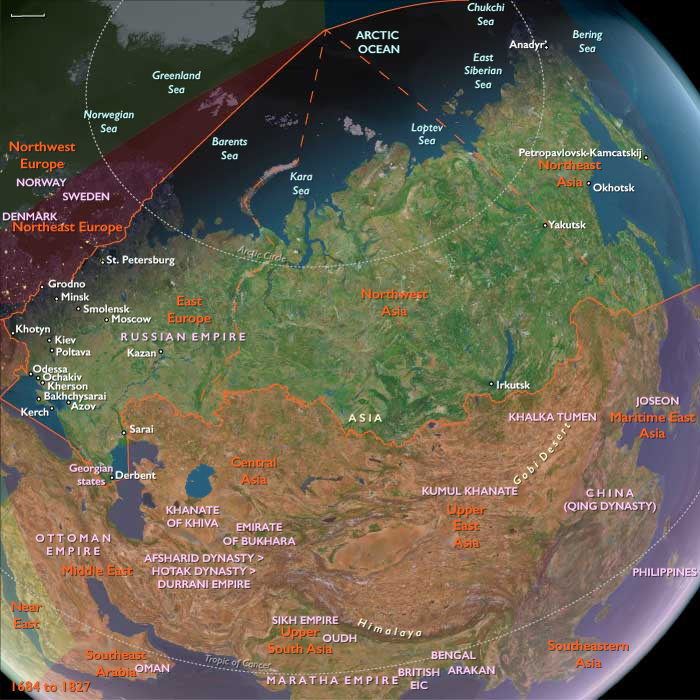
Between 1768 and 1779, Russian maritime and fur-trading activities in Northeast Asia intensified significantly, driven by ongoing exploration and commercial incentives. The fur trade continued to flourish, primarily targeting valuable sea otters, fur seals, and fox pelts from the Aleutian Islands and surrounding areas, increasingly impacting local ecosystems and indigenous populations.
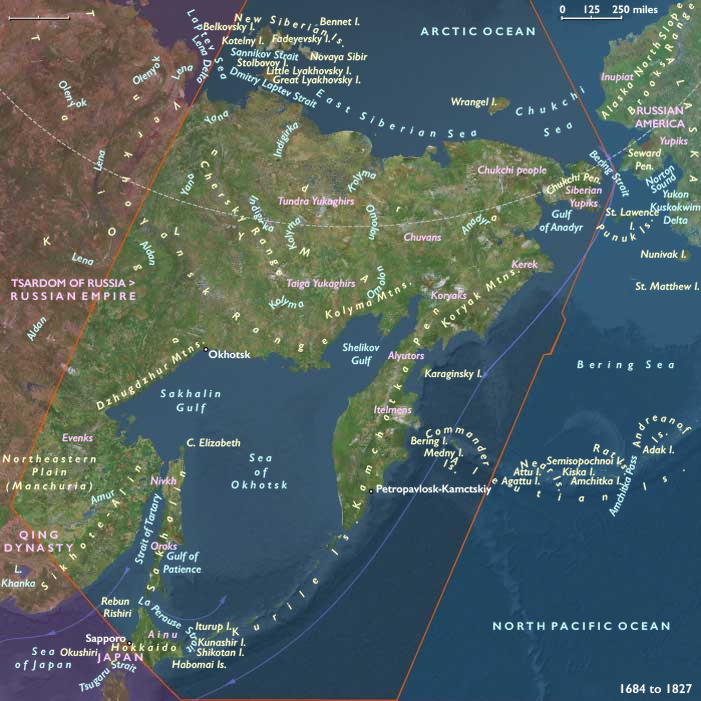
During these decades, ships routinely stopped at the Commander Islands, primarily to hunt Steller's sea cows, a large sirenian mammal discovered by the German naturalist Georg Wilhelm Steller in 1741 during Vitus Bering's expedition. Initially numbering fewer than fifteen hundred at their discovery, these creatures provided meat, skins for boats, and valuable subcutaneous fat for cooking and lighting. Intensive hunting by sailors, seal hunters, and traders quickly drove the species to extinction by 1768, less than three decades after their discovery.
In addition to the ecological consequences, this period saw increased European maritime exploration of the region. Captain James Cook's third expedition, aimed at discovering a navigable Northwest Passage, significantly influenced European knowledge about Northeast Asia. After Cook's death in the Hawaiian Islands, command passed to Charles Clerke, who continued exploring the northern Pacific coast and proceeded to the Siberian Pacific coast. Clerke, already weakened by illness, died of tuberculosis on August 22, 1779, en route to Kamchatka. He was buried in Kamchatka on August 29, and his second-in-command, John Gore, assumed leadership, eventually guiding the expedition back to Britain.
This era underscores the profound environmental impact of intensified Russian commercial activities and highlights the significant geographical knowledge gained through European exploratory missions.
People
Groups
- Koryaks
- Chukchi
- Nivkh people
- Yukaghirs
- Evens, or Eveny
- Ainu people
- Buddhism
- Siberian Yupiks
- Itelmens
- Evenks
- Kereks
- Alyutors
- Russia, Tsardom of
Topics
Commodoties
Subjects
Regions
Subregions
Years: 1768 - 1779
People
Groups
- Koryaks
- Chukchi
- Nivkh people
- Yukaghirs
- Evens, or Eveny
- Ainu people
- Buddhism
- Siberian Yupiks
- Itelmens
- Evenks
- Kereks
- Alyutors
- Russia, Tsardom of
Topics
Commodoties
Subjects
Regions
Subregions