
Northeast Asia (1756–1767 CE) Russian Expansion, …
Years: 1756 - 1767
Northeast Asia (1756–1767 CE)
Russian Expansion, Indigenous Encounters, and Economic Consolidation
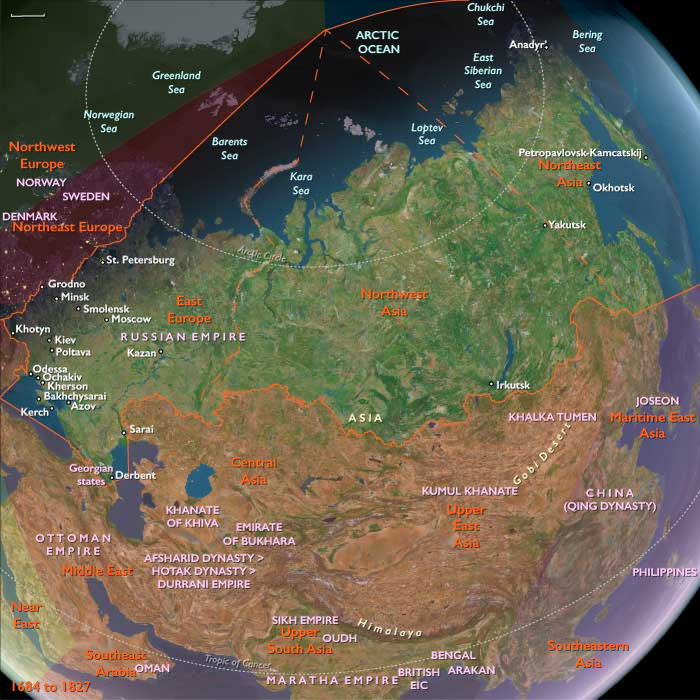
From 1756 to 1767, the Russian presence in Northeast Asia continued to expand significantly, driven primarily by the maritime fur trade and further exploration. The profitability of the fur industry encouraged intensified Russian efforts in the region, notably along the Aleutian Islands and throughout the Kamchatka Peninsula.
The Russian settlement of Okhotsk, despite its challenging location and poor harbor conditions, remained the essential maritime gateway connecting inland Siberia with the North Pacific fur trade. Russian traders continued to gather substantial quantities of pelts—primarily sea otter, arctic fox, and fur seal—which were then transported inland and sold in the Chinese markets via the Mongolian border town of Kyakhta.
This era saw increased interaction—often exploitative or conflictual—with local indigenous communities, including the Koryaks, Chukchi, and Itelmens. Indigenous peoples faced demands for yasak (tribute) and were frequently coerced or violently compelled into participating in the fur trade, resulting in significant cultural disruptions and ecological consequences due to overhunting.
In response to escalating competition and logistical challenges, Russian authorities and private traders improved maritime infrastructure, fortified coastal settlements, and enhanced local resource extraction methods. However, Okhotsk’s limitations—scarce arable land, a short growing season, and severe weather—continued to impose substantial difficulties, necessitating the importation of supplies and provisions.
Despite these persistent hardships, the period from 1756 to 1767 consolidated Russia’s territorial claims in Northeast Asia, established firmer administrative control, and deepened its involvement in lucrative trans-Pacific commerce. These developments would shape the geopolitical and economic landscapes of Northeast Asia well into subsequent periods.
Groups
- Koryaks
- Chukchi
- Nivkh people
- Yukaghirs
- Evens, or Eveny
- Ainu people
- Buddhism
- Siberian Yupiks
- Itelmens
- Evenks
- Kereks
- Alyutors
- Russia, Tsardom of
Topics
Commodoties
Subjects
Regions
Subregions

Related Events
Showing 10 events out of 26811 total
Years: 1756 - 1767
Groups
- Koryaks
- Chukchi
- Nivkh people
- Yukaghirs
- Evens, or Eveny
- Ainu people
- Buddhism
- Siberian Yupiks
- Itelmens
- Evenks
- Kereks
- Alyutors
- Russia, Tsardom of
Topics
Commodoties
Subjects
Regions
Subregions