
Northeast Asia (1708–1719 CE) Russian Maritime …
Years: 1708 - 1719
Northeast Asia (1708–1719 CE)
Russian Maritime Expansion and Strategic Developments
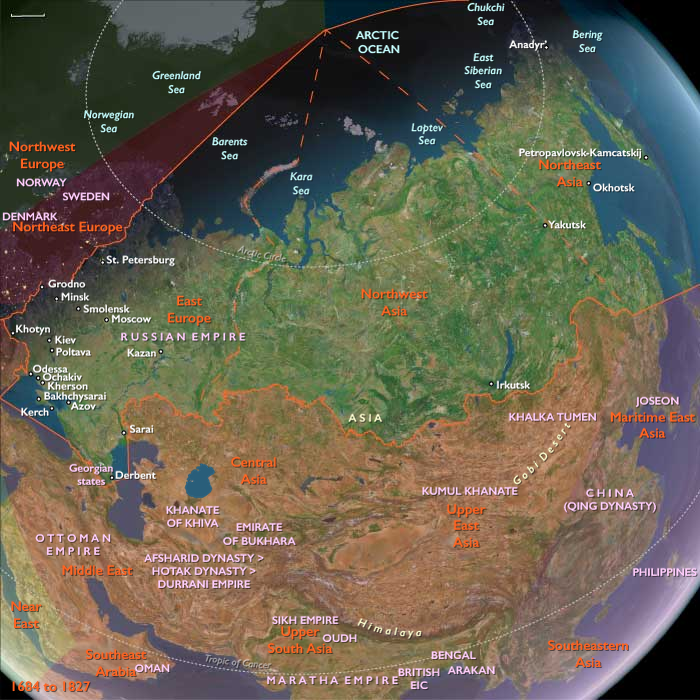
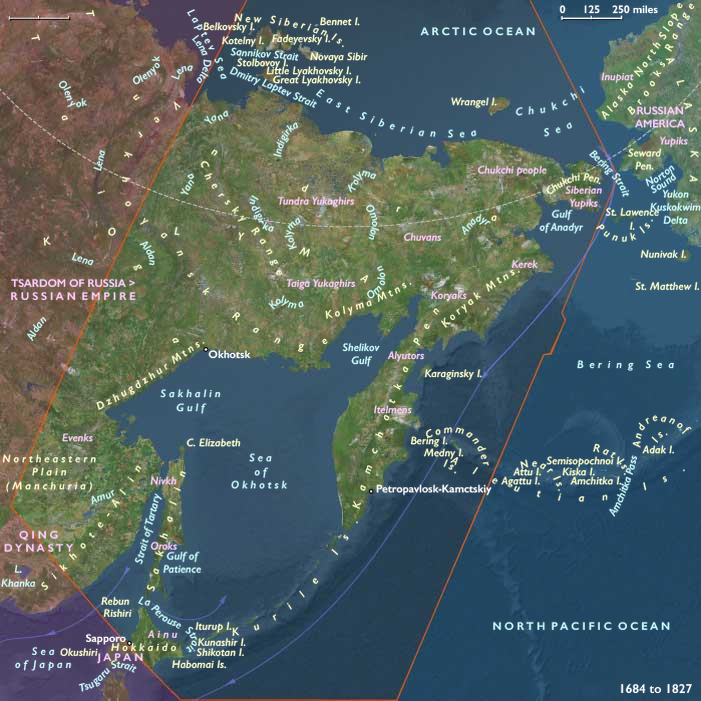
From 1708 to 1719, Northeast Asia—a region encompassing the easternmost areas of Siberia (east of 130°E), the extreme northeastern portion of China's Heilongjiang province, the northern half of Russia's Primorsky Krai, and most of the island of Hokkaido (excluding its southwestern portion)—witnessed significant Russian efforts to solidify maritime routes and expand fur trading activities, setting the stage for deeper colonial integration and increased indigenous interaction.
Russian exploration and colonization intensified under Tsar Peter the Great, who sought more efficient ways to access and exploit Kamchatka Peninsula’s rich fur resources. Prior to this period, Russian entry into Kamchatka was arduous, primarily involving difficult overland routes from the north. To facilitate quicker access, in 1714, Peter the Great commissioned a group of shipbuilders to establish a maritime base at Okhotsk, despite recognizing the site’s considerable limitations.
In 1715, the first significant maritime construction project culminated with the building of the ship Vostok, marking a major advancement in Russia’s naval capabilities on the Pacific frontier. Under the command of Kozma Sokolov, the Vostok successfully completed a landmark voyage to Kamchatka in 1716–1717, demonstrating the viability of a maritime link between Okhotsk and Kamchatka. Despite its drawbacks—including a difficult inland route, a poor harbor, and the necessity of importing food due to the region’s short growing season and lack of arable land—Okhotsk emerged as Russia’s main Pacific seaport. It would maintain this status for the subsequent one hundred and fifty years, playing a critical logistical role in supporting Kamchatka and other emerging Russian settlements along the coast.
These strategic initiatives during 1708–1719 considerably enhanced Russian influence in Northeast Asia, creating vital infrastructure that would shape future colonization and significantly impact the region's indigenous populations.
People
Groups
- Koryaks
- Chukchi
- Nivkh people
- Yukaghirs
- Evens, or Eveny
- Ainu people
- Buddhism
- Siberian Yupiks
- Itelmens
- Evenks
- Kereks
- Alyutors
- Russia, Tsardom of
Topics
Commodoties
Subjects
Regions
Subregions
Years: 1708 - 1719
People
Groups
- Koryaks
- Chukchi
- Nivkh people
- Yukaghirs
- Evens, or Eveny
- Ainu people
- Buddhism
- Siberian Yupiks
- Itelmens
- Evenks
- Kereks
- Alyutors
- Russia, Tsardom of
Topics
Commodoties
Subjects
Regions
Subregions