
Northeast Asia (1720–1731 CE) Expansion of …
Years: 1720 - 1731
Northeast Asia (1720–1731 CE)
Expansion of Russian Influence and Kamchatka’s Integration
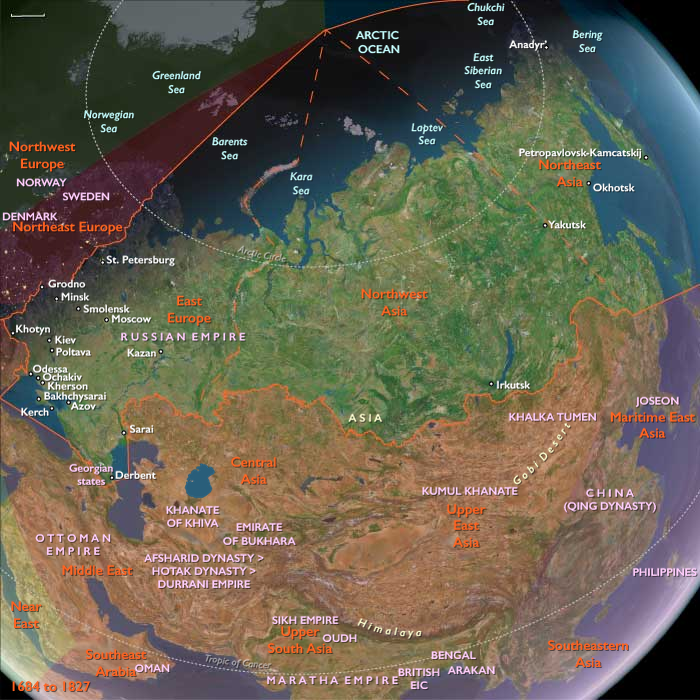
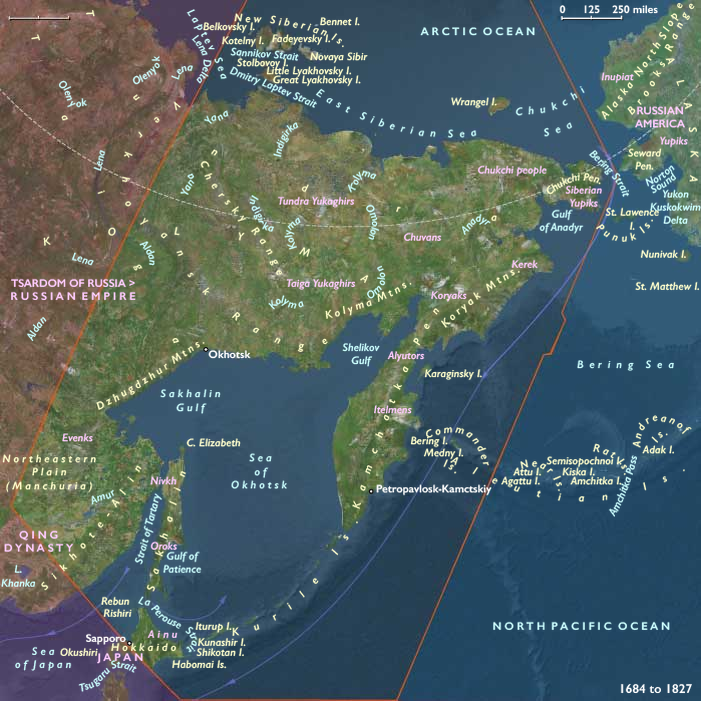
From 1720 to 1731, Northeast Asia—a region encompassing the easternmost areas of Siberia (east of 130°E), the extreme northeastern portion of China's Heilongjiang province, the northern half of Russia's Primorsky Krai, and most of the island of Hokkaido (excluding its southwestern portion)—continued to witness steady Russian expansion and consolidation of maritime and colonial efforts, significantly affecting the region's indigenous populations and economic dynamics.
The maritime route established earlier between Okhotsk and Kamchatka, although challenging due to Okhotsk's harsh climate, poor harbor conditions, and limited agricultural potential, became increasingly significant for Russia’s colonial strategy. Despite these ongoing hardships, Okhotsk strengthened its position as Russia's primary Pacific seaport, handling critical logistical demands and supplying the isolated outposts scattered along the Siberian coastline.
The successful voyages of vessels like the Vostok under commanders such as Kozma Sokolov had demonstrated the practicality of maritime navigation in these remote waters, and Russia now moved decisively toward increased utilization of naval routes. This strategic maritime connection supported the rapid expansion of the Russian fur trade, which depended heavily on the abundant sable, fox, and sea otter pelts available in Kamchatka and the surrounding areas.
During this era, Russian presence in Kamchatka became more structured and extensive. Early settlements transitioned from temporary outposts into permanent trading centers and forts, supported by consistent naval supply lines established through Okhotsk. These settlements introduced considerable disruption to indigenous lifeways, particularly for the Itelmen of Kamchatka, who began experiencing intensified pressures from Russian traders, including demands for tribute (yasak). Indigenous communities faced significant ecological impacts due to intensified fur trapping, while simultaneously becoming increasingly integrated into Russian economic networks as intermediaries, hunters, and laborers.
This period set important precedents for future colonization efforts, marking a shift from sporadic exploration and trading missions toward a more sustained and systematic Russian colonial presence. The foundation laid during these critical years enabled Russia to consolidate its hold over Northeast Asia and significantly alter the region’s demographic, cultural, and ecological landscape.
Groups
- Koryaks
- Chukchi
- Nivkh people
- Yukaghirs
- Evens, or Eveny
- Ainu people
- Buddhism
- Siberian Yupiks
- Itelmens
- Evenks
- Kereks
- Alyutors
- Russia, Tsardom of
Topics
Commodoties
Subjects
Regions
Subregions
Related Events
Showing 10 events out of 28131 total
Years: 1720 - 1731
Groups
- Koryaks
- Chukchi
- Nivkh people
- Yukaghirs
- Evens, or Eveny
- Ainu people
- Buddhism
- Siberian Yupiks
- Itelmens
- Evenks
- Kereks
- Alyutors
- Russia, Tsardom of
Topics
Commodoties
Subjects
Regions
Subregions