
Northeast Asia (1696–1707 CE) Russian Maritime …
Years: 1696 - 1707
Northeast Asia (1696–1707 CE)
Russian Maritime Endeavors and Indigenous Interactions
Between 1696 and 1707, Northeast Asia—a region encompassing eastern Siberia east of 130°E, northeastern Heilongjiang province, the northern half of Primorsky Krai, and most of Hokkaido (excluding its southwestern portion)—experienced continued expansion of Russian exploration, intensified maritime activities, and evolving interactions with indigenous peoples.
Russian promyshlenniki (fur traders) advanced further into the region, seeking valuable pelts, particularly sable, sea otter, and fox, driven by strong demand from Chinese markets. During these expeditions, indigenous communities, notably the maritime Chukchi, engaged cautiously with the Russians, trading furs, ivory, and marine products for metal goods, beads, tobacco, and firearms. Despite profitable exchanges, Chukchi groups remained vigilant against Russian attempts to exert control, safeguarding their autonomy through strategic alliances and occasional armed resistance.
On the Kamchatka Peninsula, semi-nomadic peoples such as the Koryaks and Alyutors faced mounting pressures as Russian traders expanded settlements and competed for local resources, especially reindeer herds and fishing territories. Relations between Russians and these indigenous groups were characterized by a complex mix of cooperation, cultural exchange, tension, and intermittent conflict.
Further south on Kamchatka, the river-dwelling Itelmens found Russian settlers increasingly establishing outposts along critical waterways, which led to a gradual shift in their traditional economic practices. Russians depended heavily on Itelmen knowledge for navigating the peninsula’s challenging terrain and waterways but frequently disrupted indigenous ways of life through exploitation and forced tribute (yasak).
Recognizing the necessity of a more efficient maritime connection to support its distant outposts, Russia intensified efforts to enhance maritime infrastructure. Tsar Peter the Great had dispatched shipbuilders to the harsh and remote coastal site of Okhotsk in 1714 to create a crucial Pacific seaport. Despite poor harbor conditions and challenging logistics, in 1715 shipbuilders constructed the vessel Vostok, which was successfully sailed by Kozma Sokolov to Kamchatka in 1716–1717, significantly strengthening Russia's strategic reach and logistical capabilities in Northeast Asia.
This era thus represented a pivotal phase, establishing enduring frameworks for Russian-indigenous relations, maritime expansion, and regional economic integration, shaping the cultural and geopolitical contours of Northeast Asia for decades to follow.
People
Groups
- Koryaks
- Chukchi
- Nivkh people
- Evens, or Eveny
- Yukaghirs
- Ainu people
- Buddhism
- Itelmens
- Siberian Yupiks
- Evenks
- Alyutors
- Kereks
- Russia, Tsardom of
- Chinese Empire, Qing (Manchu) Dynasty
- Russian Empire
Topics
Commodoties
- Fish and game
- Hides and feathers
- Gem materials
- Glass
- Domestic animals
- Grains and produce
- Strategic metals
Subjects
Regions
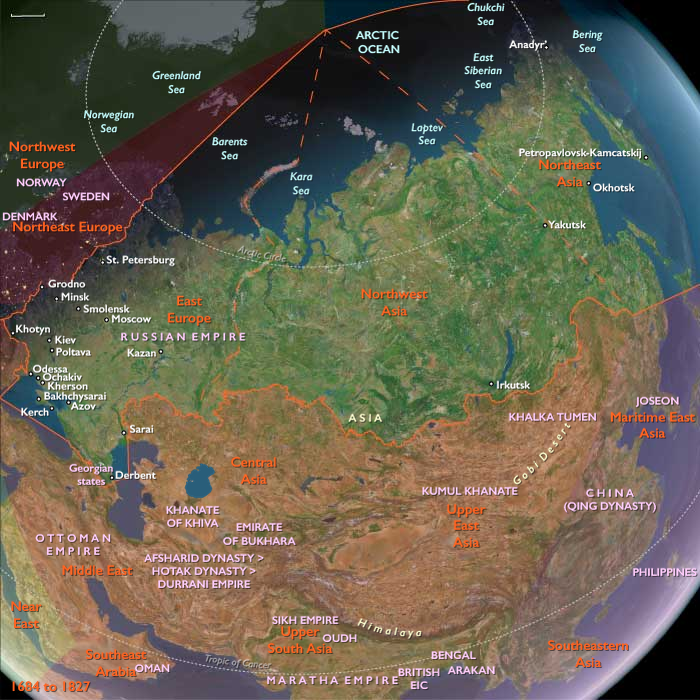
Subregions
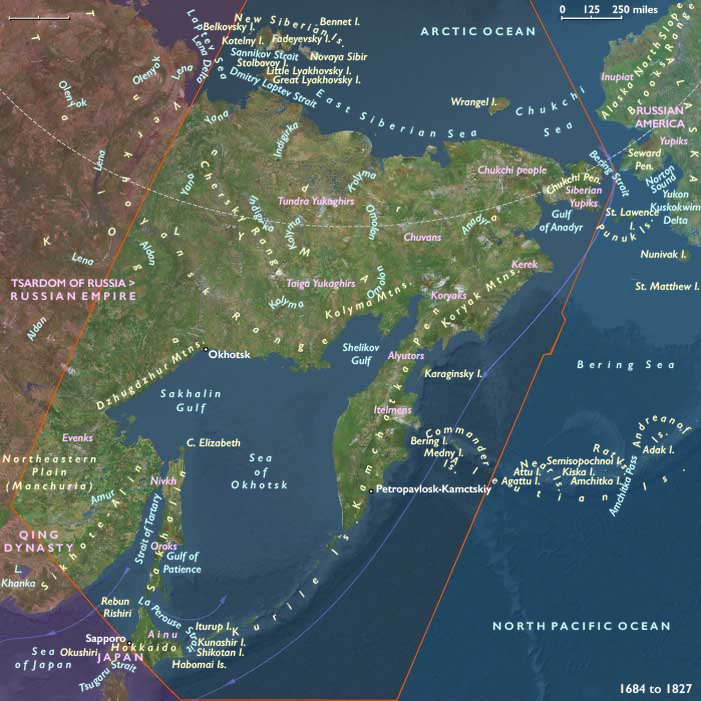
Years: 1696 - 1707
People
Groups
- Koryaks
- Chukchi
- Nivkh people
- Evens, or Eveny
- Yukaghirs
- Ainu people
- Buddhism
- Itelmens
- Siberian Yupiks
- Evenks
- Alyutors
- Kereks
- Russia, Tsardom of
- Chinese Empire, Qing (Manchu) Dynasty
- Russian Empire
Topics
Commodoties
- Fish and game
- Hides and feathers
- Gem materials
- Glass
- Domestic animals
- Grains and produce
- Strategic metals
Subjects
Regions
Subregions