
Northeast Asia (1252 – 1395 CE): Ainu …
Years: 1252 - 1395
Northeast Asia (1252 – 1395 CE): Ainu Consolidation, Yuan Campaigns on Sakhalin, and Amur–Kamchatka Exchange
Geographic and Environmental Context
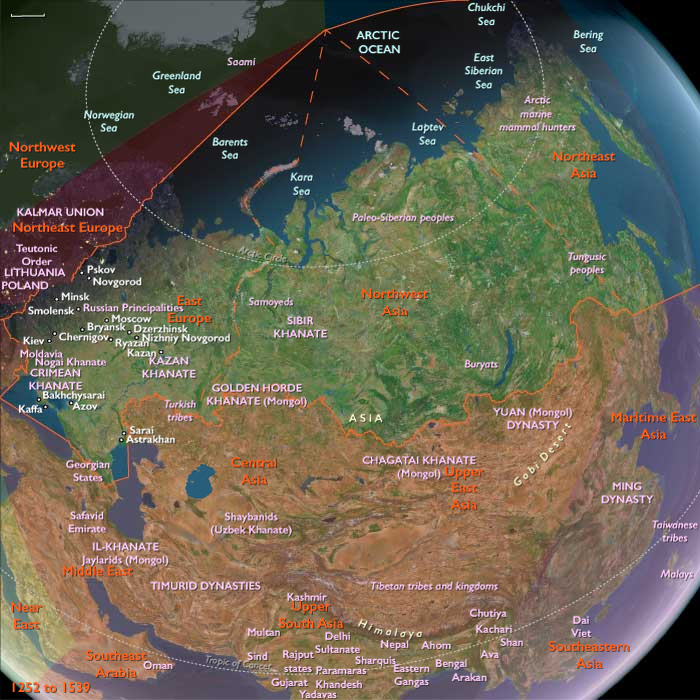
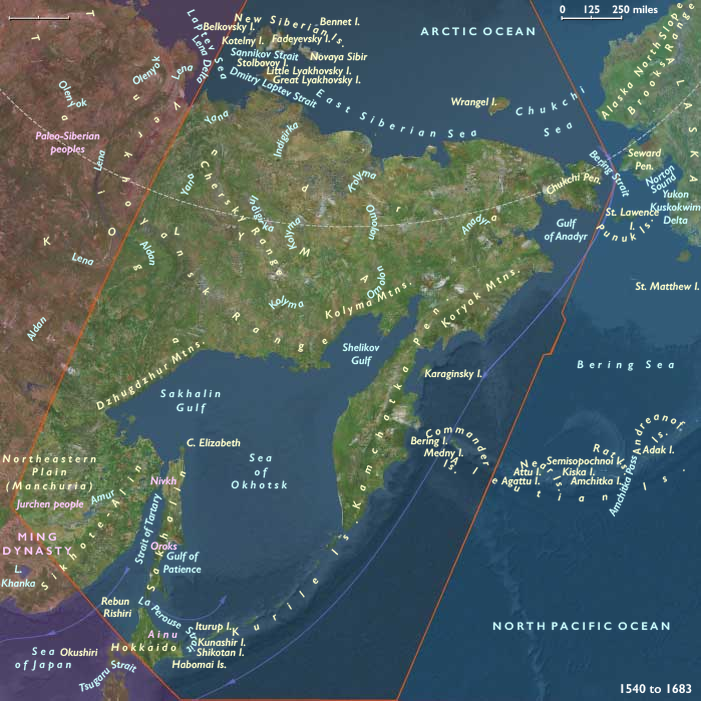
Northeast Asia includes Siberia east of the Lena River basin to the Pacific, the Russian Far East (excluding southern Primorsky Krai/Vladivostok), northern Hokkaidō (above the southwestern peninsula), and China’s extreme northeastern Heilongjiang.
-
A cold belt of taiga, tundra, and maritime coasts: the Amur–Ussuri lowlands and Sakhalin straits; the Okhotsk shores and Kamchatka; the northern half of Hokkaidō; and the lower Amur–Heilongjiang basin.
Climate and Environmental Shifts
-
Under the late Medieval Warm Period, summers were modestly longer along river valleys and Hokkaidō’s lowlands, improving salmon runs and plant yields; interiors remained subarctic.
-
Sea ice in the Okhotsk seasonally retreated from river mouths, sustaining rich polynyas for seals and salmon.
Societies and Political Developments
-
Lower Amur–Sakhalin (Nivkh, Ulch, Nanai/Hezhe): clan villages continued salmon and seal economies; from the 1270s the Yuan court mounted repeated expeditions to Sakhalin, compelling tribute from Nivkh and intervening in conflicts with Ainu groups. By the early 14th century a Yuan-mediated tribute rhythm (furs, falcons) bound the lower Amur and Sakhalin to continental centers.
-
Northern Hokkaidō (Ainu): Satsumon-era communities coalesced into distinct Ainu culture. Exchange with Wajin merchants from northern Honshū intensified (iron blades, lacquerware, textiles) in return for furs, dried fish, and eagle feathers. Ainu lineages consolidated coastal–river territories; ritual and trade leaders gained prominence.
-
Kamchatka and Chukotka (Koryak, Itelmen, Chukchi): Koryak reindeer herders and coastal sea-mammal hunters, and Itelmen salmon fishers, maintained mobile lifeways; Chukchi linked the Bering shore to interior herding and hunting. Cross-Strait contacts with Siberian Yupik and Inuit remained episodic but durable.
-
Heilongjiang fringe: after the fall of Jin (1234), Mongol/Yuan authority extended into the Amur basin; by the 1370s–1390s the Ming replacement of Yuan reduced direct pressure, but riverine clans retained tributary habits with southern courts.
Economy and Trade
-
Fur frontiers: sable, marten, fox, and otter pelts moved by canoe and winter trails to Yuan depots and later Ming-border marts; eagle hawks (falcons) were prized court tributes.
-
Fish and sea-mammal products: dried salmon, seal oil, and whale by-products were staples for subsistence and exchange from Hokkaidō to Kamchatka.
-
Iron inflows: most metal arrived via trade—Yuan intermediaries on the Amur, Wajin merchants to Hokkaidō, or recycled pieces from coastal wreckage—resharpened locally into knives, spearheads, and adze bits.
-
Local manufactures: carved wooden utensils, birch-bark containers, bone and antler points, and woven fish nets remained ubiquitous.
Subsistence and Technology
-
Riverine fisheries: weirs and wicker traps on the Amur, Teshio, and Ishikari; drying racks supported winter stores.
-
Maritime hunting: toggling harpoons, lashed bone blades, and skin or plank canoes in Okhotsk and Kamchatka; coastal drive techniques for seals.
-
Taiga mobility: skis, snowshoes, dog or reindeer sleds in interior corridors; bark canoes and plank craft in ice-free seasons.
-
Village forms: semi-subterranean or plank houses in Amur and Hokkaidō riverlands; conical hide or bark shelters in mobile herding/hunting zones.
Movement and Interaction Corridors
-
Amur–Sakhalin–Okhotsk loop: tied Nivkh, Nanai, and Ulch villages to Yuan tribute routes and inter-clan exchange; winter ice enabled crossings to Sakhalin.
-
La Pérouse Strait & northern Hokkaidō coasts: Ainu–Wajin trade intensified along Hokkaidō’s north and east shores; coastal nodes doubled as ritual centers.
-
Kamchatka–Bering shore: Koryak, Itelmen, and Chukchi circuits connected reindeer pastures, salmon rivers, and sea-mammal rookeries, with occasional cross-Strait trade.
-
Forest portages: linked lower Amur villages to upland Evenki hunters and to Heilongjiang markets.
Belief and Symbolism
-
Ainu: the bear-sending rite (iyomante) and offerings to river and mountain kamuy framed reciprocity with animal masters; plank-house altars and carved inau marked sacred exchanges.
-
Amur peoples (Nivkh/Nanai): salmon and sea spirits honored through first-fish rites; clan shamans mediated illness, hunting luck, and weather.
-
Koryak/Itelmen/Chukchi: sea and sky deities, ancestral patrons of herds and rookeries; drums and trance practices guided hunting seasons and migrations.
Adaptation and Resilience
-
Portfolio subsistence: salmon + sea mammals + gathered plants (and in some Ainu districts, limited millet/barley gardening) buffered bad runs or ice failures.
-
Mobility: seasonal moves among coast, river, and interior taiga maintained access to fish, game, and reliable water.
-
Tribute pragmatism: accommodation to Yuan demands (furs, falcons) traded coercion risk for iron, cloth, and prestige items; after 1368, shifting to Ming border exchange reduced military pressure while preserving trade.
-
Ritual cohesion: communal feasts, first-catch rites, and iyomante reinforced sharing rules and managed inter-clan tensions.
Long-Term Significance
By 1395, Northeast Asia was a fur-and-fish frontier knit to imperial markets yet culturally anchored in northern lifeways:
-
Yuan campaigns on Sakhalin had drawn Nivkh and Ainu into a tributary orbit without dismantling local autonomy.
-
Ainu society in Hokkaidō consolidated, deepening trade with Wajin while preserving distinctive ritual authority.
-
Koryak, Itelmen, and Chukchi maintained resilient mobile economies across Kamchatka and the Bering shore.
-
As Ming replaced Yuan, imperial reach loosened along the Amur, but the fur corridor endured—setting the stage for later 15th–17th-century contests among Ainu, Wajin, Ming, and, eventually, Russian newcomers.
Groups
- Koryaks
- Chukchi
- Ulch people
- Nivkh people
- Ainu people
- Buddhism
- Mohe people
- Wajin
- Inuit
- Siberian Yupiks
- Itelmens
- Nanai people
- Northern Yuan dynasty
- Chinese Empire, Ming Dynasty
Commodoties
- Fish and game
- Weapons
- Hides and feathers
- Gem materials
- Glass
- Domestic animals
- Oils, gums, resins, and waxes
- Grains and produce
- Textiles
- Strategic metals
- Manufactured goods
Subjects
Regions
Subregions
Years: 1252 - 1395
Groups
- Koryaks
- Chukchi
- Ulch people
- Nivkh people
- Ainu people
- Buddhism
- Mohe people
- Wajin
- Inuit
- Siberian Yupiks
- Itelmens
- Nanai people
- Northern Yuan dynasty
- Chinese Empire, Ming Dynasty
Commodoties
- Fish and game
- Weapons
- Hides and feathers
- Gem materials
- Glass
- Domestic animals
- Oils, gums, resins, and waxes
- Grains and produce
- Textiles
- Strategic metals
- Manufactured goods
Subjects
Regions
Subregions