
North Polynesia (964 – 1107 CE): Ahupuaʻa …
Years: 964 - 1107
North Polynesia (964 – 1107 CE): Ahupuaʻa Landscapes, Loko Iʻa Expansion, and Chiefly Consolidation
Geographic and Environmental Context
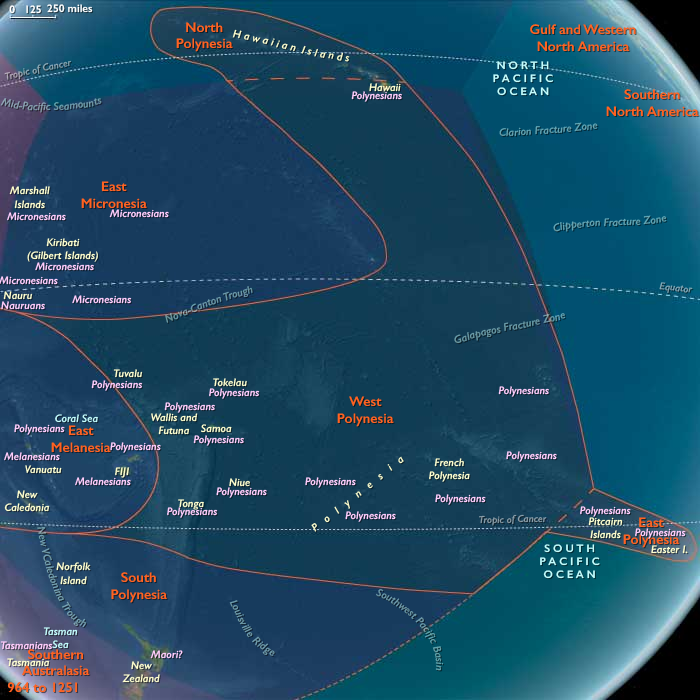
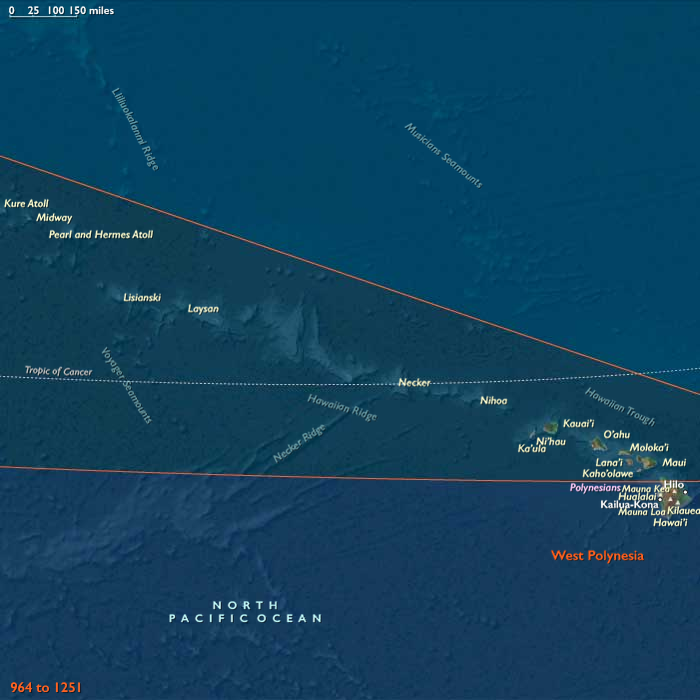
North Polynesia includes Oʻahu, Maui, Kauaʻi, Molokaʻi, Lānaʻi, Niʻihau, and Midway Atoll (episodic).
-
Mature agricultural basins and protected leeward coasts supported population growth; reef flats and embayments were engineered into extensive fishpond systems.
Climate and Environmental Shifts
-
Generally favorable rainfall; episodic droughts required flexible scheduling in dryland fields and heavier reliance on fishpond output and preserved foods.
Societies and Political Developments
-
Greater chiefly centralization under aliʻi nui on Oʻahu, Maui, and Kauaʻi.
-
Land–water administration crystallized into ridge-to-reef management akin to ahupuaʻa (not necessarily codified yet, but practiced): coordinated streams, terraces, fallows, and nearshore fisheries.
-
Ritual leadership intensified, with heiau networks legitimizing chiefly claims and regulating seasonal closures.
Economy and Trade
-
Intensified irrigation: expansion and refurbishment of loʻi kalo terraces; diversification of dryland crops (ʻuala, gourds, sugarcane).
-
Fishponds (loko iʻa) proliferated—stone walls, sluice gates, and species management (ʻamaʻama, awa) scaled up protein production.
-
Interisland exchanges moved canoe hulls, basalt, salt, dried fish, dog and pig stocks, and barkcloth; specialist craft lineages (stoneworkers, canoe builders, net makers) gained prominence.
Subsistence and Technology
-
Sophisticated ditch gradients, terraced mosaics, and weir placement maximized flow and yields.
-
Fishpond engineering: sluice gates (mākāhā), stacked-stone revetments, scheduled harvest rotations.
-
Navigation refined—stellar paths, swell patterns, bird behavior—ensured consistent interisland voyaging.
Movement and Interaction Corridors
-
Canoe routes tied all high islands, with regular provisioning voyages and marriage alliances aligning districts.
-
Midway remained peripheral, occasionally tapped for seabirds and marine resources.
Belief and Symbolism
-
Temple complexes (heiau) dedicated to agriculture, fishing, healing, and war expanded; feather regalia (ʻahu ʻula, mahiole) symbolized rank.
-
The kapu system structured access to water heads, pond gates, and spawning grounds, embedding ecology in ritual law.
-
Genealogical recitations linked aliʻi authority to ancestral deities and sacred landscapes.
Adaptation and Resilience
-
Distributed production (valley terraces + coastal ponds + dryland fields + reef gleaning) created redundancy.
-
Communal labor cycles (ditch cleaning, wall repairs, pond harvests) maintained infrastructure resilience.
-
Interisland reciprocity and ritual closures protected stocks through shocks (drought, storms).
Long-Term Significance
By 1107 CE, North Polynesia possessed highly integrated ahupuaʻa-like systems, mature fishpond networks, and consolidated chiefly polities, providing the demographic and institutional base for later island-wide states and monumental temple construction.
Groups
Commodoties
Subjects
Regions
Subregions
Years: 964 - 1107
Groups
Commodoties
Subjects
Regions
Subregions