
North Polynesia (676–819 CE) Early Polynesian …
Years: 676 - 819
North Polynesia (676–819 CE)
Early Polynesian Settlement and Development
Polynesian seafarers are renowned for their extraordinary ocean navigation and astronomical knowledge. At a time when Western vessels rarely ventured out of sight of land, Polynesians regularly undertook extensive voyages, covering vast distances across the Pacific Ocean.
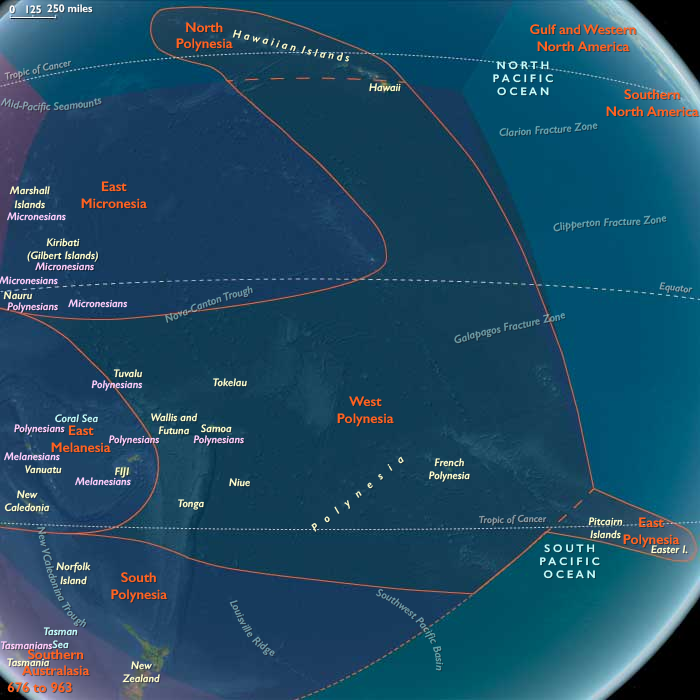
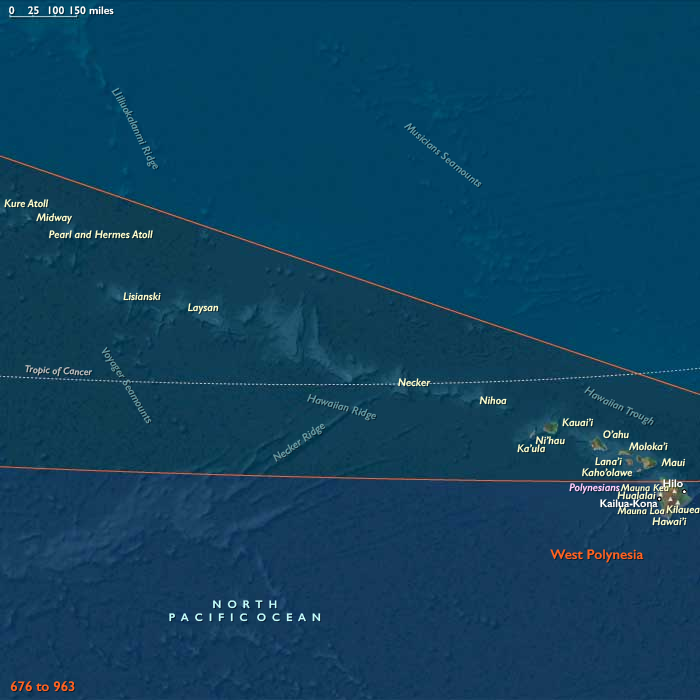
The early settlement history of Hawaiʻi remains somewhat uncertain; however, substantial archaeological and paleoecological evidence supports human habitation of the Hawaiian archipelago by 800 CE, possibly dating back as early as 300–500 CE. Many researchers suggest that these initial Polynesian settlers originated from the Marquesas Islands.
Upon arrival, these early Polynesians brought with them essential clothing, plants, and livestock, quickly establishing settlements along coastal regions and within larger valleys. Their agricultural practices prominently featured crops like kalo (taro), maiʻa (banana), niu (coconut), and ulu (breadfruit). They also raised animals such as puaʻa (pigs), moa (chickens), and the ʻīlio (poi dog), although meats were consumed less frequently compared to vegetables, fruits, and seafood.
Staple condiments included paʻakai (salt), ground kukui nut, limu (seaweed), and ko (sugarcane), which served both culinary and medicinal purposes. Additionally, the settlers soon incorporated ʻuala (sweet potato) into their diet. This introduction of the sweet potato, native to South America, remains a mystery, leading some researchers to speculate on pre-Columbian transoceanic contacts between Polynesia and the Americas.
The early Polynesians constructed hale (homes) and sacred heiau (temples) as they settled into their new environment. Archaeologists currently suggest that the earliest communities were established at the southern end of the Hawaiian archipelago, particularly on the Big Island of Hawai'i, with settlements gradually extending northwards along coastal areas and easily accessible river valleys. As the population expanded, communities increasingly moved inland, adapting to diverse ecological niches and fostering complex societies that would flourish in the centuries to come.
Groups
Topics
Commodoties
Subjects
Regions
Subregions
Years: 676 - 819
Groups
Topics
Commodoties
Subjects
Regions
Subregions