
North Polynesia (7,821 – 6,094 BCE): Early …
Years: 7821BCE - 6094BCE
North Polynesia (7,821 – 6,094 BCE): Early Holocene — Cloud Forests, Stable Currents, and Lagoon Productivity
Geographic & Environmental Context
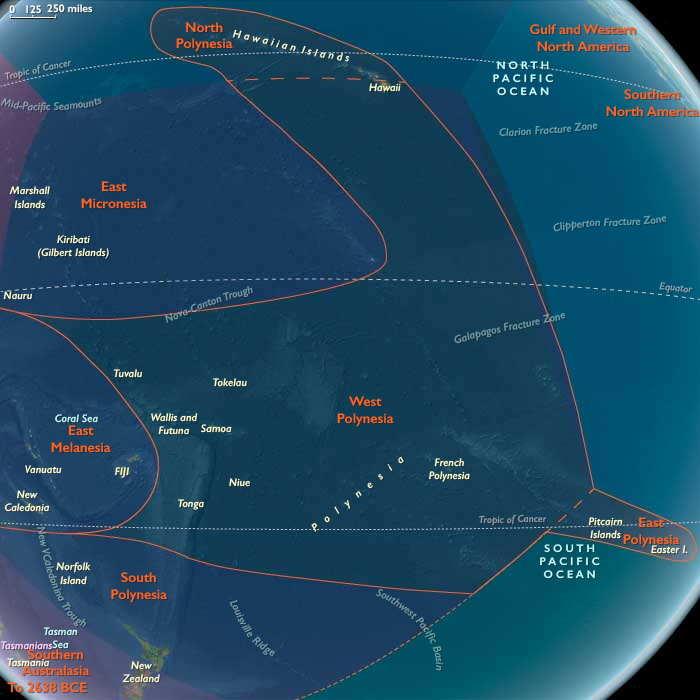
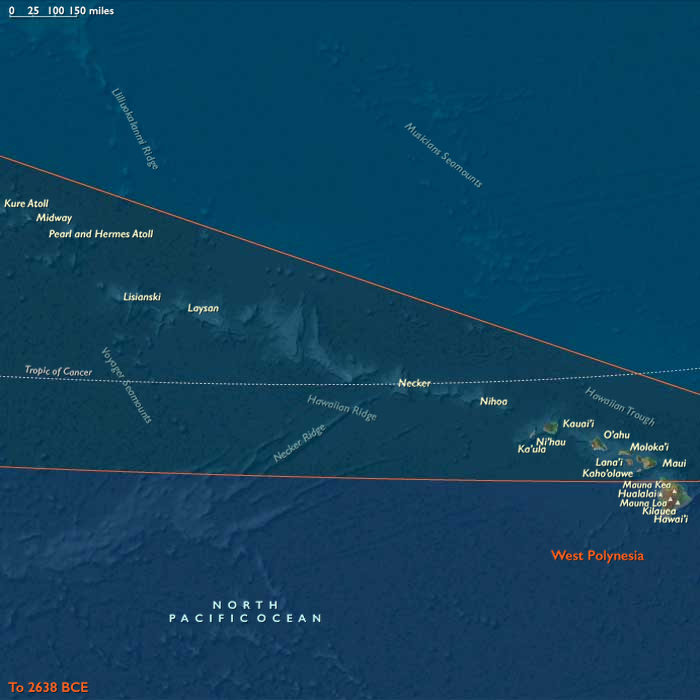
North Polynesia includes the Hawaiian Islands chain except Hawaiʻi Island (the Big Island) — principally Oʻahu, Maui, Kauaʻi, Molokaʻi, Lānaʻi, Niʻihau — plus Midway Atoll.
-
Anchors: Koʻolau windward amphitheaters and perennial streams; Maui Nui channels (Auʻau, Pailolo) with strong tidal jets; Kauaʻi’s deep valleys (Waimea, Hanalei); Midway’s carbonate rim.
Climate & Environmental Shifts
-
Early Holocene thermal optimum: warmer SSTs, relatively stable trades; consistent winter swell.
-
Orographic rainfall intensified cloud-forest belts; lowland wetlands formed behind beach ridges.
Biota & Baseline Ecology (No Human Presence)
-
Expansion of endemic lowland and mesic forests (pandanus, hardwoods)—before later human-driven shifts.
-
Anchialine ponds and estuarine inlets matured—ideal for future fishpond (loko iʻa) engineering.
Long-Term Significance
A high-productivity mosaic (ridge forest–valley stream–reef lagoon) emerged—an environmental “blueprint” for later integrated ridge-to-reef food systems.
Topics
Subjects
Regions
Subregions
Years: 7821BCE - 6094BCE
Topics
Subjects
Regions
Subregions