
North Polynesia (49,293 – 28,578 BCE): Upper …
Years: 49293BCE - 28578BCE
North Polynesia (49,293 – 28,578 BCE): Upper Paleolithic I — Volcanic High Islands, Reef Beginnings, and Seabird Kingdoms
Geographic & Environmental Context
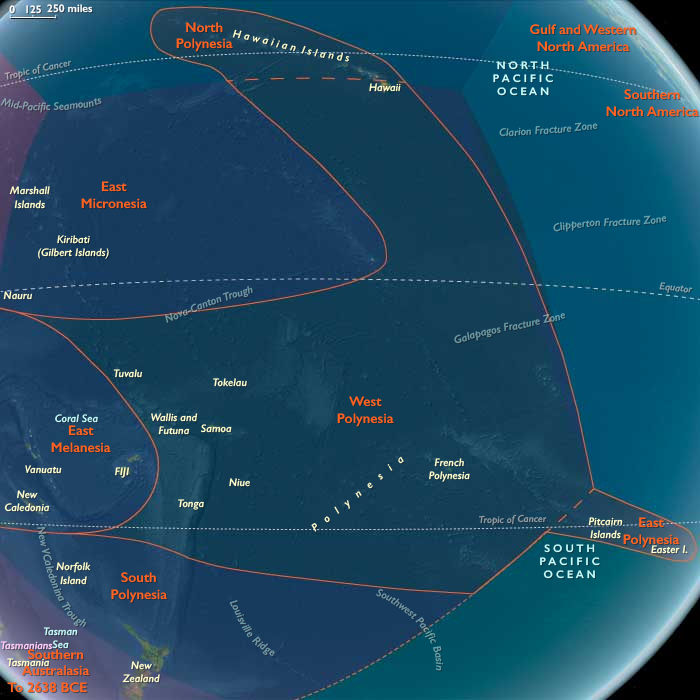
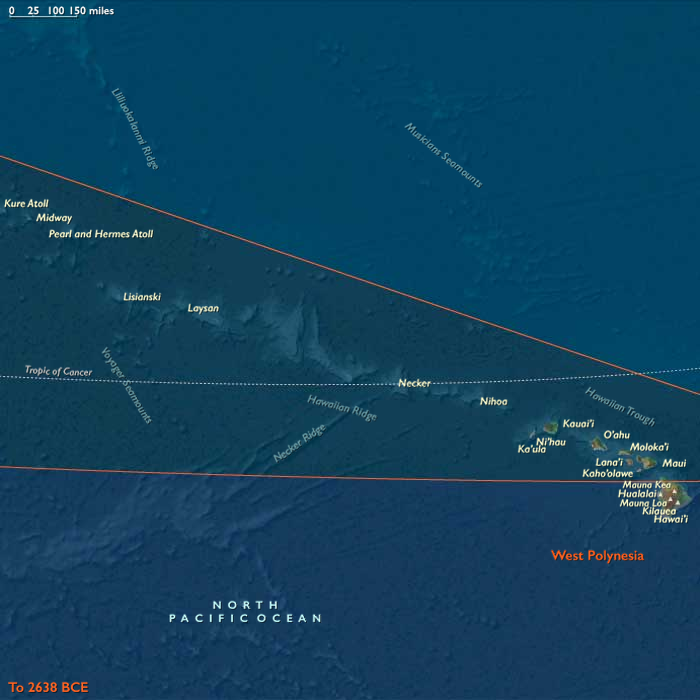
North Polynesia includes the Hawaiian Islands chain except Hawaiʻi Island (the Big Island) — principally Oʻahu, Maui, Kauaʻi, Molokaʻi, Lānaʻi, Niʻihau — plus Midway Atoll.
-
Anchors: Oʻahu’s twin shield ranges (Koʻolau, Waiʻanae) with deeply incised gulches; Kauaʻi–Niʻihau as the older high-island pair; Maui Nui as a broad, shallow platform with multiple emergent peaks; Midway Atoll as a carbonate cap on the subsiding Emperor–Hawaiian chain.
-
Sea level sat well below modern during glacial maxima, exposing wide reef flats and coastal benches.
Climate & Environmental Shifts
-
Late Pleistocene glacial climate: cooler SSTs, stronger trade-wind seasonality; broad coastal steppe–scrub around high-island skirts.
-
Episodic dust, stronger winter surf; reef growth pulsed between coolings.
Biota & Baseline Ecology (No Human Presence)
-
Seabird rookeries dense on offshore stacks and atolls (proto-Midway); Hawaiian monk seals hauled out on remote beaches.
-
Native forests atop ridges were a mosaic of cloud forest and dry woodland; streams were clear, with endemic fish/invertebrates.
Long-Term Significance
This epoch set the geomorphic template: high islands with fertile amphitheaters, narrow coastal plains, and nascent reef systems—conditions that would later support intensive Polynesian agro-ecologies.
Topics
Subjects
Regions
Subregions
Years: 49293BCE - 28578BCE
Topics
Subjects
Regions
Subregions