
North Polynesia (1840–1851 CE) Consolidation and …
Years: 1840 - 1851
North Polynesia (1840–1851 CE)
Consolidation and Constitutional Reform under Kamehameha III
The reign of Kamehameha III (Kauikeaouli) saw crucial developments in the political and social landscape of the Hawaiian Islands. Having assumed full royal authority following the deaths of his influential advisors—Kaʻahumanu in 1832 and Kinaʻu shortly thereafter—Kamehameha III sought stability through the establishment of a more formalized system of governance.
In 1840, Kamehameha III promulgated Hawaii’s first written constitution, fundamentally transforming the kingdom into a constitutional monarchy. This document, influenced significantly by Western legal principles, outlined a government structure comprising executive, legislative, and judicial branches, thereby strengthening central authority and clearly defining the king’s powers.
The Paulet Affair and International Diplomacy
In 1843, tensions escalated with the arrival of British naval officer Lord George Paulet, who claimed Hawaii for Britain after disputes involving the property rights of British subjects. Paulet's temporary occupation prompted Kamehameha III to dispatch diplomatic representatives to London. The crisis was resolved through diplomatic channels, and British Rear Admiral Richard Thomas restored Hawaiian sovereignty later that same year. This restoration led Kamehameha III to famously proclaim, Ua Mau ke Ea o ka ʻĀina i ka Pono—"The life of the land is perpetuated in righteousness"—a phrase which became Hawaii’s official motto.
Land Tenure and the Great Mahele
In an effort to modernize land management and ownership, the landmark Great Mahele (land division) commenced in 1848. This extensive land redistribution dramatically altered traditional landholding practices, transitioning from communal systems to individual ownership under Western property laws. However, the Mahele inadvertently favored foreign settlers and Hawaiian elites, resulting in widespread dispossession and marginalization of many native Hawaiians who lacked familiarity with private land ownership concepts.
Economic and Social Changes
During this period, Hawaii's economy continued to thrive due to increased trade and agricultural exports, especially sugar. The cultivation of sugarcane expanded substantially, spurred by Western technological advancements and rising international demand. Honolulu’s prominence as a trade hub continued to grow, solidifying its role as the economic and political center of the kingdom.
The rapid economic expansion brought an influx of foreign workers and settlers, intensifying Hawaii's transformation into a multicultural society. Despite economic gains, the native Hawaiian population continued to decline, ravaged by diseases such as measles and influenza introduced through increased international contact.
Educational and Religious Developments
Missionary influence persisted throughout Kamehameha III's reign, significantly shaping education and religious life. Protestant and Catholic missions competed for influence, establishing schools, churches, and seminaries across the islands. Education became more accessible, particularly in English, which increasingly became the language of commerce and government.
These developments between 1840 and 1851 further solidified the Kingdom of Hawaii’s integration into the global economic system, formalized its governmental structures, and marked a pivotal transition toward modernity and Western influence, albeit with profound consequences for native Hawaiian society and culture.
People
Groups
- Papal States (Republic of St. Peter)
- Hawaiians, Native
- Christians, Roman Catholic
- Protestantism
- Congregation of the Sacred Hearts of Jesus and Mary
- United States of America (US, USA) (Washington DC)
- Hawaii, Kingdom of
- France, constitutional monarchy of
- France, Second Republic of
Topics
Commodoties
- Fish and game
- Hides and feathers
- Domestic animals
- Oils, gums, resins, and waxes
- Grains and produce
- Fibers
- Salt
- Sweeteners
- Lumber
- Tobacco
Subjects
Regions
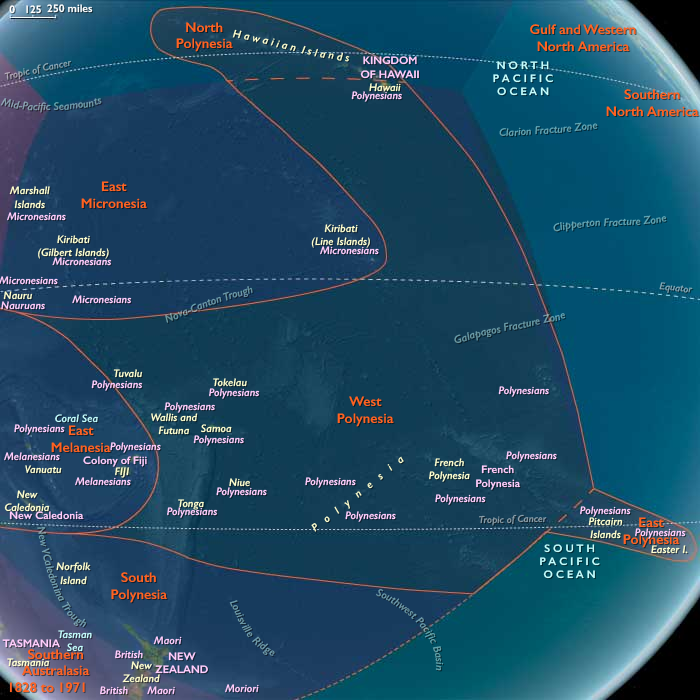
Subregions
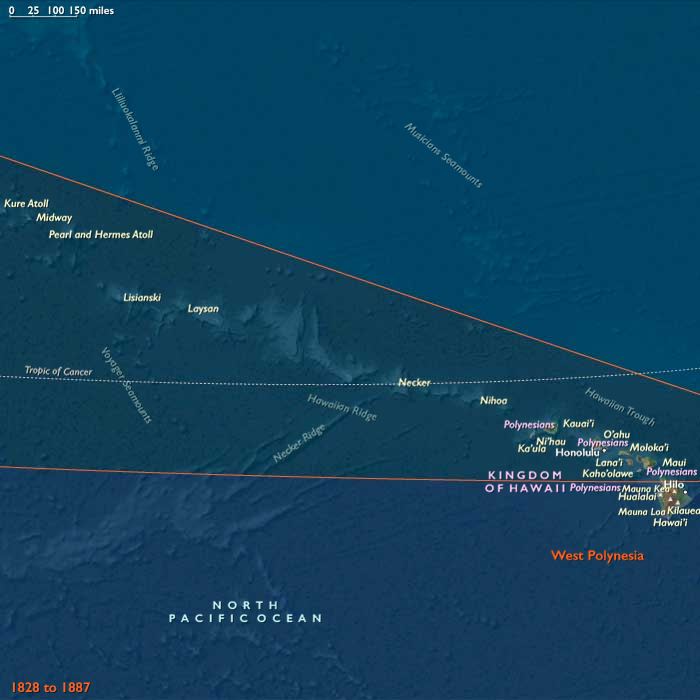
Years: 1840 - 1851
People
Groups
- Papal States (Republic of St. Peter)
- Hawaiians, Native
- Christians, Roman Catholic
- Protestantism
- Congregation of the Sacred Hearts of Jesus and Mary
- United States of America (US, USA) (Washington DC)
- Hawaii, Kingdom of
- France, constitutional monarchy of
- France, Second Republic of
Topics
Commodoties
- Fish and game
- Hides and feathers
- Domestic animals
- Oils, gums, resins, and waxes
- Grains and produce
- Fibers
- Salt
- Sweeteners
- Lumber
- Tobacco
Subjects
Regions
Subregions