
North Polynesia (1252 – 1395 CE): Chiefly …
Years: 1252 - 1395
North Polynesia (1252 – 1395 CE): Chiefly Consolidation, Fishpond States, and Ridge-to-Reef Governance
Geographic and Environmental Context
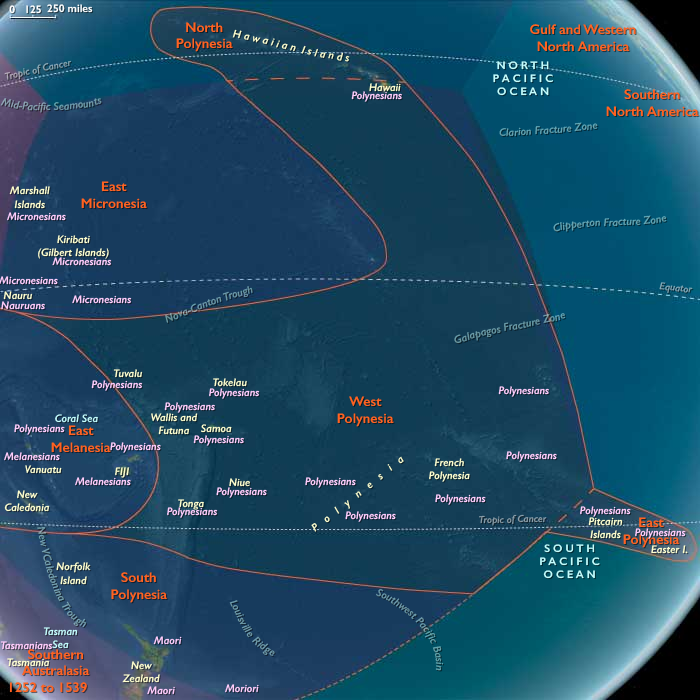
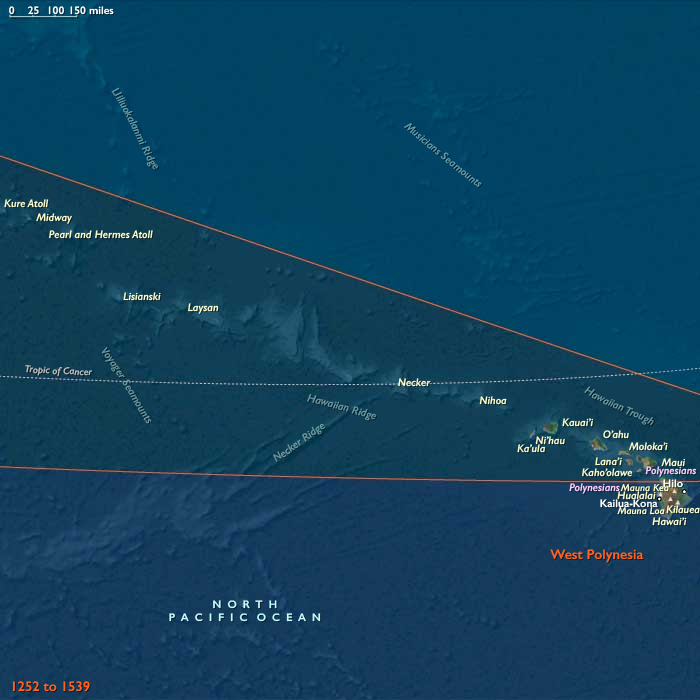
North Polynesia includes the Hawaiian Islands chain (except the Big Island of Hawaiʻi) and Midway Atoll—principally Oʻahu, Maui, Kauaʻi, Molokaʻi, Lānaʻi, Niʻihau, and Midway.
-
High islands offered windward wet valleys and leeward coastal plains suited to intensive irrigation and pond aquaculture; fringing reefs and embayments supplied stable nearshore fisheries.
-
Midway remained marginal—visited episodically but not permanently settled.
Climate and Environmental Shifts
-
The late Medieval Warm Period gave way to the early Little Ice Age (c. 1300s), bringing modestly cooler, more variable rainfall.
-
Intensified infrastructure—terraces, ditchworks, and fishponds— buffered dry spells on leeward coasts; windward valleys continued to deliver high taro yields.
Societies and Political Developments
-
Chiefly stratification deepened under aliʻi and aliʻi nui on Oʻahu, Maui, and Kauaʻi.
-
Land-and-water administration matured into robust ahupuaʻa (ridge-to-reef) jurisdictions, coordinated by district stewards under high chiefs.
-
Inter-island rivalries sharpened—alliances and warfare reshaped boundaries among Oʻahu–Maui–Molokaʻi–Kauaʻi polities; Niʻihau remained closely tied to Kauaʻi.
-
Elite courts patronized specialists—irrigation overseers, fishpond managers, navigators, chanters—entrenching chiefly power.
Economy and Trade
-
Intensive agro-aquatic production: windward loʻi kalo (irrigated taro) coupled with large coastal fishponds (loko iʻa) yielded reliable surpluses of kalo and finfish (e.g., ʻamaʻama, awa).
-
Dryland belts produced ʻuala (sweet potato), gourds, and sugarcane; salt works and fish-drying on leeward flats fed inter-district exchange.
-
Inter-island circulation moved canoe timber, fine barkcloth, basalt adze blanks, feather regalia, and preserved foods among the main high islands; Midway played no regular role.
Subsistence and Technology
-
Hydraulic engineering: stone-lined canals, check dams, and terrace mosaics maximized valley throughflow to loʻi kalo.
-
Fishpond systems: seawalls with sluice gates (mākāhā) managed recruitment and harvest; staggered pond complexes spread risk.
-
Vessels & tools: double-hulled canoes (waʻa kaulua) for inter-island voyaging; basalt adzes and coral-abraders for carpentry; fiber nets and basket traps for reef/pond fisheries.
-
Storage & processing: stone platforms and house-lofts for dried fish and poi batter stabilized year-round provisioning.
Movement and Interaction Corridors
-
Regular canoe circuits linked Oʻahu–Maui–Molokaʻi–Lānaʻi and Kauaʻi–Niʻihau clusters; channels doubled as diplomatic frontiers and trade lanes.
-
Intra-island networks tied upland irrigation headworks to coastal pond precincts within ahupuaʻa boundaries, facilitating rapid mobilization of labor.
Belief and Symbolism
-
Temple complexes (heiau) proliferated—agricultural, fishing, healing, and war temples presided over seasonal rites that synchronized labor and legitimated chiefly rule.
-
The kapu system regulated access to water heads, pond gates, spawning grounds, and sacred groves, embedding ecology in law.
-
Elite feather regalia and genealogical chants affirmed aliʻi sanctity and seniority.
Adaptation and Resilience
-
Portfolio production—wet taro + dryland crops + fishponds + reef fisheries—created redundancy against droughts and storms.
-
Coordinated corvée maintained ditches, terraces, and pond walls after flood damage; ritual closures allowed stock recovery.
-
Inter-island diplomacy (marriage ties, tribute exchanges) mitigated conflict and smoothed resource imbalances.
Long-Term Significance
By 1395, North Polynesia had evolved into highly managed ridge-to-reef chiefdoms:
-
Oʻahu, Maui, and Kauaʻi anchored dense populations with engineered valleys and pond-coast estates.
-
Consolidated ahupuaʻa governance, monumental heiau, and surplus mobilization furnished the institutional base for later island-wide unifications—while sustaining resilient food systems through the climatic variability of the early Little Ice Age.
Groups
Commodoties
Subjects
Regions
Subregions
Years: 1252 - 1395
Groups
Commodoties
Subjects
Regions
Subregions