
North Africa (952–963 CE) Fatimid Preparations …
Years: 952 - 963
North Africa (952–963 CE)
Fatimid Preparations for Eastern Expansion and Continued Western Autonomy
Between 952 and 963 CE, North Africa sees the Fatimid Caliphate consolidating its regional dominance and preparing for ambitious expansion eastward, while the western Maghreb maintains its characteristic autonomy and diverse political landscape.
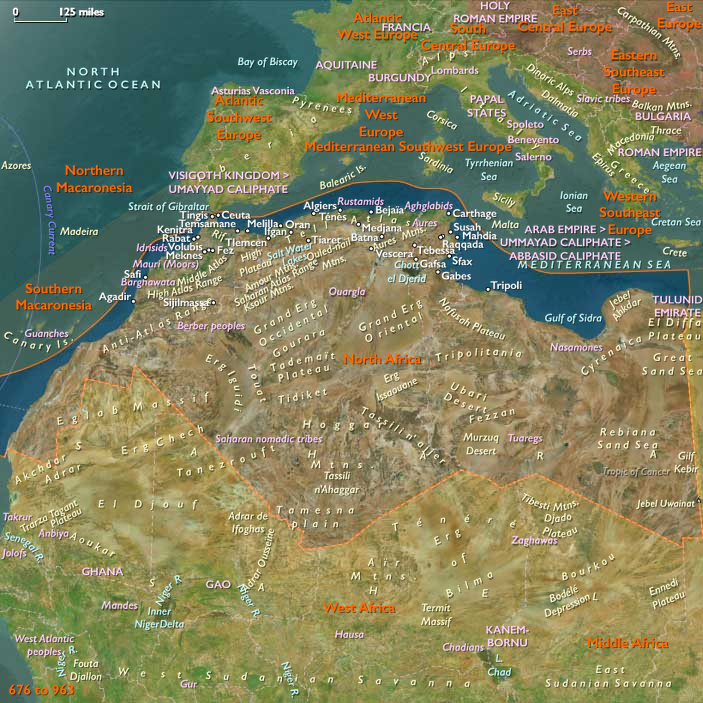
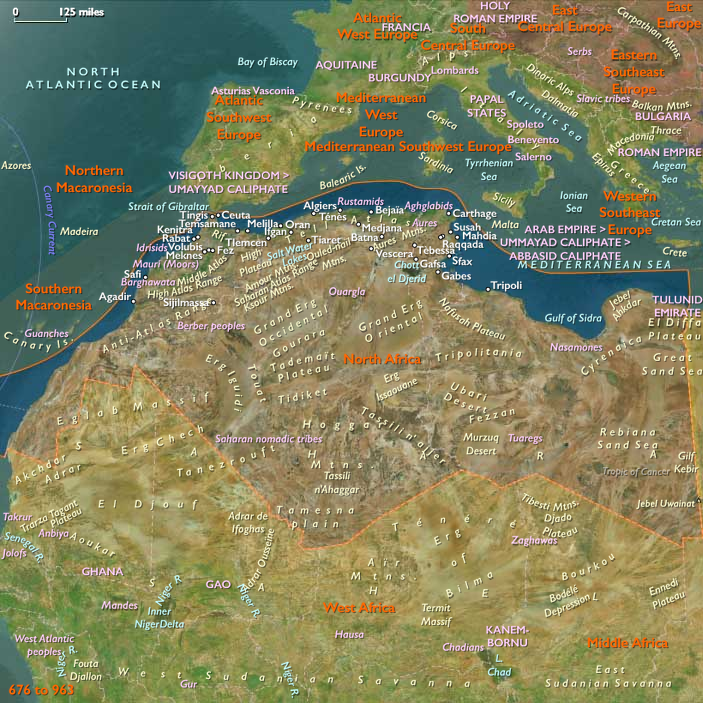
In Ifriqiya, the Fatimid Caliphate, under the vigorous leadership of Caliph al-Mu'izz li-Din Allah (953–975 CE), intensifies its preparations for the historic conquest of Egypt. Although the invasion and eventual conquest occur slightly later (in 969 CE), these crucial years are marked by significant economic growth, strategic military preparations, and increased political centralization from the Fatimid capital at al-Mahdiyya. Al-Mu'izz notably supports the rise of the Zirid Dynasty, loyal Berber governors appointed to administer Ifriqiya, ensuring stable governance and allowing the Fatimid leadership to focus on broader strategic objectives.
In Morocco and the western Maghreb, political decentralization continues, marked by a mosaic of autonomous Berber states and tribal entities. The once-powerful Idrisid Dynasty further fragments, ceding influence to emerging Berber tribal confederations such as the Miknasa, Maghrawa, and other Zenata groups. Fez (Fès), though reduced in political prominence, remains a crucial center of commerce and scholarship.
The independent Emirate of Nekor in the Rif region maintains its prosperous maritime trade, continuing its strong links with Umayyad al-Andalus. Along the Atlantic coast, the Barghawata confederation retains its distinct cultural and religious identity, preserving its political autonomy and economic vitality.
Further south, the Saharan city-state of Sijilmasa, strategically governed by influential Tuareg tribes, remains a pivotal trans-Saharan trade center, reinforcing its importance in regional commerce connecting North Africa with sub-Saharan markets.
By the conclusion of 963 CE, North Africa stands strategically poised. The Fatimid Caliphate is firmly established and ready to project its influence into Egypt and the broader Islamic world, while the western Maghreb retains its distinct political fragmentation, characterized by resilient Berber autonomy and vibrant regional commerce. These developments set the stage for transformative changes that will shape the region profoundly in subsequent decades.
People
Groups
- Arab people
- Berber people (also called Amazigh people or Imazighen, "free men", singular Amazigh)
- Tuaregs, or Touareg, people
- Kutama
- Maghrawa (Zenata Berber tribe)
- Miknasa (Zenata Berber tribe)
- Islam
- Muslims, Sunni
- Muslims, Kharijite
- Muslims, Shi'a
- Zenata (Berber tribal confederacy)
- Muslims, Ibadi
- Sijilmassa, Berber state of
- Barghawata Confederacy (Masmuda Berber tribal confederacy)
- Nekor, Kingdom of
- Sicily, Emirate of
- Roman Empire, Eastern: Macedonian dynasty
- Abbasid Caliphate (Baghdad)
- Sicily (theme)
- Ifriqiya, Fatimid Caliphate of
- Idrisid Caliphate (Fatimid dynasty overlordship)
- Córdoba, (Umayyad) Caliphate of
- Ifriqiya, Fatimid Caliphate of
Commodoties
Subjects
Regions
Subregions
Related Events
Showing 10 events out of 52909 total
Years: 952 - 963
People
Groups
- Arab people
- Berber people (also called Amazigh people or Imazighen, "free men", singular Amazigh)
- Tuaregs, or Touareg, people
- Kutama
- Maghrawa (Zenata Berber tribe)
- Miknasa (Zenata Berber tribe)
- Islam
- Muslims, Sunni
- Muslims, Kharijite
- Muslims, Shi'a
- Zenata (Berber tribal confederacy)
- Muslims, Ibadi
- Sijilmassa, Berber state of
- Barghawata Confederacy (Masmuda Berber tribal confederacy)
- Nekor, Kingdom of
- Sicily, Emirate of
- Roman Empire, Eastern: Macedonian dynasty
- Abbasid Caliphate (Baghdad)
- Sicily (theme)
- Ifriqiya, Fatimid Caliphate of
- Idrisid Caliphate (Fatimid dynasty overlordship)
- Córdoba, (Umayyad) Caliphate of
- Ifriqiya, Fatimid Caliphate of
Commodoties
Subjects
Regions
Subregions