
North Africa (940–951 CE) Fatimid Stability, …
Years: 940 - 951
North Africa (940–951 CE)
Fatimid Stability, Western Fragmentation, and Berber Autonomy
Between 940 and 951 CE, North Africa is characterized by the continued consolidation of the Fatimid Caliphate in Ifriqiya, ongoing decentralization and political fragmentation in Morocco, and persistent autonomy among independent Berber states and tribal confederations across the western Maghreb.
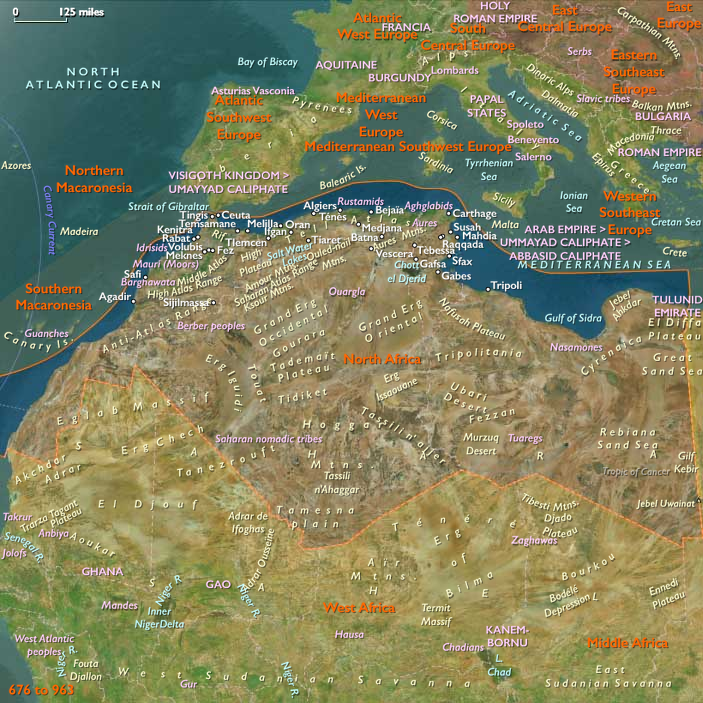
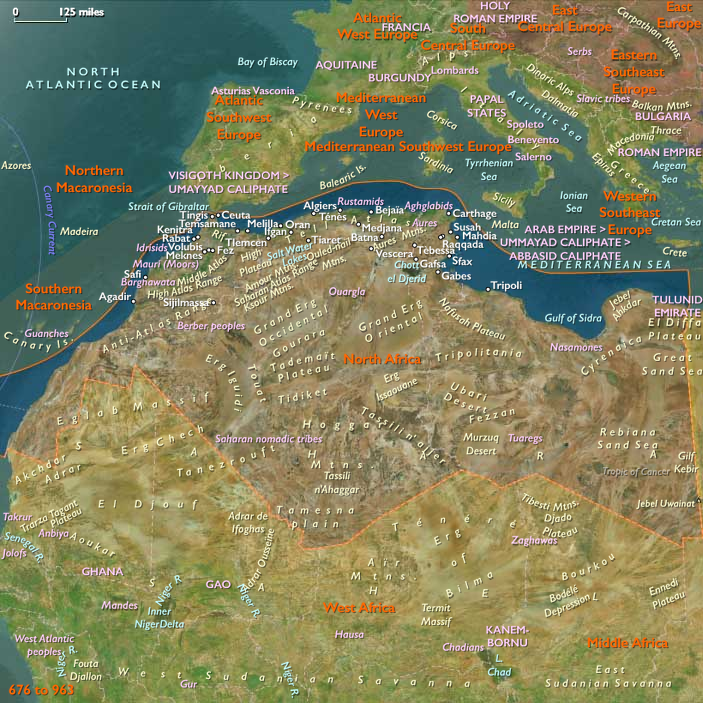
In Ifriqiya, the Fatimid Dynasty, notably under Caliph al-Qa'im bi-Amr Allah (934–946 CE) and his successor, al-Mansur Billah (946–953 CE), achieves considerable administrative efficiency and political stability. Their capital, al-Mahdiyya (modern Mahdia, Tunisia), flourishes as an economic and cultural powerhouse, benefiting greatly from enhanced maritime trade and agricultural productivity. The Fatimid state, supported militarily by loyal Kutama Berbers, cements its political authority and economic vitality throughout the region.
In Morocco, the Idrisid Dynasty continues its steady decline amidst persistent internal factionalism, allowing increasing regional autonomy for prominent Berber groups such as the Miknasa and Maghrawa tribes. Despite this political fragmentation, Fez (Fès) maintains its significance as a cultural, commercial, and scholarly center, although its political prominence diminishes as smaller Berber entities gain greater independence.
The Emirate of Nekor in Morocco's Rif region sustains its economic prosperity and political autonomy, maintaining vital trade links across the Mediterranean, especially with the Umayyad territories in al-Andalus. Along the Atlantic coast, the Barghawata confederation continues to assert its distinct religious and cultural identity, preserving its autonomy and regional influence.
In the Sahara, the strategically positioned city-state of Sijilmasa, controlled by influential Tuareg tribes, remains central to trans-Saharan commerce. Its economic strength continues to derive from trade in gold, salt, and other valuable commodities linking the Mediterranean world to sub-Saharan Africa.
By the conclusion of 951 CE, North Africa stands as a region marked by distinct contrasts: robust Fatimid governance and prosperity in the east juxtaposed against decentralized and autonomous Berber polities in the west. This political mosaic continues to shape the diverse economic, cultural, and political landscape of the Maghreb.
People
Groups
- Arab people
- Berber people (also called Amazigh people or Imazighen, "free men", singular Amazigh)
- Tuaregs, or Touareg, people
- Kutama
- Maghrawa (Zenata Berber tribe)
- Miknasa (Zenata Berber tribe)
- Islam
- Muslims, Sunni
- Muslims, Kharijite
- Muslims, Shi'a
- Muslims, Ibadi
- Sijilmassa, Berber state of
- Barghawata Confederacy (Masmuda Berber tribal confederacy)
- Córdoba, Umayyad Emirate of
- Nekor, Kingdom of
- Sicily, Emirate of
- Roman Empire, Eastern: Macedonian dynasty
- Abbasid Caliphate (Baghdad)
- Sicily (theme)
- Ifriqiya, Fatimid Caliphate of
- Idrisid Caliphate (Fatimid dynasty overlordship)
- Córdoba, (Umayyad) Caliphate of
Commodoties
Subjects
Regions
Subregions
Related Events
Showing 10 events out of 53052 total
Years: 940 - 951
People
Groups
- Arab people
- Berber people (also called Amazigh people or Imazighen, "free men", singular Amazigh)
- Tuaregs, or Touareg, people
- Kutama
- Maghrawa (Zenata Berber tribe)
- Miknasa (Zenata Berber tribe)
- Islam
- Muslims, Sunni
- Muslims, Kharijite
- Muslims, Shi'a
- Muslims, Ibadi
- Sijilmassa, Berber state of
- Barghawata Confederacy (Masmuda Berber tribal confederacy)
- Córdoba, Umayyad Emirate of
- Nekor, Kingdom of
- Sicily, Emirate of
- Roman Empire, Eastern: Macedonian dynasty
- Abbasid Caliphate (Baghdad)
- Sicily (theme)
- Ifriqiya, Fatimid Caliphate of
- Idrisid Caliphate (Fatimid dynasty overlordship)
- Córdoba, (Umayyad) Caliphate of
Commodoties
Subjects
Regions
Subregions