
North Africa (765–622 BCE) Carthaginian Ascendancy …
Years: 765BCE - 622BCE
North Africa (765–622 BCE)
Carthaginian Ascendancy and Greek Colonization
Expansion and Influence of Carthage
Between 765 and 622 BCE, Carthage firmly establishes itself as a prominent political and commercial power in North Africa and the wider Mediterranean region. Building upon its strategic location near modern-day Tunis, Carthage expands its trading networks, fostering alliances and rivalries with various Mediterranean powers, particularly Greek city-states in Sicily and southern Italy. Archaeological evidence confirms habitation of Carthage from around 750 BCE, roughly sixty-four years after its traditionally cited founding date of 814 BCE.
The city's ascendance brings increased wealth, enabling extensive urban development and fortification projects. Notably, Carthage fortifies its harbor, developing sophisticated facilities that accommodate its expanding navy and merchant fleets. This maritime supremacy facilitates trade in commodities such as precious metals, luxury goods, grains, and textiles, further enriching the city's economy and bolstering its political influence.
Greek Colonization and the Founding of Cyrene
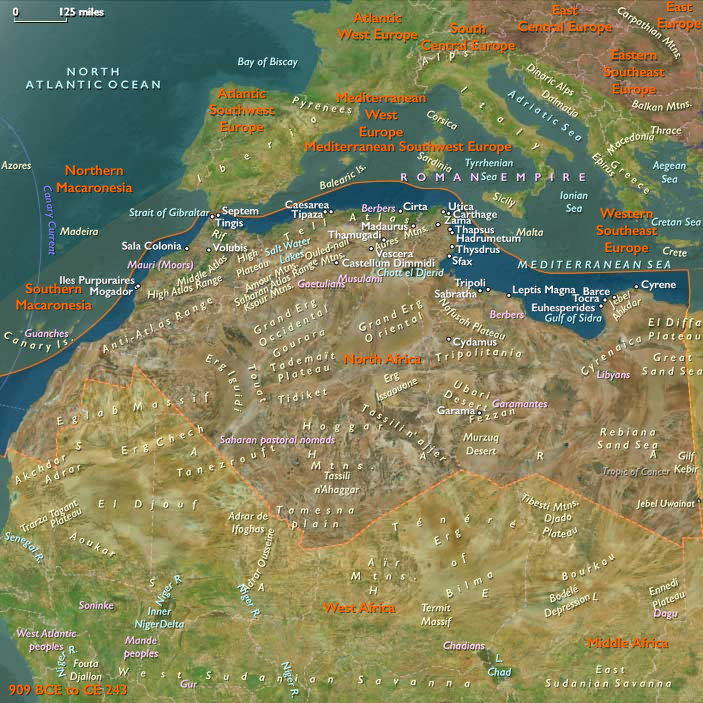
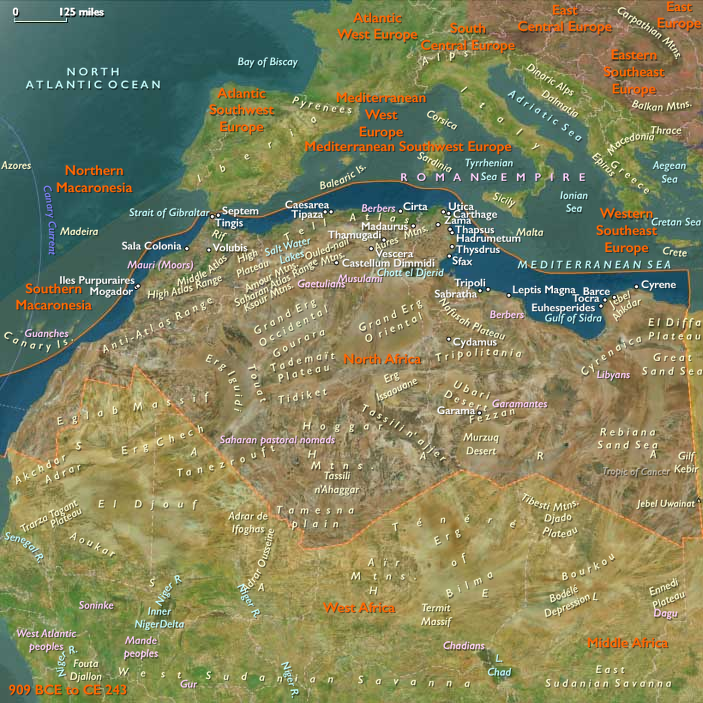
During this era, Greek colonization of North Africa intensifies markedly. While Minoan and Greek seafarers had long explored the North African coastline, systematic Greek settlement begins in earnest in the seventh century BCE. A severe population crisis on the small Cycladic island of Thera prompts colonists, guided by the oracle at Delphi, to establish the city of Cyrene around 631 BCE. Berber guides lead them to a fertile highland area approximately twenty kilometers inland, famously described as a region where a "hole in the heavens" would provide ample rainfall.
Cyrene, named after a local spring nymph, is founded by settlers led by a figure known as Battus, whose name, derived from a Libyan word, signifies "king." The colony occupies a strategic high ridge five miles from the sea, situated in the fertile foothills of the Akhdar Mountains, northeast of present-day Benghazi. Cyrene rapidly develops into a prosperous colony, exploiting the fertile agricultural land and establishing robust trade connections with mainland Greece and other Mediterranean powers.
Interactions and Conflicts with Greek Powers
Carthaginian competition with Greek settlements, especially in Sicily and Southern Italy, intensifies during this period. Carthaginian ambitions increasingly clash with the territorial interests of Greek city-states such as Syracuse, leading to periodic conflicts that foreshadow the extensive Punic Wars of subsequent centuries. The Greek historian Herodotus records these early tensions, often depicting Carthaginians unfavorably due to ongoing Greek rivalries.
Despite hostilities, cultural and economic exchanges between Carthaginians and Greeks flourish. Greek artistic and architectural influences permeate Carthaginian culture, manifesting in evolving styles of pottery, sculpture, and urban planning.
Development of Berber Societies
Inland Berber societies in regions such as the Atlas Mountains and Saharan oases continue to thrive, maintaining significant cultural independence. While coastal Berber groups engage increasingly with Carthaginian and Greek trade networks, interior communities remain largely autonomous, preserving their distinct cultural identities through resilient tribal structures and localized governance.
Cultural Integration and Innovation
Phoenician settlers in Carthage introduce technological advancements and agricultural practices adopted by local Berber populations. The Phoenician alphabet promotes limited attempts at written communication within Berber communities. Religious and cultural exchanges, exemplified by the worship of Carthaginian deities such as Melqart, lead to hybridized spiritual practices among coastal Berber groups.
Legacy and Regional Dynamics
By 622 BCE, Carthage and Cyrene have solidified their statuses as influential regional powers, shaping complex socio-economic dynamics along the North African coast. The interaction among Carthaginian, Greek, and Berber cultures establishes enduring foundations, significantly influencing the historical trajectory of the region.
People
Groups
- Phoenicians
- Libu
- Meshwesh
- Tyre, Kingdom of (Phoenicia)
- Egypt (Ancient), Third Intermediate Period of
- Berber people (also called Amazigh people or Imazighen, "free men", singular Amazigh)
- Sicily, classical
- Carthage, Kingdom of
- Greeks, Classical
- Magna Graecia
- Syracuse, Corinthian city-state of
- Cyrene
Topics
Commodoties
Subjects
Regions
Subregions
Related Events
Showing 10 events out of 66527 total
Years: 765BCE - 622BCE
People
Groups
- Phoenicians
- Libu
- Meshwesh
- Tyre, Kingdom of (Phoenicia)
- Egypt (Ancient), Third Intermediate Period of
- Berber people (also called Amazigh people or Imazighen, "free men", singular Amazigh)
- Sicily, classical
- Carthage, Kingdom of
- Greeks, Classical
- Magna Graecia
- Syracuse, Corinthian city-state of
- Cyrene
Topics
Commodoties
Subjects
Regions
Subregions