
North Africa (916–927 CE) Fatimid Consolidation, …
Years: 916 - 927
North Africa (916–927 CE)
Fatimid Consolidation, Berber Realignment, and Continued Regional Dynamism
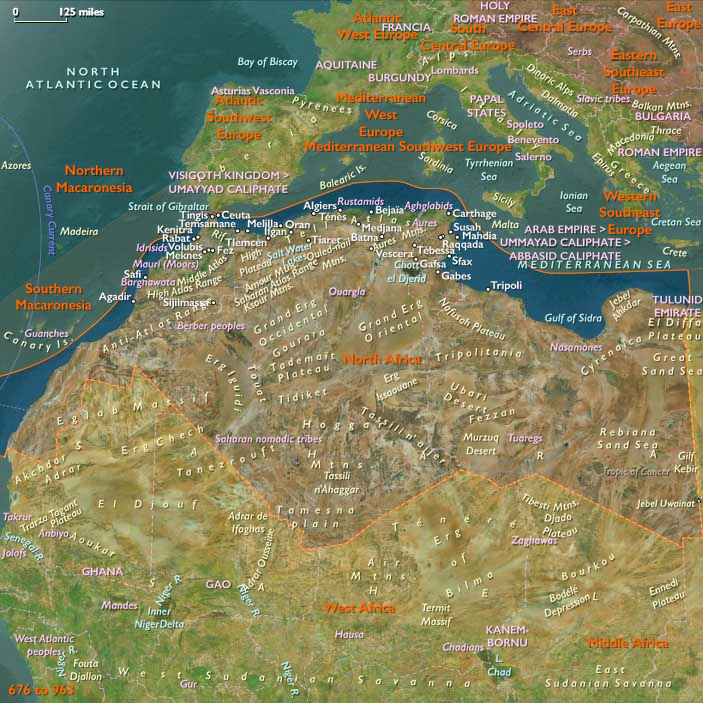
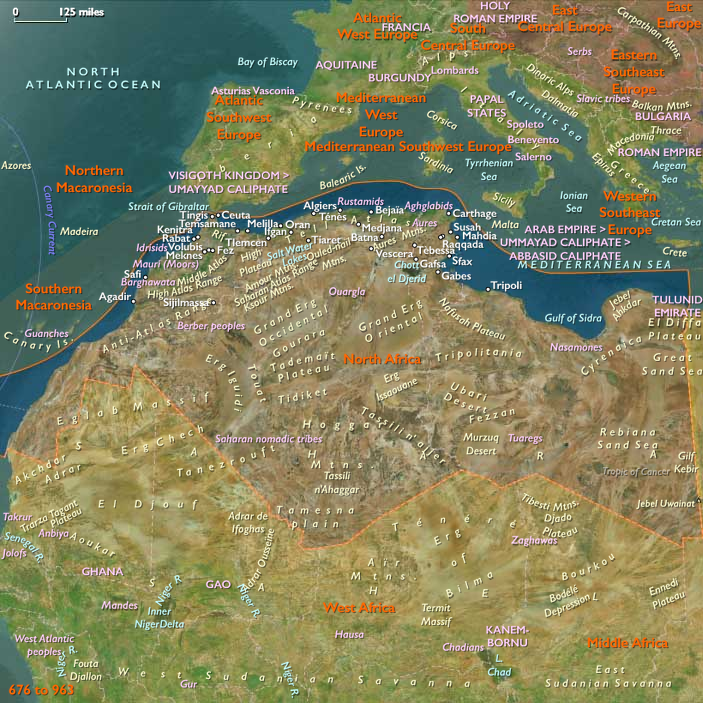
Between 916 and 927 CE, North Africa witnesses the consolidation of the Fatimid Caliphate in Ifriqiya alongside the continuing political realignments among various Berber entities in Morocco and the western Maghreb.
In Ifriqiya, Caliph Ubaydallah al-Mahdi Billah (909–934 CE) further solidifies Fatimid rule from the newly established capital of Mahdia. Under his leadership, the Fatimids expand administrative control, strengthening economic foundations through robust Mediterranean trade and improved agricultural productivity. Al-Mahdi Billah effectively utilizes the support of Kutama Berbers, ensuring military stability and regional dominance.
In Morocco, the fragmented Idrisid Dynasty continues its gradual decline, with diminished central authority giving rise to increased autonomy among influential Berber tribes, notably the Miknasa and Maghrawa. This fragmentation enables these tribal confederations to develop independently, establishing stronger local political structures and economic networks.
The independent Emirate of Nekor in the Rif region maintains its prosperity through Mediterranean trade, preserving its economic and cultural autonomy. Along Morocco's Atlantic coast, the Barghawata confederation remains a distinctive political and religious entity, further asserting its independence.
In the Saharan region, Sijilmasa, strategically governed by influential Tuareg tribes, remains a critical trans-Saharan trade hub, solidifying its position as an indispensable center of commerce linking the Mediterranean to sub-Saharan Africa.
By the conclusion of 927 CE, the political landscape of North Africa reflects a clear Fatimid ascendancy in the east, marked by stability and economic growth. Concurrently, the western Maghreb maintains a dynamic, fragmented structure, characterized by autonomous Berber states and tribal confederations, setting the stage for continued regional evolution in subsequent decades.
People
Groups
- Arab people
- Berber people (also called Amazigh people or Imazighen, "free men", singular Amazigh)
- Tuaregs, or Touareg, people
- Kutama
- Maghrawa (Zenata Berber tribe)
- Miknasa (Zenata Berber tribe)
- Islam
- Muslims, Sunni
- Muslims, Kharijite
- Muslims, Shi'a
- Muslims, Ibadi
- Sijilmassa, Berber state of
- Barghawata Confederacy (Masmuda Berber tribal confederacy)
- Idrisid dynasty (independent)
- Nekor, Kingdom of
- Sicily, Emirate of
- Abbasid Caliphate (Samarra)
- Roman Empire, Eastern: Macedonian dynasty
- Sicily (theme)
- Ifriqiya, Fatimid Caliphate of
- Idrisid Caliphate (Fatimid dynasty overlordship)
Commodoties
Subjects
Regions
Subregions
Years: 916 - 927
People
Groups
- Arab people
- Berber people (also called Amazigh people or Imazighen, "free men", singular Amazigh)
- Tuaregs, or Touareg, people
- Kutama
- Maghrawa (Zenata Berber tribe)
- Miknasa (Zenata Berber tribe)
- Islam
- Muslims, Sunni
- Muslims, Kharijite
- Muslims, Shi'a
- Muslims, Ibadi
- Sijilmassa, Berber state of
- Barghawata Confederacy (Masmuda Berber tribal confederacy)
- Idrisid dynasty (independent)
- Nekor, Kingdom of
- Sicily, Emirate of
- Abbasid Caliphate (Samarra)
- Roman Empire, Eastern: Macedonian dynasty
- Sicily (theme)
- Ifriqiya, Fatimid Caliphate of
- Idrisid Caliphate (Fatimid dynasty overlordship)
Commodoties
Subjects
Regions
Subregions