
North Africa (4–15 CE) Roman Provincial …
Years: 4 - 15
North Africa (4–15 CE)
Roman Provincial Expansion, Mauretanian Prosperity, Cyrenaic Stability, Berber Integration, and Saharan Trade Dynamics
Roman Administrative Consolidation and Economic Stability
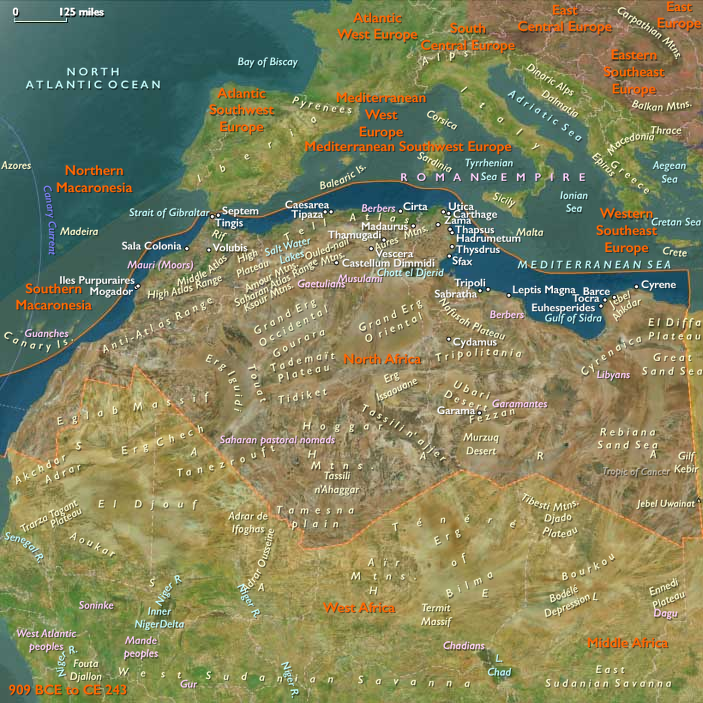
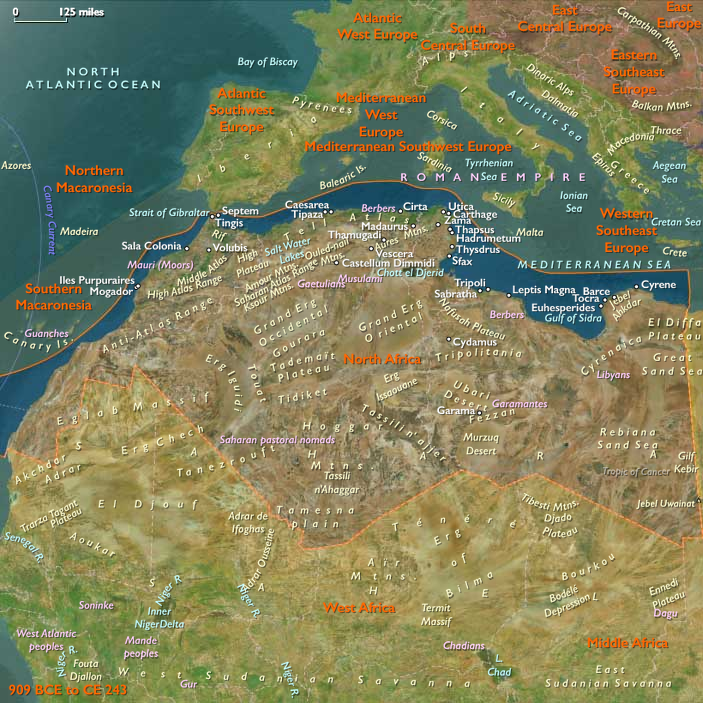
Between 4 and 15 CE, Rome continues enhancing its administrative structures and economic influence within Africa Proconsularis. Ongoing investments in infrastructure, agricultural productivity, and urban development ensure that cities such as Utica remain central to regional commerce and governance. The province benefits from stable governance and sustained prosperity, further embedding North Africa within Rome’s extensive Mediterranean sphere.
Numidia: Continued Stability and Economic Integration
Numidia maintains its stability and economic growth under Roman provincial governance. Investments in agriculture and infrastructure sustain local economic activities and trade. Numidian society, while firmly integrated into the Roman administrative framework, preserves distinctive local customs and traditions, contributing to the overall cultural and economic vibrancy of the region.
Mauretania: Cultural and Economic Flourishing under Juba II and Cleopatra Selene
Mauretania continues to prosper culturally and economically under King Juba II and Queen Cleopatra Selene II. Caesarea (modern Cherchell) further consolidates its status as an intellectual, artistic, and commercial center, benefiting from extensive public works and architectural enhancements blending Egyptian, Greek, and Roman styles. The province remains economically vibrant through sustained exports of grain, olive oil, and other commodities, reinforcing its strategic importance to Roman economic networks.
Cyrenaica: Continued Economic Prosperity and Intellectual Vitality
Cyrenaica retains its strong economic performance under stable governance. The Greek Pentapolis—Cyrene, Barce (Al Marj), Euhesperides (Benghazi), Teuchira (Tukrah), and Apollonia (Susah)—maintains vigorous trade, especially in grain, wine, wool, livestock, and the esteemed medicinal herb Silphium. Cyrene sustains its influential role as a cultural and intellectual hub, attracting renowned scholars and medical practitioners from around the Mediterranean.
Berber Communities: Persistent Economic Integration and Cultural Resilience
Berber communities remain deeply engaged in the region’s economic activities, particularly through vibrant coastal commerce centered around hubs such as Oea (Tripoli). Inland Berber tribes benefit indirectly from coastal prosperity, retaining traditional governance structures and cultural practices. This enduring interaction ensures regional economic stability, social cohesion, and cultural resilience.
Garamantes: Vital Role in Saharan Trade Networks
The Garamantes continue to facilitate essential trans-Saharan trade, linking sub-Saharan regions with Mediterranean economies. Their innovative agricultural practices and strategic management of Saharan caravan routes significantly bolster regional commerce, fostering continued economic prosperity and cultural exchange.
Musulami, Gaetulians, Mauri (Moors), and Saharan Pastoral Nomads
The Musulami, residing between Numidia and the Sahara, continue their active engagement in agriculture and pastoral activities, sustaining regular commercial and cultural interactions with neighboring Roman and Numidian communities.
The semi-nomadic Gaetulians uphold their pivotal role in facilitating trade and cultural connections between inland and coastal territories, reinforcing regional economic cohesion.
The Mauri (Moors) maintain their influential status through diplomatic efforts and robust economic activities in western North Africa, ensuring regional stability and prosperity.
Saharan pastoral nomads persist as critical connectors, enhancing trade, cultural exchanges, and knowledge dissemination across extensive ecological and economic zones, further enriching the region's interconnected networks.
Cultural Syncretism and Vibrant Interaction
Ongoing cultural exchanges among Berber, Roman, Greek, Garamantian, Musulami, Gaetulian, Mauri, and Saharan pastoral communities continue enriching regional traditions in arts, crafts, and artisanal practices. Religious syncretism remains strong, harmoniously blending indigenous Berber beliefs with Roman, Greek, Phoenician, and Saharan spiritual customs, contributing to the dynamic cultural diversity of North Africa.
Strong Foundations for Continued Prosperity
By 15 CE, North Africa maintains its position as a prosperous and stable region, supported by effective Roman provincial administration, Juba II and Cleopatra Selene’s flourishing Mauretania, sustained Cyrenaic economic and cultural vitality, resilient Berber communities, and dynamic Saharan trade networks. Together, these interconnected elements reinforce North Africa's ongoing strategic significance within the broader Mediterranean geopolitical landscape.
People
Groups
- Berber people (also called Amazigh people or Imazighen, "free men", singular Amazigh)
- Numidians
- Garamantes
- Gaetuli
- Tripolitania (Roman province)
- Africa proconsularis (Roman province)
- Mauretania, Kingdom of
- Crete and Cyrenaica (Roman province)
- Roman Principate (Rome)
- Roman Empire (Rome): Julio-Claudian dynasty
Commodoties
- Fish and game
- Gem materials
- Grains and produce
- Fibers
- Textiles
- Ceramics
- Strategic metals
- Salt
- Slaves
- Beer, wine, and spirits
Subjects
- Commerce
- Architecture
- Sculpture
- Faith
- Government
- Scholarship
- Custom and Law
- Metallurgy
- Medicine
- Philosophy and logic
Regions
Subregions
Years: 4 - 15
People
Groups
- Berber people (also called Amazigh people or Imazighen, "free men", singular Amazigh)
- Numidians
- Garamantes
- Gaetuli
- Tripolitania (Roman province)
- Africa proconsularis (Roman province)
- Mauretania, Kingdom of
- Crete and Cyrenaica (Roman province)
- Roman Principate (Rome)
- Roman Empire (Rome): Julio-Claudian dynasty
Commodoties
- Fish and game
- Gem materials
- Grains and produce
- Fibers
- Textiles
- Ceramics
- Strategic metals
- Salt
- Slaves
- Beer, wine, and spirits
Subjects
- Commerce
- Architecture
- Sculpture
- Faith
- Government
- Scholarship
- Custom and Law
- Metallurgy
- Medicine
- Philosophy and logic
Regions
Subregions