
North Africa (844–855 CE) Aghlabid Maritime …
Years: 844 - 855
North Africa (844–855 CE)
Aghlabid Maritime Expansion, Idrisid Consolidation, and Continued Berber Autonomy
Between 844 and 855 CE, North Africa continues to thrive under powerful regional dynasties, characterized by sustained Aghlabid maritime ambitions, steady consolidation of the Idrisids in Morocco, and enduring independence of autonomous Berber states and emirates.
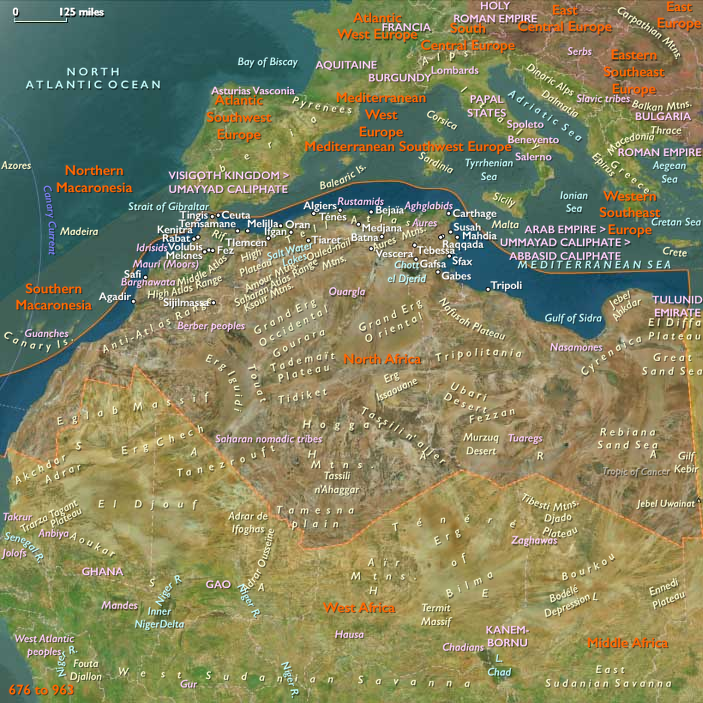
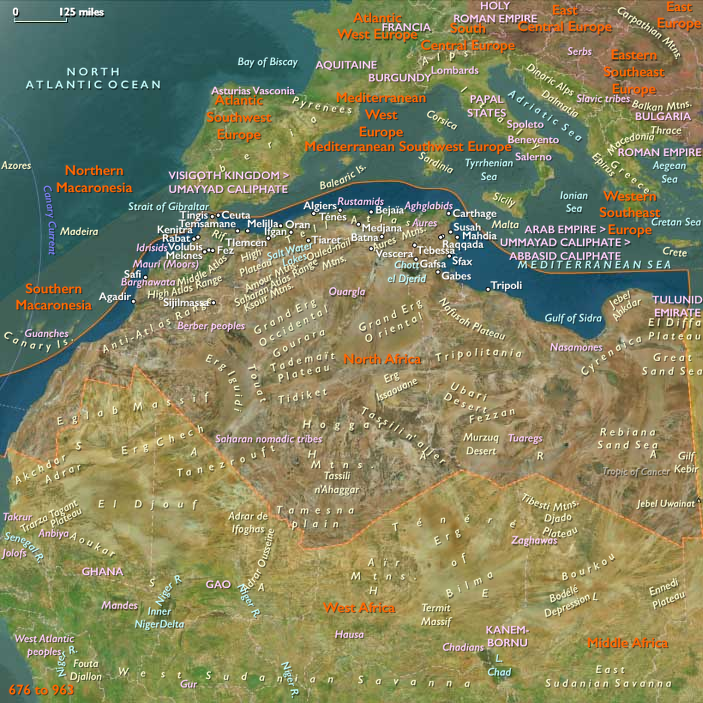
In Ifriqiya, the Aghlabid Dynasty, notably under Muhammad I ibn al-Aghlab (841–856 CE), actively pursues maritime expansion in the central Mediterranean. From their capital at Kairouan (Al Qayrawan), Aghlabid fleets intensify naval operations, achieving significant successes in Sicily, ultimately laying the groundwork for an extensive Muslim presence there. Prosperity continues to grow in Ifriqiya through commerce, advanced agricultural techniques, and infrastructure enhancements, reinforcing Kairouan's status as a major economic and cultural center.
To the west, the Idrisid Dynasty of Morocco maintains its growth and stability, particularly through urban development and administrative consolidation. Fez (Fès) further solidifies its role as an influential center of commerce, learning, and craftsmanship, with Idrisid governance fostering cultural vibrancy and economic strength.
In central Algeria, the Rustamid Dynasty, based in Tahert (modern Tiaret), remains an independent and culturally rich Ibadi Kharijite imamate, continuing as a key regional trading and scholarly nexus. The Rustamids’ tolerant policies ensure Tahert's reputation as an open and diverse center for religious and intellectual discourse.
Meanwhile, the Emirate of Nekor, an independent polity in Morocco's Rif region, sustains its prosperous trade-based economy and cultural exchanges, connecting the Mediterranean trade networks with al-Andalus. Likewise, along Morocco’s Atlantic coast, the distinct religious identity of the Barghawata confederation continues to thrive autonomously.
The Saharan city-state of Sijilmasa, centrally managed by powerful Tuareg tribes, flourishes as a pivotal trans-Saharan trade hub, maintaining prosperous commercial relationships extending deep into sub-Saharan Africa.
By 855 CE, North Africa's political landscape remains vibrant, characterized by successful regional dynasties, independent Berber entities, and prosperous commercial centers, all fostering continued cultural and economic vitality across the Maghreb.
People
Groups
- Arab people
- Berber people (also called Amazigh people or Imazighen, "free men", singular Amazigh)
- Tuaregs, or Touareg, people
- Islam
- Muslims, Sunni
- Muslims, Kharijite
- Sicily (theme)
- Muslims, Ibadi
- Sijilmassa, Berber state of
- Barghawata Confederacy (Masmuda Berber tribal confederacy)
- Córdoba, Umayyad Emirate of
- Rustamid Dynasty of Algeria
- Abbasid Caliphate (Baghdad)
- Idrisid dynasty (independent)
- Ifriqiya, Aghlabid Emirate of
- Nekor, Kingdom of
- Sicily, Emirate of
Commodoties
Subjects
Regions
Subregions
Related Events
Showing 10 events out of 54225 total
Years: 844 - 855
People
Groups
- Arab people
- Berber people (also called Amazigh people or Imazighen, "free men", singular Amazigh)
- Tuaregs, or Touareg, people
- Islam
- Muslims, Sunni
- Muslims, Kharijite
- Sicily (theme)
- Muslims, Ibadi
- Sijilmassa, Berber state of
- Barghawata Confederacy (Masmuda Berber tribal confederacy)
- Córdoba, Umayyad Emirate of
- Rustamid Dynasty of Algeria
- Abbasid Caliphate (Baghdad)
- Idrisid dynasty (independent)
- Ifriqiya, Aghlabid Emirate of
- Nekor, Kingdom of
- Sicily, Emirate of
Commodoties
Subjects
Regions
Subregions