
North Africa (820–831 CE) Aghlabid Strength, …
Years: 820 - 831
North Africa (820–831 CE)
Aghlabid Strength, Idrisid Flourishing, and Rustamid Stability
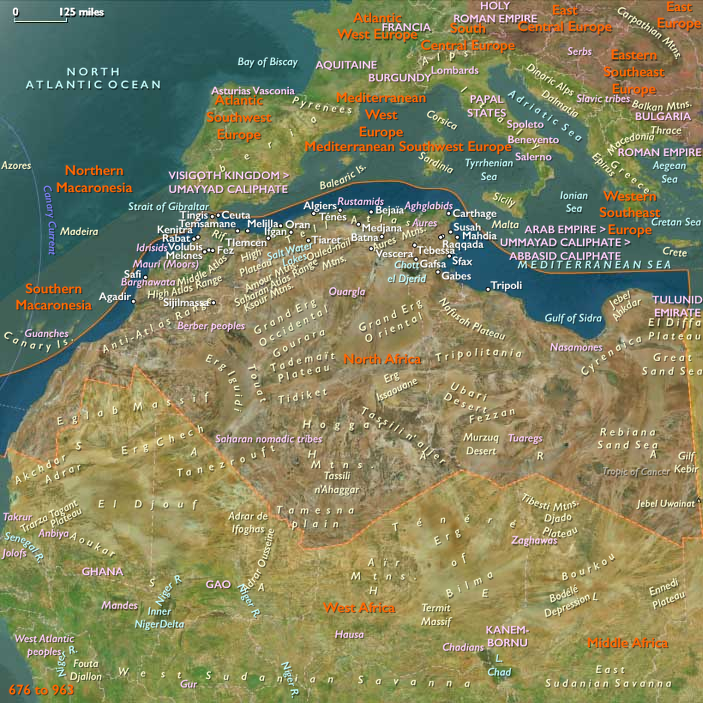
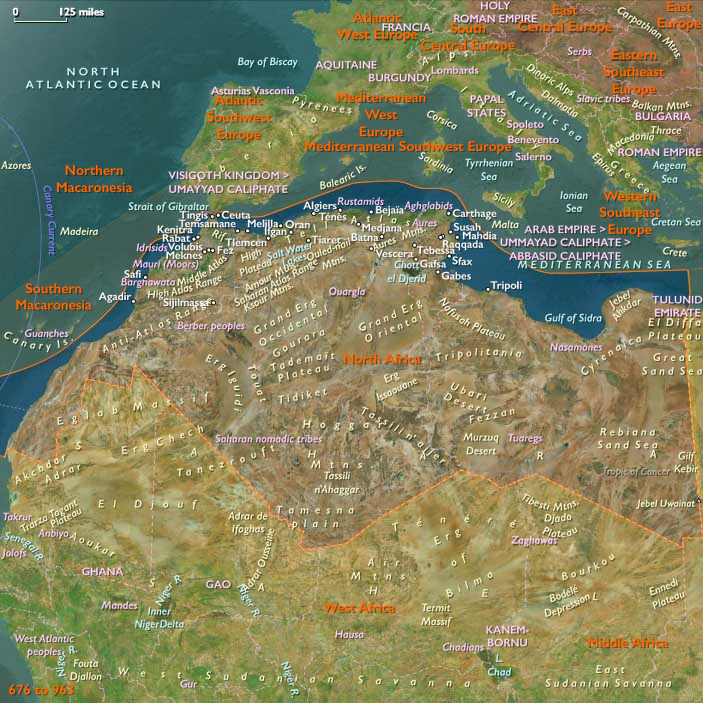
Between 820 and 831 CE, North Africa continues to experience relative stability and economic prosperity under influential dynasties: the Aghlabids in Ifriqiya, the Idrisids in Morocco, and the Ibadi Rustamids in central Algeria, each cultivating a distinct and vibrant regional identity.
In Ifriqiya, the Aghlabid Dynasty, ruling from their prosperous capital at Kairouan (Al Qayrawan), consolidates political control and economic strength. Ziyadat Allah I (817–838 CE) notably focuses on significant public works, expanding irrigation systems and encouraging agricultural productivity. His reign also sees the early stages of Aghlabid maritime ventures, setting the stage for later Mediterranean expeditions and territorial expansion.
Meanwhile, in Morocco, the Idrisid Dynasty under Idris II (803–828 CE) reaches its cultural and political zenith. Idris II enhances Fez (Fès) as a thriving commercial and intellectual center, attracting scholars, merchants, and artisans from across the broader Islamic world. Under his guidance, Fez becomes one of North Africa’s preeminent urban hubs, contributing significantly to the dynasty’s economic and political stature.
The Ibadi Rustamid Dynasty in Tahert (modern Tiaret) maintains its scholarly and religious influence through continued commitment to intellectual freedom and regional commerce. Its unique elective governance and tolerance draw traders and scholars from diverse backgrounds, reinforcing Rustamid stability and autonomy amid regional political shifts.
On the periphery, independent entities such as the coastal Barghawata confederation in Morocco, and the Saharan trading hub Sijilmasa, controlled by powerful Tuareg tribes, remain prosperous, driven by lucrative trans-Saharan commerce and autonomy from larger state formations.
Thus, by the conclusion of 831 CE, North Africa is defined by robust local dynasties and economic vitality, each regionally distinct yet interconnected through commerce, scholarship, and cultural exchange. This vibrant mosaic sets the foundation for continued developments in subsequent eras.
People
Groups
- Arab people
- Berber people (also called Amazigh people or Imazighen, "free men", singular Amazigh)
- Tuaregs, or Touareg, people
- Islam
- Muslims, Sunni
- Muslims, Kharijite
- Sicily (theme)
- Muslims, Ibadi
- Sijilmassa, Berber state of
- Barghawata Confederacy (Masmuda Berber tribal confederacy)
- Rustamid Dynasty of Algeria
- Abbasid Caliphate (Baghdad)
- Idrisid dynasty (independent)
- Ifriqiya, Aghlabid Emirate of
- Sicily, Emirate of
Subjects
Regions
Subregions
Related Events
Showing 10 events out of 54673 total
Years: 820 - 831
People
Groups
- Arab people
- Berber people (also called Amazigh people or Imazighen, "free men", singular Amazigh)
- Tuaregs, or Touareg, people
- Islam
- Muslims, Sunni
- Muslims, Kharijite
- Sicily (theme)
- Muslims, Ibadi
- Sijilmassa, Berber state of
- Barghawata Confederacy (Masmuda Berber tribal confederacy)
- Rustamid Dynasty of Algeria
- Abbasid Caliphate (Baghdad)
- Idrisid dynasty (independent)
- Ifriqiya, Aghlabid Emirate of
- Sicily, Emirate of
Subjects
Regions
Subregions