
North Africa (832–843 CE) Aghlabid Stability, …
Years: 832 - 843
North Africa (832–843 CE)
Aghlabid Stability, Idrisid Growth, and Flourishing Autonomous States
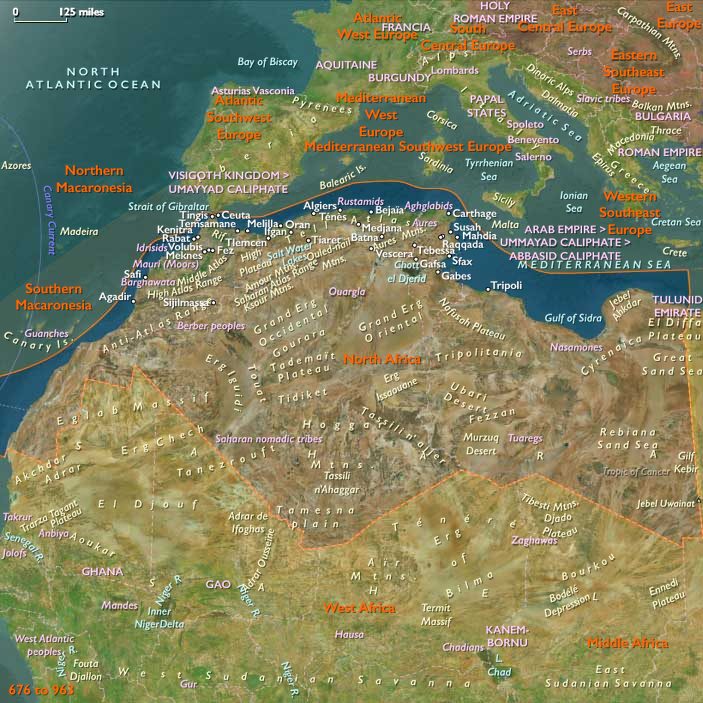
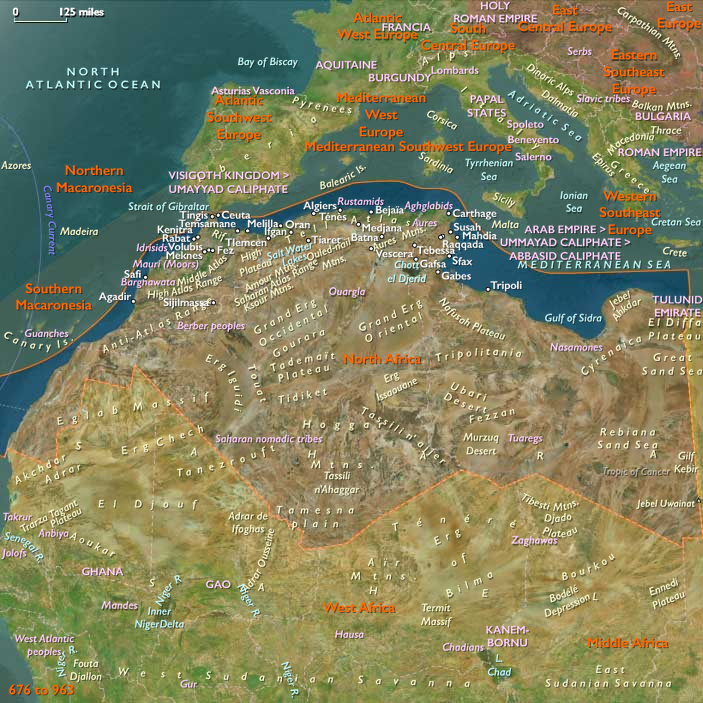
Between 832 and 843 CE, North Africa continues its trajectory of dynastic stability, economic growth, and cultural vibrancy, marked notably by sustained Aghlabid strength in Ifriqiya, expanding influence of the Idrisid Dynasty in Morocco, and enduring autonomy among the Rustamids, Barghawata, Sijilmasa, and the Emirate of Nekor.
In Ifriqiya, the Aghlabid Dynasty, under Ziyadat Allah I (817–838 CE), maintains its peak of power, marked by administrative competence and substantial infrastructure investment. Ziyadat Allah I oversees major enhancements to irrigation systems and urban infrastructure, significantly enriching the agricultural and commercial base of Kairouan (Al Qayrawan). His efforts solidify Aghlabid control, setting the stage for later Mediterranean naval expansion and sustained prosperity.
To the west, the Idrisid Dynasty further develops its political and cultural presence. Following the death of Idris II in 828 CE, his sons and successors continue his legacy, reinforcing Fez (Fès) as a premier cultural, intellectual, and economic center. Under their leadership, the city attracts increasing numbers of scholars, artisans, and traders, furthering Morocco's prosperity and enhancing the dynasty’s prestige and influence.
The Ibadi Rustamid Dynasty, based in Tahert (modern Tiaret), maintains its prominence as an intellectual hub and a center of commerce. Renowned for tolerance, religious diversity, and scholarship, Tahert continues to thrive independently, drawing merchants and scholars from across the Islamic world, and sustaining robust regional trade connections.
Independent polities also thrive during this era. The coastal Barghawata confederation in Morocco consolidates its distinct religious and cultural identity, blending indigenous traditions with unique Islamic practices. In the Saharan region, the economically pivotal city-state of Sijilmasa, strategically controlled by influential Tuareg tribes, remains a central hub for trans-Saharan commerce, significantly facilitating trade in gold, salt, and slaves.
The Emirate of Nekor, an independent entity established in the Rif region of northern Morocco, continues to flourish as a vital economic and cultural crossroads. Founded in the early eighth century by Yemeni immigrants of the Banu Salih family, Nekor maintains strong Mediterranean trade links, particularly with the Umayyad emirate of al-Andalus, and serves as a prominent point of intercultural exchange.
Thus, by 843 CE, North Africa remains characterized by robust regional diversity and prosperity, anchored by stable dynastic centers in Ifriqiya and Morocco, and bolstered by vibrant independent Berber and Arab states. This period lays essential foundations for future developments and shifts in regional power.
People
Groups
- Arab people
- Berber people (also called Amazigh people or Imazighen, "free men", singular Amazigh)
- Tuaregs, or Touareg, people
- Islam
- Muslims, Sunni
- Muslims, Kharijite
- Sicily (theme)
- Muslims, Ibadi
- Sijilmassa, Berber state of
- Barghawata Confederacy (Masmuda Berber tribal confederacy)
- Córdoba, Umayyad Emirate of
- Rustamid Dynasty of Algeria
- Abbasid Caliphate (Baghdad)
- Idrisid dynasty (independent)
- Ifriqiya, Aghlabid Emirate of
- Nekor, Kingdom of
- Sicily, Emirate of
Commodoties
Subjects
Regions
Subregions
Related Events
Showing 10 events out of 54343 total
Years: 832 - 843
People
Groups
- Arab people
- Berber people (also called Amazigh people or Imazighen, "free men", singular Amazigh)
- Tuaregs, or Touareg, people
- Islam
- Muslims, Sunni
- Muslims, Kharijite
- Sicily (theme)
- Muslims, Ibadi
- Sijilmassa, Berber state of
- Barghawata Confederacy (Masmuda Berber tribal confederacy)
- Córdoba, Umayyad Emirate of
- Rustamid Dynasty of Algeria
- Abbasid Caliphate (Baghdad)
- Idrisid dynasty (independent)
- Ifriqiya, Aghlabid Emirate of
- Nekor, Kingdom of
- Sicily, Emirate of
Commodoties
Subjects
Regions
Subregions