
North Africa (796–807 CE) Aghlabid Ascendancy, …
Years: 796 - 807
North Africa (796–807 CE)
Aghlabid Ascendancy, Idrisid Expansion, and Flourishing Berber States
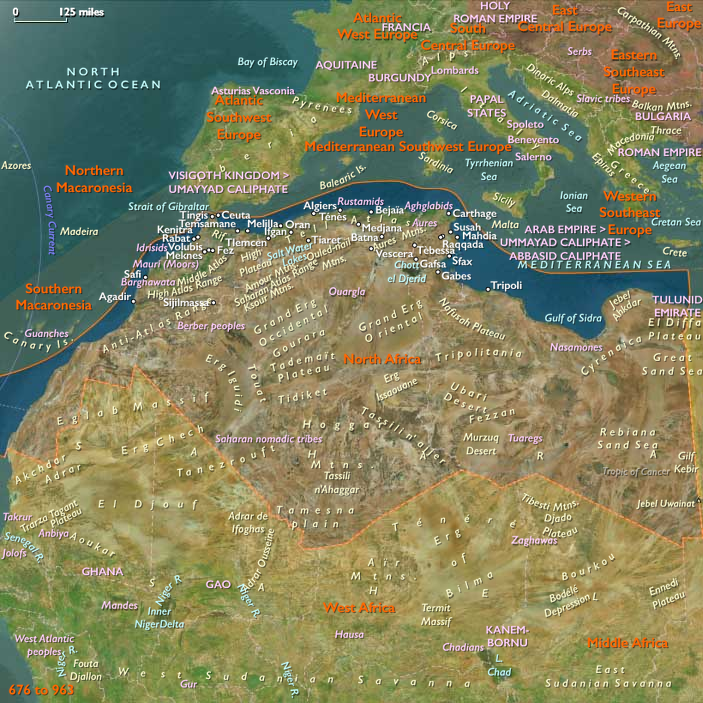
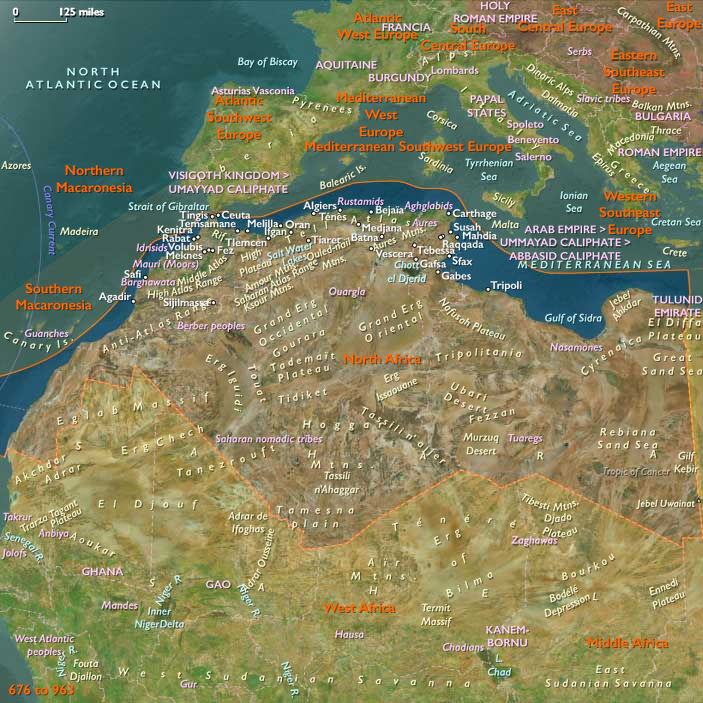
Between 796 and 807 CE, North Africa undergoes another significant political transformation marked by the establishment of the influential Arab-led Aghlabid dynasty in Ifriqiya, continued consolidation and territorial expansion of the Idrisids in Morocco, and the enduring strength of independent Berber states in the central Maghreb.
In 800 CE, the Abbasid Caliph Harun al-Rashid appoints Ibrahim ibn al-Aghlab as governor of Ifriqiya, based at Kairouan (Al Qayrawan). Ibrahim swiftly establishes the semi-autonomous hereditary Aghlabid dynasty, ruling nominally under Abbasid spiritual authority while exercising effective independence in political and administrative matters. The Aghlabids quickly earn a reputation for capable governance, significantly enhancing regional prosperity through ambitious infrastructure improvements, notably reviving Roman-era irrigation systems. This effort substantially increases agricultural productivity, bolstering the economy and enhancing Kairouan’s status as a major cultural and economic hub in the Islamic world.
Simultaneously, further west, the Idrisid dynasty—founded by Idris I in 788 CE—continues its territorial and political expansion from its newly established capital at Fez (Fès). After Idris I's death in 791 CE, his successor, Idris II (ruling from 803 CE), significantly expands Idrisid territory, consolidating political control and actively fostering urban growth and economic development. Under his leadership, Fez flourishes culturally and economically, emerging as a vital center for Islamic scholarship, trade, and urban development in the western Maghreb.
The Berber-led Rustamid dynasty at Tahert (Tiaret) remains robustly independent, continuing as a prominent Ibadi Kharijite imamate. Renowned for scholarly and religious tolerance, Rustamid Tahert attracts intellectuals and merchants from across North Africa and beyond, serving as a crucial nexus for regional trade and cultural exchange. Its political stability and scholarly prestige contrast sharply with the declining Abbasid political presence in the broader Maghreb.
Meanwhile, other Berber polities, such as the coastal Barghawata confederation in Morocco, sustain their unique religious traditions and independent governance. Additionally, the Saharan trading center of Sijilmasa, strategically located along vital trans-Saharan routes managed by powerful Tuareg tribes, maintains its prosperous economic autonomy, ensuring continuous economic links between sub-Saharan Africa and the Mediterranean.
By the end of 807 CE, North Africa is firmly characterized by political and economic diversity, underpinned by vibrant regional states and influential dynasties. The Aghlabids effectively govern Ifriqiya as a prosperous semi-independent state, while the Idrisids consolidate their rule over Morocco. At the same time, independent Berber states such as the Rustamids maintain their stability and influence, reflecting a complex tapestry of cultural diversity and decentralized governance that will shape North African historical dynamics in subsequent decades.
People
Groups
- Arab people
- Berber people (also called Amazigh people or Imazighen, "free men", singular Amazigh)
- Tuaregs, or Touareg, people
- Islam
- Muslims, Sunni
- Muslims, Kharijite
- Muslims, Ibadi
- Barghawata Confederacy (Masmuda Berber tribal confederacy)
- Ifriqiya, Kharijite Berber
- Rustamid Dynasty of Algeria
- Abbasid Caliphate (Baghdad)
- Ifriqiya, Muhallabid Dynasty of
- Idrisid dynasty (independent)
Subjects
Regions
Subregions
Related Events
Showing 10 events out of 54939 total
Years: 796 - 807
People
Groups
- Arab people
- Berber people (also called Amazigh people or Imazighen, "free men", singular Amazigh)
- Tuaregs, or Touareg, people
- Islam
- Muslims, Sunni
- Muslims, Kharijite
- Muslims, Ibadi
- Barghawata Confederacy (Masmuda Berber tribal confederacy)
- Ifriqiya, Kharijite Berber
- Rustamid Dynasty of Algeria
- Abbasid Caliphate (Baghdad)
- Ifriqiya, Muhallabid Dynasty of
- Idrisid dynasty (independent)
Subjects
Regions
Subregions