
North Africa (784–795 CE) Height of …
Years: 784 - 795
North Africa (784–795 CE)
Height of Muhallabid Influence, Rise of the Idrisids, and Continued Berber Autonomy
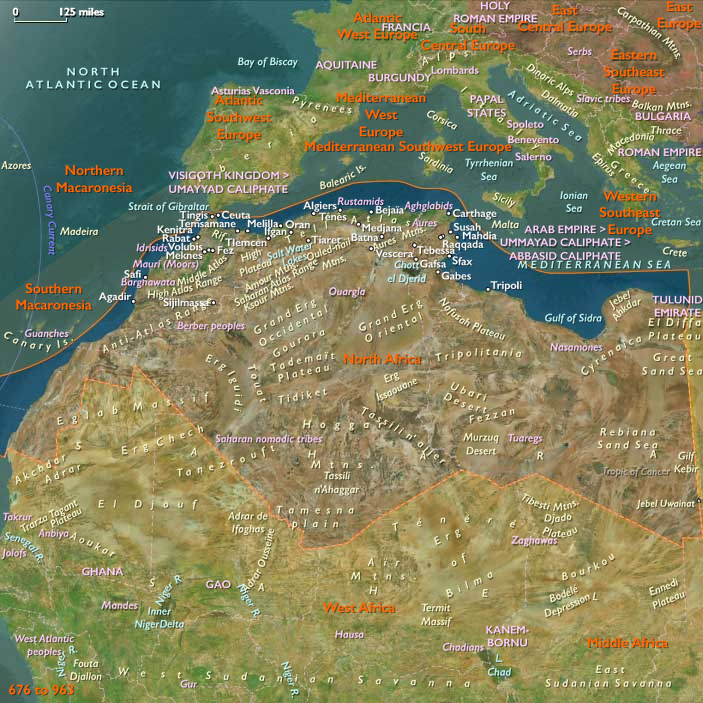
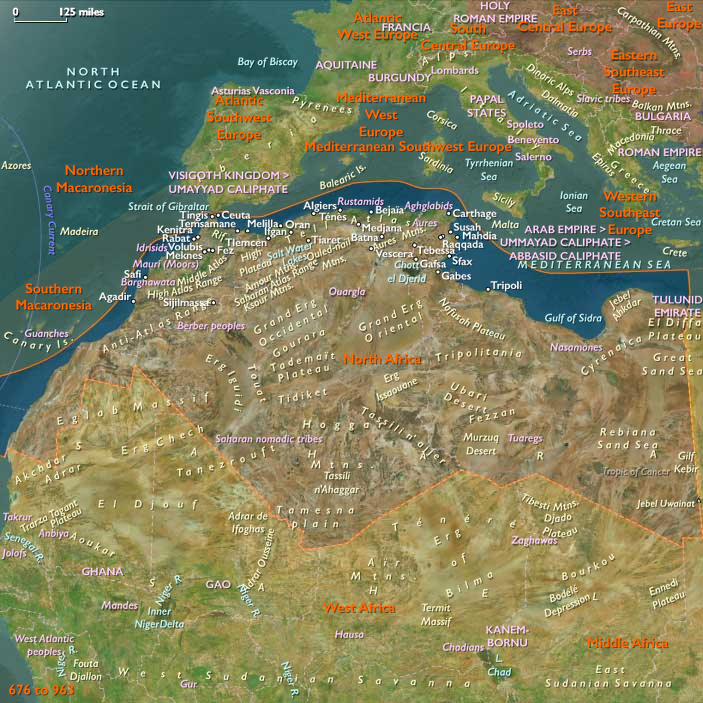
Between 784 and 795 CE, North Africa experiences a significant realignment of political power marked by the apex and subsequent decline of the Abbasid-appointed Muhallabid dynasty in Ifriqiya, the rise of the independent Arab-led Idrisid dynasty in Morocco, and the continued flourishing of indigenous Berber states.
Under Muhallabid rule, Ifriqiya, governed from the capital at Kairouan (Al Qayrawan), reaches its economic and cultural zenith. Muhallabid governors, particularly Yazid ibn Hatim al-Muhallabi (779–787 CE) and his successor, Dawud ibn Yazid al-Muhallabi (787–794 CE), significantly expand agricultural prosperity through ambitious irrigation projects and stable administrative governance. The region enjoys notable prosperity, becoming a critical hub for trade, agriculture, and intellectual life, with Kairouan thriving as a major urban center renowned for its scholarly and cultural achievements.
Despite their successful governance within Ifriqiya, the Muhallabids find their influence increasingly constrained. To the west, indigenous Berber polities, particularly the Rustamid Dynasty in Tahert (Tiaret), consolidate their independence, fostering a thriving center of Ibadi Kharijite religious scholarship and commerce. Further south, the influential city-state of Sijilmasa, strategically positioned along trans-Saharan trade routes managed primarily by powerful Tuareg tribes, continues to prosper independently, controlling significant trade in gold, ivory, salt, and slaves between sub-Saharan Africa and Mediterranean markets.
In Morocco, this era sees the emergence and rapid rise of the Arab-led Idrisid Dynasty. Founded by Idris ibn Abdallah (Idris I) in 788 CE, following his flight from Abbasid persecution in the east, the Idrisids swiftly establish their power base in the city of Volubilis and shortly thereafter in the newly founded city of Fez (Fès), which Idris I establishes as his dynasty’s capital in 789 CE. The Idrisid state blends Arab political traditions with indigenous Berber support, rapidly emerging as a powerful, independent Islamic kingdom—the first significant Muslim dynasty in Morocco.
Meanwhile, along the Atlantic coast, the distinctive Barghawata confederation solidifies its political and religious autonomy, maintaining a unique form of Islam infused with indigenous Berber elements, further exemplifying the period's cultural and religious diversity.
The Muhallabids, unable to assert effective control beyond the immediate vicinity of Kairouan and Ifriqiya, increasingly struggle to maintain influence amid the emergence of these powerful independent states. Their period of prosperity and influence eventually diminishes amid internal administrative weaknesses, external pressures from Berber states, and shifting Abbasid political interests.
By the close of 795 CE, North Africa clearly reflects a new political landscape, characterized by regional fragmentation, the ascendance of the independent Idrisid state in Morocco, robust Berber autonomy under the Rustamids, and the diminishing authority of Muhallabid governors in Ifriqiya. This era firmly establishes enduring patterns of political independence and cultural diversity that profoundly shape North Africa’s subsequent historical trajectory.
People
Groups
- Arab people
- Berber people (also called Amazigh people or Imazighen, "free men", singular Amazigh)
- Tuaregs, or Touareg, people
- Islam
- Muslims, Sunni
- Muslims, Kharijite
- Muslims, Ibadi
- Barghawata Confederacy (Masmuda Berber tribal confederacy)
- Ifriqiya, Kharijite Berber
- Rustamid Dynasty of Algeria
- Abbasid Caliphate (Baghdad)
- Ifriqiya, Muhallabid Dynasty of
- Idrisid dynasty (independent)
Subjects
Regions
Subregions
Years: 784 - 795
People
Groups
- Arab people
- Berber people (also called Amazigh people or Imazighen, "free men", singular Amazigh)
- Tuaregs, or Touareg, people
- Islam
- Muslims, Sunni
- Muslims, Kharijite
- Muslims, Ibadi
- Barghawata Confederacy (Masmuda Berber tribal confederacy)
- Ifriqiya, Kharijite Berber
- Rustamid Dynasty of Algeria
- Abbasid Caliphate (Baghdad)
- Ifriqiya, Muhallabid Dynasty of
- Idrisid dynasty (independent)
Subjects
Regions
Subregions